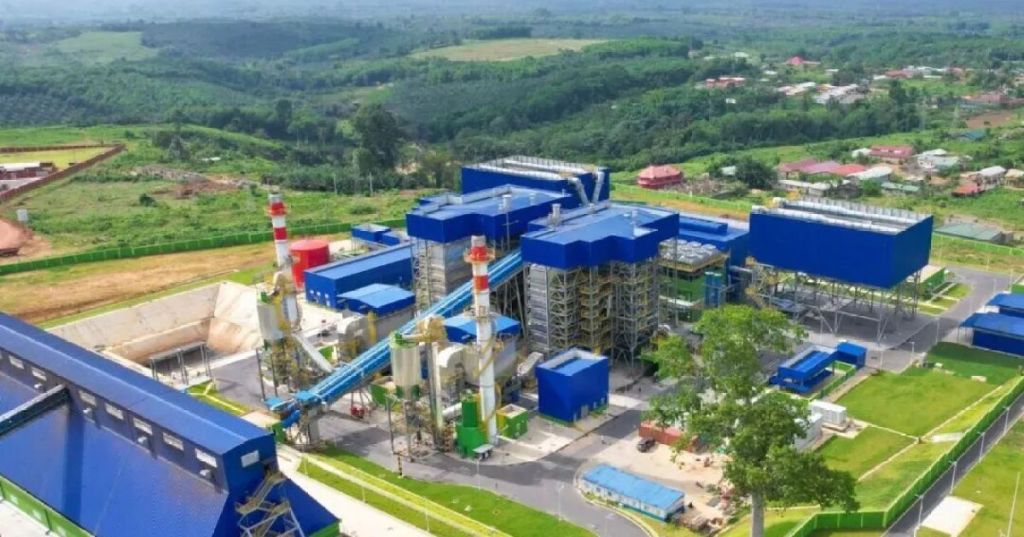
Côte d’Ivoire has commissioned its first power station dedicated to agricultural residues and is considering two additional biomass projects. The 46 MW Biovéa facility at Ayébo, near Aboisso, entered official service on November 5, 2026, according to the Ministry of Mines, Petroleum and Energy. Unlike the water-driven generation covered in our report on the Tina River hydroelectric project, Biovéa converts locally collected plant material into electricity.
From palm residues to dispatchable electricity
The government identifies oil-palm residues from industrial plantations and local producers as the primary fuel. In a conventional biomass steam cycle, fuel is prepared and burned in a boiler, transferring thermal energy to water. Pressurized steam drives a turbine coupled to an electrical generator. Condensation and water treatment support recirculation, while auxiliary equipment consumes part of the generated electricity. Unlike intermittent generation, a biomass plant can schedule production subject to fuel availability, equipment limits and maintenance.
What 46 MW means over a year
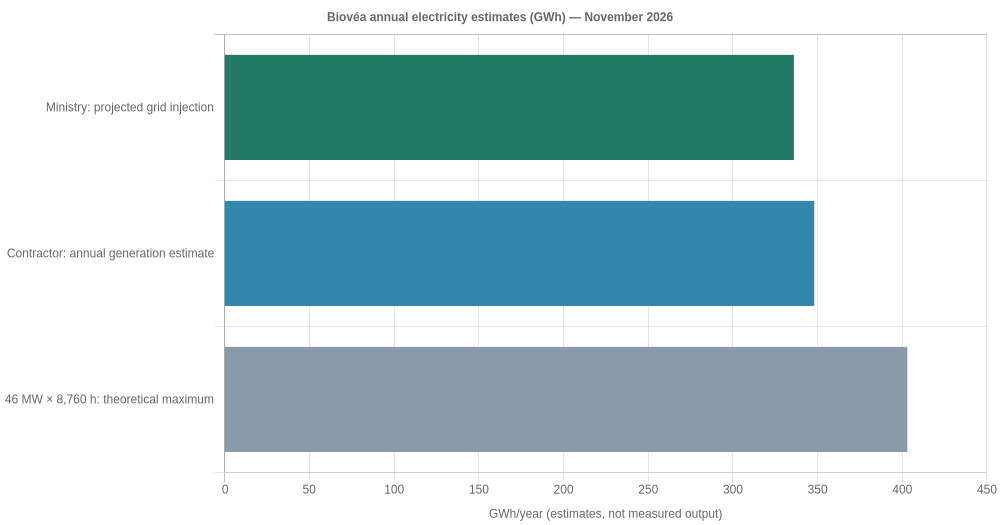
At uninterrupted nameplate output, 46 MW multiplied by 8,760 hours would yield 402.96 GWh in a non-leap year. The ministry expects approximately 336 GWh of annual grid injection, equivalent to an average delivery of 38.36 MW and an indicative nameplate-based utilization ratio of 83.4%. Contractor China Energy International Group reports a separate annual generation estimate of 348 GWh. The two figures should not be treated as identical measurements or used to infer auxiliary consumption without a confirmed accounting boundary. As with offshore wind capacity, a plant’s rated megawatts and delivered megawatt-hours describe different properties.
Fuel logistics determine reliability
The ministry estimates roughly 450,000 tonnes of palm residues annually, while the contractor cites 520,000 tonnes of agricultural material. Differences in procurement assumptions and fuel specifications remain unresolved. Moisture, storage conditions, transport distance and combustion efficiency determine how much useful energy reaches the grid. Removing too much residue from farms may also affect soil nutrients. The government expects ash reuse in agriculture, subject to appropriate quality and environmental controls.
The investment exceeds 150 billion CFA francs, supported by EDF, Meridiam, SIFCA and financing partners. Industrial power consumers, including computing facilities, benefit from reliable supply, but no dedicated computing offtake has been announced. Our Homer City power campus coverage illustrates the distinction between a dedicated industrial power strategy and electricity supplied to a general grid.
Two additional projects under consideration
On November 27, Bioenergy Insight reported that the government is considering plants using cocoa residues at Divo and cotton stalks at Boundiali. Neither project has a disclosed capacity or commissioning timetable in the report. Like Alaska’s proposed Pilgrim Hot Springs geothermal microgrid, a proposed energy project must be distinguished from an operating asset. Biovéa’s next meaningful benchmarks are actual annual generation, fuel-supply reliability, operating costs and verified environmental performance.
We volunteer daily to ensure the credibility of the information on this platform is Verifiably True. If you would like to support to help further secure the integrity of our research initiative, please scan the QR code below.

For mobile scanning, open the article on another display and scan the QR code with a Bitcoin wallet. The voluntary donation amount is 5,000 sats. Verify the receiving address 3C9o19EH5HSiwEPyCTmEKzxhNCbo2X6TTb before sending.
BitcoinVersus.tech is not a financial advisor. This media platform reports on financial subjects purely for informational purposes.


Leave a Reply