An early release for testers
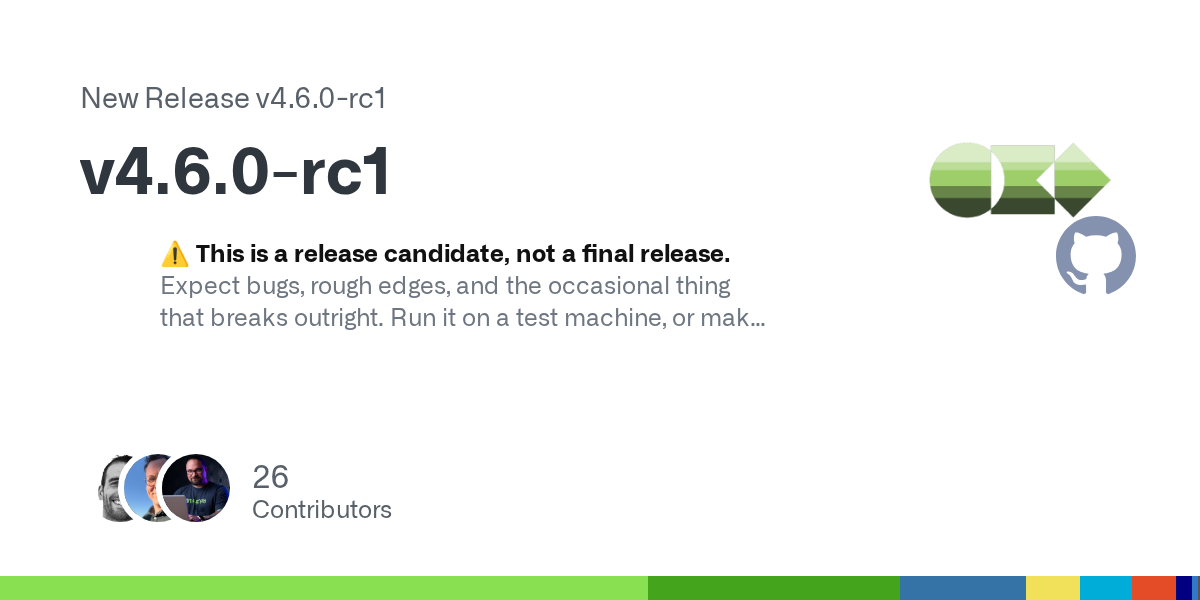
Omarchy published version 4.6.0-rc1 on GitHub on November 27. The release candidate introduces integrated local AI models, new desktop applications and changes to display and memory management. Its maintainers explicitly warn that the release is intended for testing and may contain failures. The announcement should not be interpreted as a recommendation to upgrade a production workstation without a verified backup or recovery plan.
Featured cover: conceptual editorial artwork, not a documentary photograph of the named product or event.
Watch the video directly on YouTube if the embedded player is unavailable.
Local models change the computing boundary
An AI application can send requests to a remote service or execute inference on hardware controlled by the user. Local inference can reduce dependence on network connectivity and remote service availability. Omarchy’s agents panel integrates model selection and can configure suitable catalog models within a container that the project describes as having no network access. Users may also connect to models hosted on another machine through a Tailscale network. Remote inference and fully local inference have different privacy and availability implications.
Hardware still sets the limits
A language model requires memory to hold its parameters and additional runtime state. Quantization can reduce storage and memory requirements by representing parameters with fewer bits. For illustration, a model with seven billion parameters stored at four bits per parameter would require roughly 3.5 GB for raw weights alone. Runtime memory may be considerably higher because of metadata, context caches and other allocations. CPU and GPU characteristics, memory bandwidth and software implementation influence token generation speed. Automatic model selection cannot eliminate those hardware limits.
Desktop integration beyond inference
The release introduces Folio as the file manager, replacing Nautilus. Omaview handles images and media, and the redesigned display configuration presents connected monitors as a movable arrangement. A unified agents interface brings together locally hosted models and remote providers. These features reflect an attempt to integrate AI into everyday desktop workflows rather than requiring users to configure every application separately. The release remains an Arch-based Linux environment with underlying operating-system dependencies.
Why cautious upgrades matter
A release candidate offers an opportunity to test compatibility before stable distribution. A workstation used for critical operations needs dependable display, network, storage and application behavior. Users should test the release on noncritical hardware or retain a tested rollback path, as the maintainers advise. Local inference security also depends on permissions, sandbox boundaries and which files an agent can access. The important question is not whether a desktop ships an AI model, but whether users can operate it reliably and understand its resource consumption, access boundaries and failure modes.
The project also provides separate installation images for x86-64 and ARM64 hardware. Users evaluating the software can verify the image checksum against the release documentation before booting. Testing peripheral compatibility and recovery procedures is particularly important on systems with uncommon graphics or wireless hardware.
Sources and related coverage
Report or primary announcement | Additional documentation
Modular Linux laptop | Arm Cortex-M42 | Robotic rope manipulation research | Cadence and TSMC chiplet design
We volunteer daily to ensure the credibility of the information on this platform is Verifiably True. If you would like to support to help further secure the integrity of our research initiative, please scan the QR code below.

For mobile scanning, open the article on another display and scan the QR code with a Bitcoin wallet. The voluntary donation amount is 5,000 sats. Verify the receiving address 3C9o19EH5HSiwEPyCTmEKzxhNCbo2X6TTb before sending.
BitcoinVersus.tech is not a financial advisor. This media platform reports on financial subjects purely for informational purposes.


Leave a Reply