Open-Source History of Materials Science • Intermediate • Estimated study time: 35 minutes
Late Bronze Age craftspeople transformed quartz and alkaline plant ash into colorful glass. Egyptian workshops at Qantir-Piramesses and Amarna provide evidence of increasingly specialized production. Unlike the quartz-rich glazed bodies examined in OSHMS.006 on faience, glass consists primarily of a continuous noncrystalline solid network.
Prerequisites and learning objectives
Understand the relationship between heat, composition and material structure.
- Distinguish glass from faience and crystalline quartz.
- Explain the functions of silica, alkaline flux and stabilizing oxides.
- Describe the two-stage glassmaking evidence from Qantir.
- Explain core forming, coloration and controlled cooling.
- Distinguish archaeological evidence from experimental reconstruction.
The chemistry of glass
Silica (SiO₂) forms the network of ordinary silicate glass. In crystalline quartz, atoms follow a repeating arrangement; in glass, long-range periodic order is absent. Alkali-bearing plant ash supplies fluxing compounds that modify the silica network and enable processing below the temperature needed for pure silica. Calcium-bearing components help stabilize common soda-lime silicate glass against chemical attack. Ancient batches varied, so modern commercial compositions must not be imposed on every artifact. Earlier lime plaster technology illustrates a different use of calcium compounds and heat.
Two stages at Qantir
In a 2005 Science paper, Thilo Rehren and Edgar Pusch reported production evidence at Qantir-Piramesses, the site associated with the capital of Ramesses II. Their archaeological study estimates an initial reaction stage at 900–950°C and a subsequent coloring and ingot-forming stage at 1000–1100°C. The first stage created a partially reacted material; further heating produced more homogeneous glass. Ceramic vessels, residues and finished material help researchers reconstruct the process.
Using the midpoints of the published intervals, 925°C and 1050°C, the estimated difference is 125°C (125 K). The difference does not measure fuel consumption: energy demand also depends on batch mass, heat capacity, chemical reactions, furnace losses and firing duration. As with bloomery iron smelting, furnace residues reveal technological choices but do not preserve a complete operating record.
From ingots to vessels
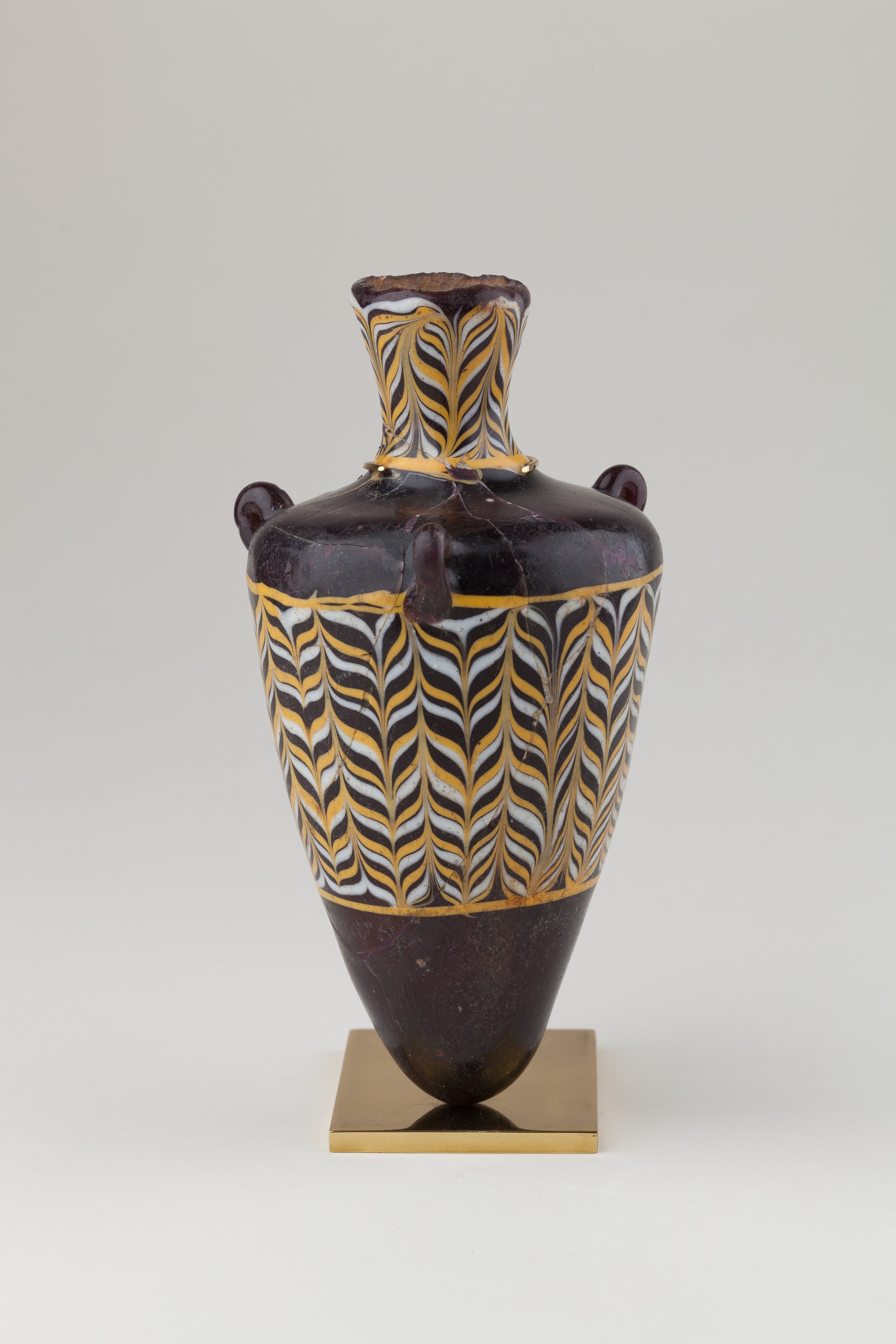
Primary glassmaking produces glass from raw materials; secondary glassworking reshapes existing glass. Core forming creates a hollow object by shaping softened glass around a removable core. The core supports the wall during manufacture and is removed after cooling. Colored trails can be applied and manipulated while the surface remains workable. Glassblowing belongs to a much later development, not the New Kingdom process.
Color and cooling
Transition-metal compounds can impart color to glass; copper chemistry, oxidation conditions and composition influence the resulting appearance. Cobalt can impart blue coloration. Opaque and translucent objects reflect different material choices. Controlled cooling limits thermal gradients that might generate damaging residual stress. A modern demonstration illustrates physical mechanisms without proving every ancient workshop used the same sequence.
Evidence and safety
The Met’s Malqata vase and associated archaeological waste support local glassworking. Research distinguishes evidence of raw glass manufacture from evidence of shaping imported glass. Compare the analytical approach with early copper metallurgy. Independent study should use photographs, published data and room-temperature models; molten glass, furnaces and chemical batches require supervised specialist facilities.
Exercises and answer key
- Why add alkaline flux? Answer: it modifies the silica network and makes glass formation more practical at lower temperatures.
- What is the midpoint temperature difference between the two reported Qantir stages? Answer: 125°C.
- Why is core forming different from glassblowing? Answer: a removable solid core defines the hollow interior rather than an inflated bubble.
- Does a finished vessel alone establish local primary production? Answer: no; raw materials, crucibles, residues and chemical analysis can supply stronger evidence.
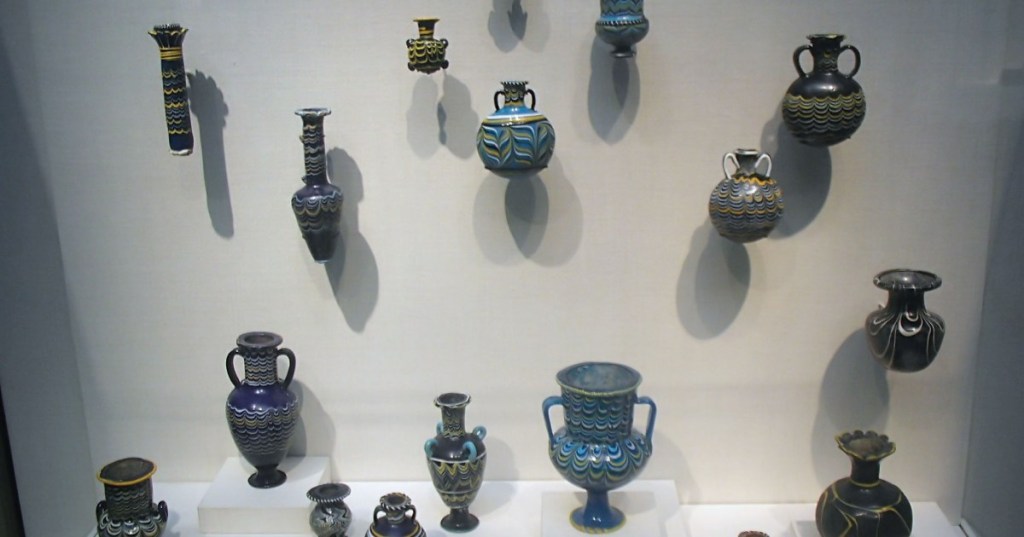
Featured photograph: Egyptian miniature glass vessels, PericlesofAthens, Wikimedia Commons, CC BY-SA 3.0; cropped to 1200 × 630.
We volunteer daily to ensure the credibility of the information on this platform is Verifiably True. If you would like to support to help further secure the integrity of our research initiative, please scan the QR code below.

BitcoinVersus.tech is not a financial advisor. This media platform reports on financial subjects purely for informational purposes.


Leave a Reply