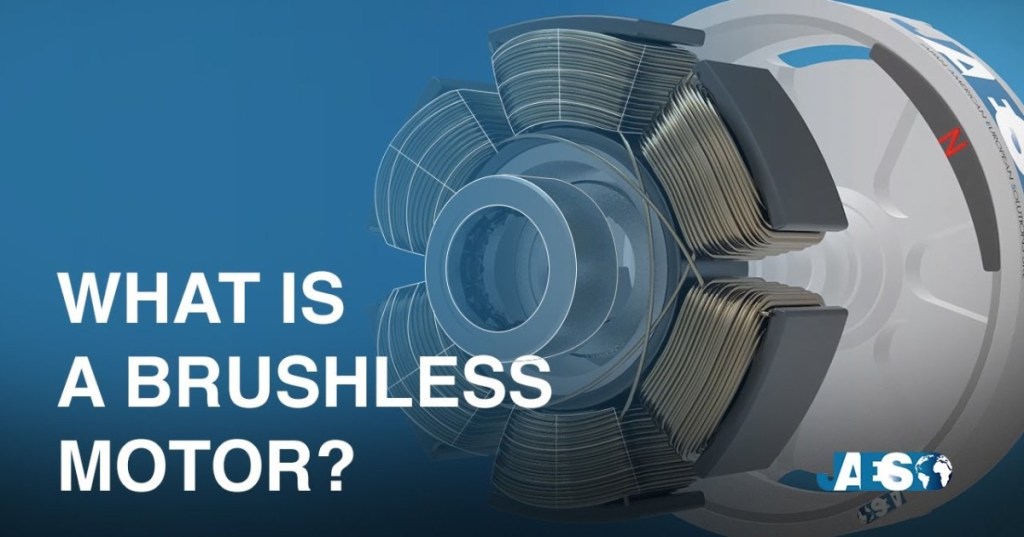
Cordless power tools convert battery energy into mechanical work. Their motors differ in how electrical current creates a rotating magnetic field, a process called commutation. Brushed and brushless motors both produce torque, but the method of switching current determines their construction, maintenance requirements and control options. The distinction matters in everything from handheld drills to equipment such as the Piccola CNC desktop milling machine.
Brushed motors: mechanical commutation
A conventional permanent-magnet brushed DC motor contains windings on a rotating armature. Stationary magnets create a magnetic field, and current in the armature produces torque. Carbon brushes slide against a segmented commutator connected to the rotating windings. As the rotor turns, the commutator changes which windings receive current, maintaining rotation. Mechanical contact produces friction, brush wear and electrical arcing. The motor remains useful when low component cost and straightforward control are important. The motor may still have an electronic speed controller.
Brushless motors: electronic commutation
A typical three-phase brushless DC motor places windings in the stator and permanent magnets on the rotor. A controller switches semiconductor devices to energize the windings in sequence. It may estimate rotor position from back electromotive force or read position sensors. Electronic commutation eliminates the sliding brush interface, but requires suitable switching electronics and software. Texas Instruments’ Hall-effect commutation application brief explains one implementation. Control algorithms can manage startup, torque, speed and braking, with related principles described in our motor braking explainer.
Energy, heat and torque
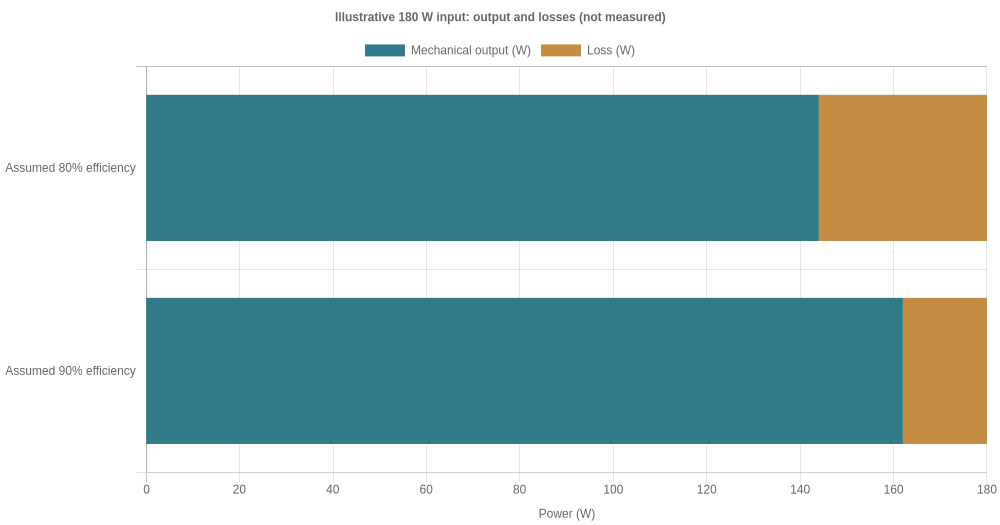
Motor mechanical power is torque multiplied by angular velocity. Electrical power is voltage multiplied by current at a DC input. At 18 V and 10 A, a tool receives 180 W of electrical power. If an assumed motor-and-controller efficiency is 80%, useful mechanical output is 144 W and losses total 36 W. These are illustrative calculations, not measured performance of a particular tool. At the same input, a hypothetical 90% efficient system would deliver 162 W and lose 18 W. The gain depends on the operating point; electronic switching, copper resistance and magnetic losses remain even without brushes.
Thermal design governs sustained operation because higher winding temperature can increase electrical resistance and damage insulation. Protective circuits may limit current or shut down a tool. Our motor winding thermistor lesson explains temperature sensing and safe troubleshooting. A brushless design is not automatically immune to heat, contamination or bearing failure.
Choosing the right architecture
A brushless tool is often attractive for repeated professional work because electronically controlled torque and reduced brush maintenance can improve usability. A brushed tool may be economically appropriate for infrequent work or accessible repairs. Compare the complete system: batteries, gearing, cooling, duty cycle, load and controller protections. As with high-power vehicle inverters, semiconductor control contributes to the outcome, but practical efficiency requires measurement. Never compare peak torque alone or assume that the label brushless guarantees superiority.
We volunteer daily to ensure the credibility of the information on this platform is Verifiably True. If you would like to support to help further secure the integrity of our research initiative, please scan the QR code below.



Leave a Reply