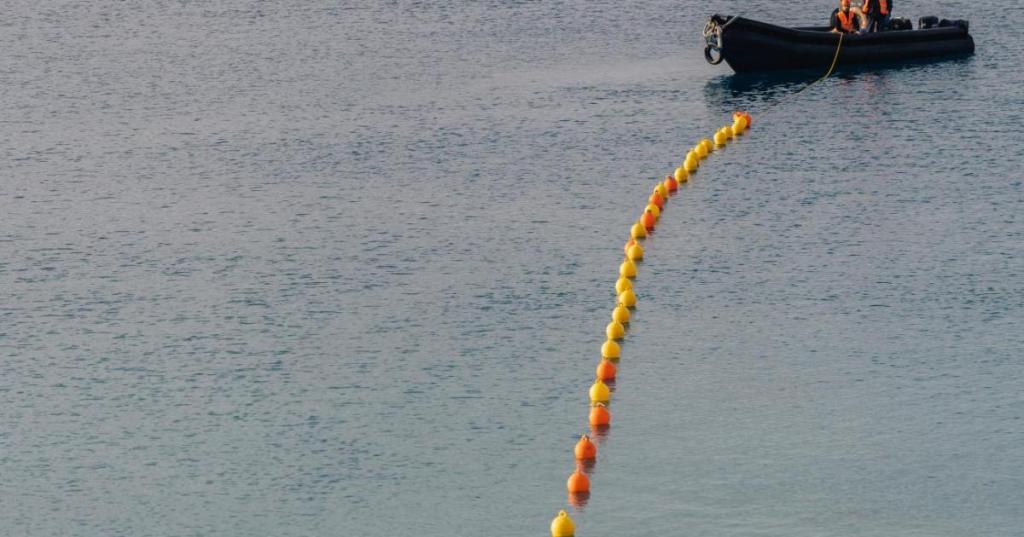
A survey vessel departed Heraklion, Crete, on November 10, 2026, to begin preparatory work for the planned electricity interconnection between Greece and Cyprus. The Great Sea Interconnector announcement identifies instrument calibration as the first activity before seabed surveying. The planned connection would extend roughly 900 kilometers underwater and initially transfer up to 1,000 MW in either direction. Like the proposed Wyoming transmission intertie, it uses high-voltage direct current (HVDC) to exchange electricity between networks.
Why direct current works for long submarine routes
Long alternating-current cables draw capacitive charging current even when transferring little useful power. Direct-current transmission avoids sustained AC charging current in the cable but requires conversion equipment at the terminals. The project specifications identify a bipolar design rated ±525 kV, with converter stations near Korakia in Crete and Kofinou in Cyprus. The voltage difference between the poles is nominally 1.05 million volts. An idealized 1 GW transfer at that voltage corresponds to approximately 952 amperes; actual operating conditions include losses and equipment limits.
Original engineering research: qualifying cable for extreme depths
At the August 2026 CIGRE Paris Session, Nexans engineers Lars Lervik, Per Vidar Laengen, Alexander Suther and Ben Kristian Johansen presented original engineering research on 525 kV mass-impregnated cables. The publicly accessible summary describes electrical and mechanical type testing for operation at depths of up to 3,000 meters. It identifies a planned total cable length of approximately 1,850 kilometers, reflecting both poles and land sections, rather than a single 1,850-kilometer sea crossing. The complete conference paper requires paid access.
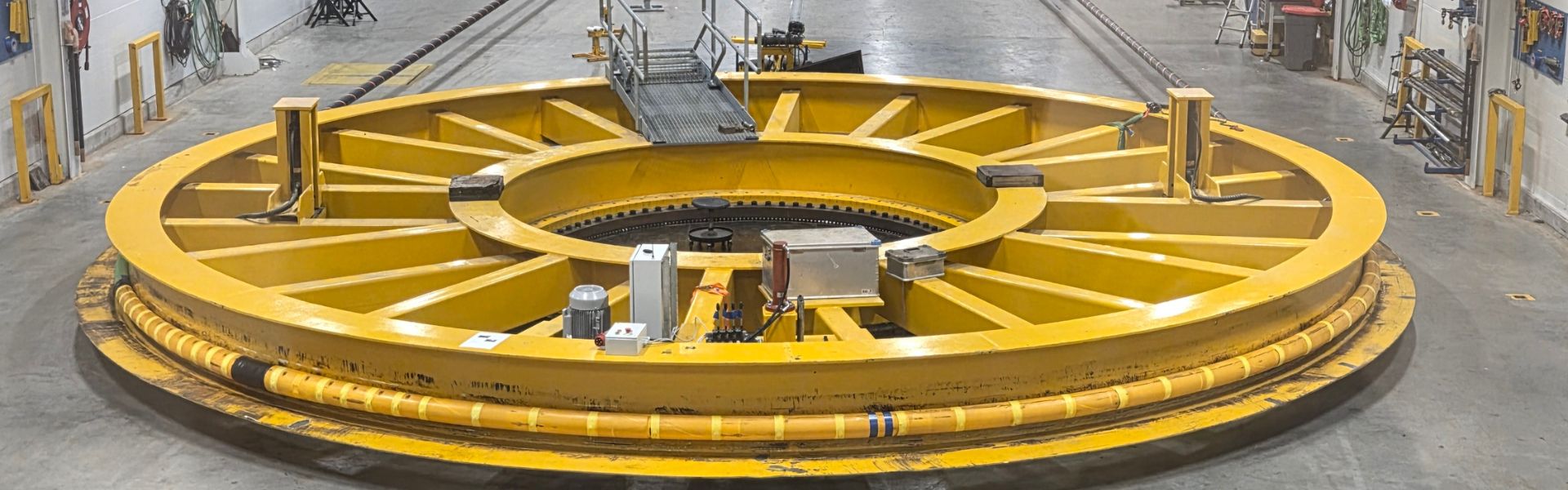
Nexans reports that a March sea trial involved deploying and recovering a single-core aluminum cable with a conductor cross-section of 1,300 square millimeters. Subsequent electrical inspection and testing were successful, according to the manufacturer. The August qualification included factory and repair joints, with mechanical testing reaching 842 kilonewtons of tension. Suspended cable weight, bending and hydrostatic pressure constrain deepwater installation. Qualification of the cable design does not demonstrate completed installation of the commercial link. Similar distinctions between component testing and network deployment apply to submarine transmission projects in New York.
Connecting an isolated electricity system
Cyprus currently lacks an electrical interconnection with the continental European network. A bidirectional link could support imports during generation shortages and exports during periods of renewable surplus. However, energy exchange depends on market arrangements, converter availability and transmission constraints. Cyprus University of Technology researchers also investigated adaptive photovoltaic inverter control in a November 2026 conference paper, demonstrating simulated improvements in local voltage management. Local distribution controls and cross-border transmission address distinct grid problems, as illustrated by the Danish offshore wind grid-restoration test.
The November 6 Reuters report notes that licensing progressed amid continuing regional maritime disputes. Financing, route confirmation, cable installation and converter commissioning remain essential milestones. The proposed link differs from the completed battery installation covered in our Cuba grid-storage report: an interconnector transfers power between systems but does not itself generate or store electricity.
Featured photograph: marine operations image accompanying the Great Sea Interconnector’s November 10 announcement, cropped for publication; the precise vessel and date depicted are not independently established.


Leave a Reply