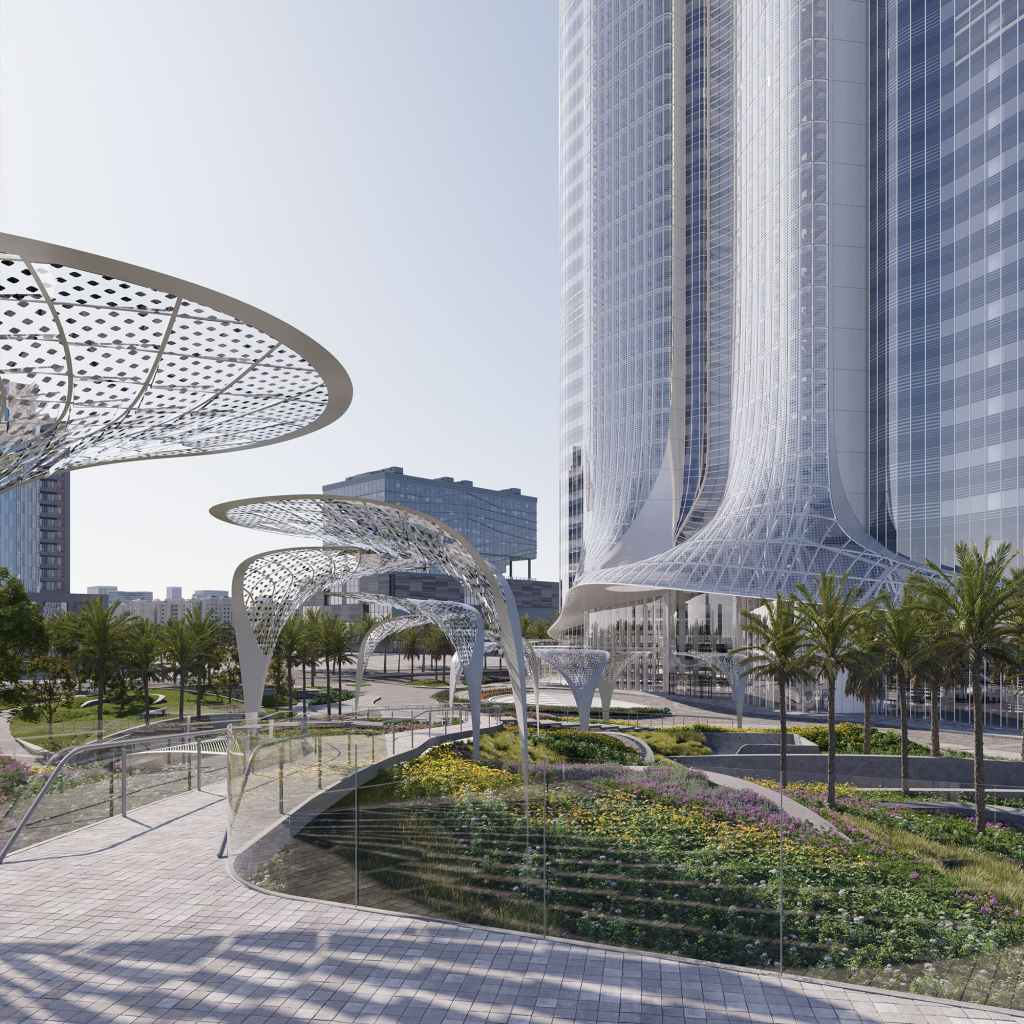
Egypt’s New Administrative Capital is set to incorporate a major computing facility within the proposed Forbes International Tower. Developer Magnom Properties and American technology company Aedan Looking Glass formalized an agreement on November 10, 2026, during the B20 business forum in Washington. The joint announcement identifies Pinnacle Data Center as a $750 million development. Data Center Dynamics subsequently reported an initial target of 100 MW and a planned 2027 construction start. The project follows a wider regional shift toward concentrated AI infrastructure, including the 100 MW Akashi campus proposed in Kazakhstan.

Combining a commercial tower with critical computing infrastructure
Trinidy AI is designated as the operator, while Aedan Looking Glass will lead technology and infrastructure delivery. Turnkey Capital participates as a strategic partner. Egypt’s Ministry of Planning confirmed the agreement in November. Unlike a conventional single-purpose data center campus, a mixed-use development must coordinate computing operations with occupied commercial spaces. Structural loading, equipment replacement routes, fire compartments, electrical risers, acoustic isolation and access controls all require careful separation. The published plans do not specify which floors will house the computing equipment or the final electrical topology.
The engineering scale of a 100 MW target
At a continuous electrical draw of 100 MW, a facility would consume 2,400 MWh each day and 876 GWh annually. Those are illustrative full-load calculations, not measured Pinnacle consumption. If the 100 MW rating instead denotes IT capacity, a hypothetical power usage effectiveness of 1.20 would require 120 MW of total facility power. Neither the precise rating boundary nor an operating PUE has been disclosed. The distinction between IT load and site supply also matters for the ECL Santa Clara project.
Nearly all electrical energy consumed by servers becomes heat. A hypothetical 100 MW IT load would therefore require approximately 100 MW of IT heat removal, excluding other facility loads. Cooling distribution units, heat exchangers, pumps and external heat rejection equipment must sustain performance during hot weather and maintenance events. The announced project includes modular infrastructure and intelligent power and cooling controls, but the partners have not publicly identified its final cooling equipment. Phase-change cooling research and deployments demonstrate one alternative approach to managing increasing server heat density.
Energy ambitions versus verified operation
Magnom’s architectural plan describes integrated photovoltaics and hydrogen-based power for the tower. The additional data center load requires a separately validated energy balance, including generation capacity, fuel availability, storage, backup power and cooling demand. Egypt is also expanding its renewable electricity infrastructure, including the Nefer Minya solar and storage project. There is no disclosed direct supply agreement linking that development to Pinnacle.
The next milestones are detailed engineering, financing execution, construction and integrated commissioning. The 100 MW target and $750 million project value describe proposed development rather than installed computing capacity. Verified electrical drawings, measured energy performance and customer deployment will establish whether the building can support its ambitious digital infrastructure plans.


Leave a Reply