
Finland’s Tax Administration confirmed on November 24, 2026 that its electronic filing service will accept the first annual cryptocurrency information returns beginning January 1, 2027. The developer bulletin accompanied an Ilmoitin.fi interface update, separating documentation from authenticated submission pages. The change affects businesses reporting Bitcoin and other covered digital-asset transactions, creating an additional data pipeline beyond the public blockchain. The first returns concern activity during 2026. The reporting obligation is distinct from the authorization rules examined in our Estonia coverage.
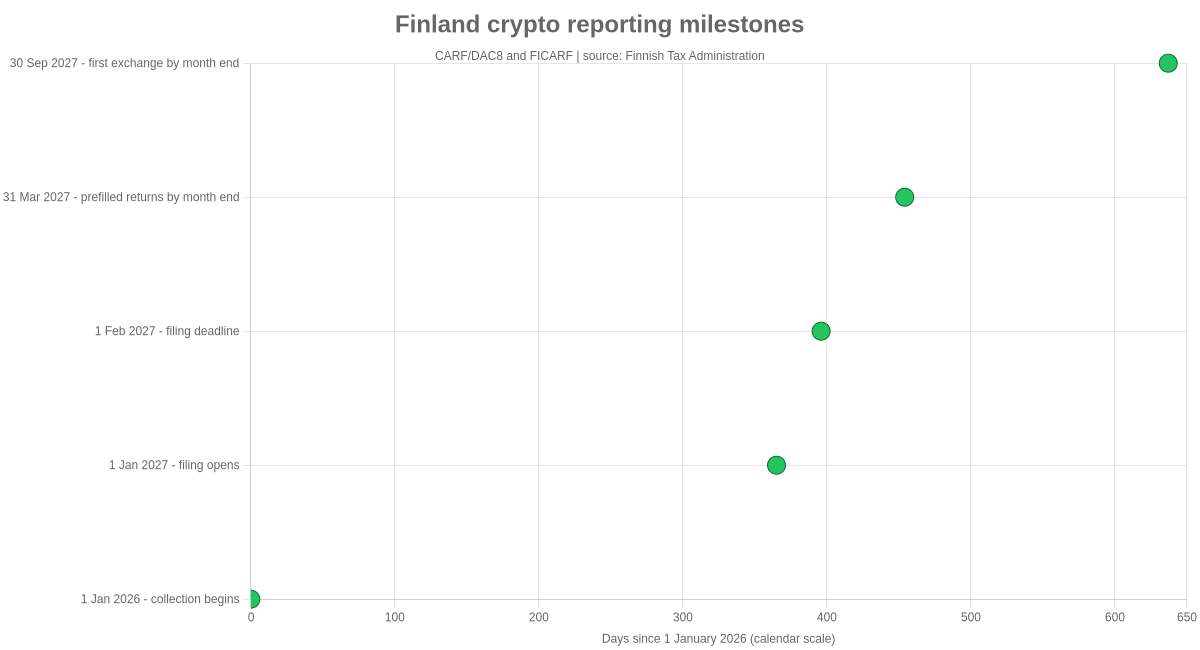
Two reporting streams, different purposes
The international CARF/DAC8 return groups yearly transaction totals by cryptoasset and transaction type. Finland additionally requires a domestic return called FICARF, intended to provide information needed to calculate income and gains or losses for resident individuals and estates. Reporting operators have been collecting customer identity and transaction information since January 2026. The statutory January 31 deadline falls on a Sunday in 2027, so the first returns are due by February 1, according to the filing instructions.
Raportoitavien tietojen kerääminen aloitettava 1.1.2026
Lasse Forsgren, Finnish Tax Administration, CARF/DAC8 ja CRS/DAC2, November 19, 2025, slide 3, original Finnish briefing.
Translated: collection of reportable information must begin on January 1, 2026. The briefing describes the collection period, not the opening date of the submission portal. The later developer notice confirms the filing start date.
How XML connects providers and tax authorities
The OECD’s July 2025 CARF XML Schema guide specifies a structured message with sender and receiver information, reporting entities, reportable users and transaction categories. XML schema validation tests whether required fields and data types conform to the agreed format. Successful validation alone does not establish the accuracy of amounts or customer identities. On page 7, the OECD states: “Validation” elements MUST be present for ALL data records in a file. The accompanying June 2025 status-message guide distinguishes file errors that can prevent processing from record-level quality issues. Those OECD documents are linked at the original publisher because direct upload was blocked.
For example, a provider needs to distinguish an exchange from a transfer and preserve the amount, asset identity and valuation context. A blockchain transaction records movements under network consensus rules, but does not generally identify the legal tax residence or acquisition price of the owner. A provider must derive relevant reporting information from its customer and accounting records. That boundary is related to our analysis of regulated payment infrastructure in Equatorial Guinea. Engineers can consult the Finnish government’s technical specifications directory and authorized test-environment documentation.

What Finnish Bitcoin users should expect
Vero expects eligible domestic-provider data to appear on prefilled returns by the end of March 2027. The agency also says foreign-provider data will arrive later; taxpayers must still check and correct their returns and declare required income. The initial international exchange is scheduled for September 2027. More than 70 jurisdictions have committed to the OECD framework, according to Vero’s October guidance. Participation does not imply that every jurisdiction has already activated an exchange relationship. As with Fiji’s fintech policy and Egypt’s cryptocurrency regulation, the legal scope must be distinguished from the underlying technology. Finland’s next milestone is the actual submission of validated records, not a change to Bitcoin consensus.
Featured photograph: Óðinn, Government Palace, Helsinki, May 2013, cropped, CC BY-SA 2.5 Canada. Original PDF and developer resources are linked. Public-page visual and responsive testing remain unverified.
We volunteer daily to ensure the credibility of the information on our platform is Verifiably True. If you would like to support our independent research, please scan the QR code below.



Leave a Reply