Wärtsilä announced a 43 MW gas-engine power plant contract with EPV Energy on November 12, 2026. The equipment supplier will oversee engineering, procurement and construction at the existing Mertaniemi power plant site in Lappeenranta, Finland. Full operation is targeted for the first half of 2029. The contract illustrates an approach to dispatchable generation that differs from the renewable energy storage system examined in our Gambia solar and battery analysis. Neither the contract nor the scheduled completion date establishes current electricity production.
Four engines provide modular generating capacity
The project specifies four Wärtsilä 34SG reciprocating gas engines. Each converts chemical energy into shaft rotation, which drives an electrical generator. Parallel generating sets allow an operator to select how many machines are required rather than always operating the entire plant. At the announced aggregate rating, the arithmetic mean is 10.75 MW per engine; individual net output and auxiliary consumption depend on operating conditions and equipment specifications. The vendor has not published a measured ramp rate for the future installation.
Wärtsilä’s December 2021 balancing-power explanation provides technical context, not footage of the proposed Mertaniemi facility. Watch at source.
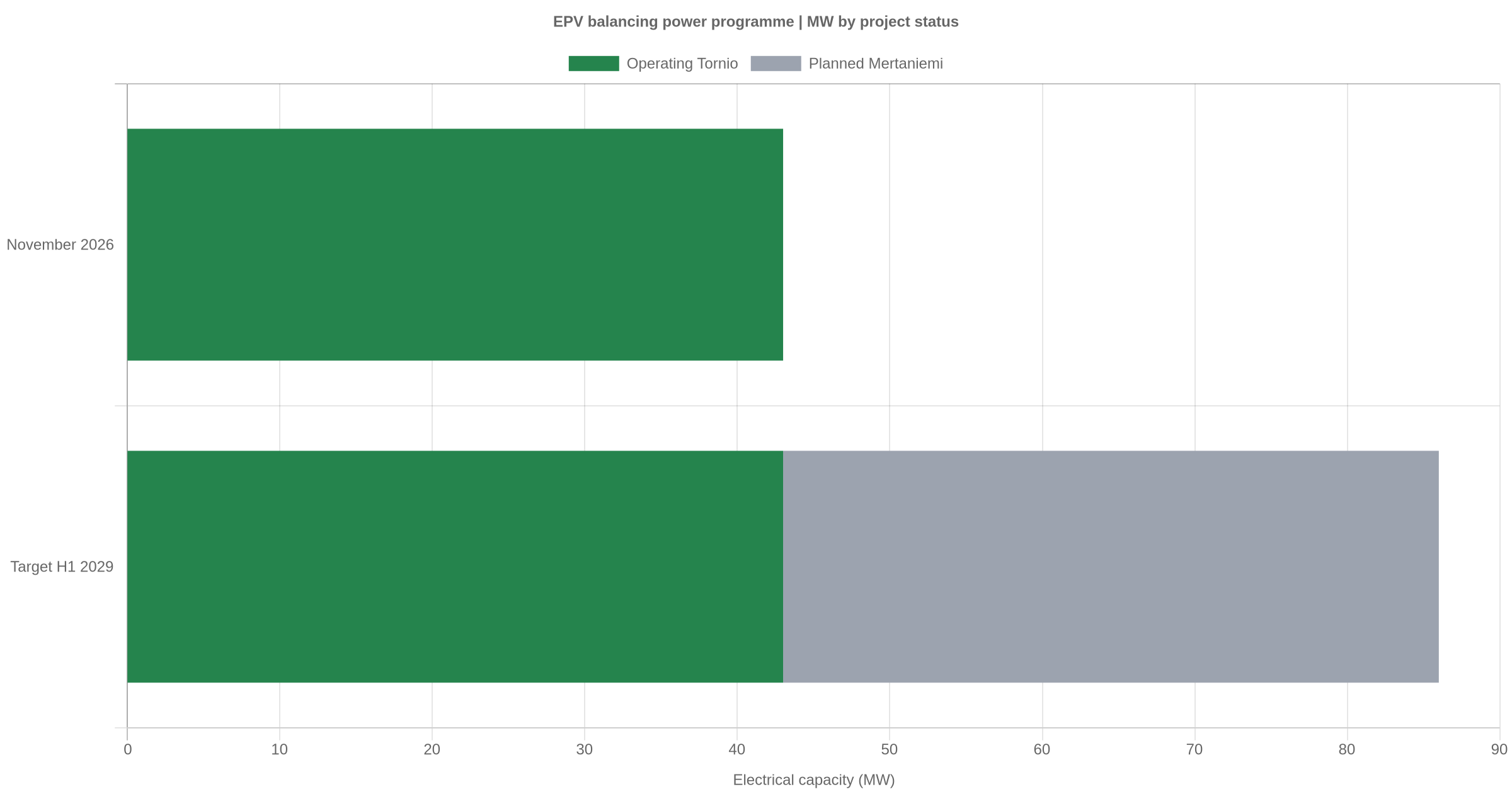
EPV’s Tornio plant began commercial operation on April 1, 2026, with the same announced aggregate capacity of 43 MW. Mertaniemi would bring the two-project programme to 86 MW if the new plant enters service at the planned rating and Tornio remains available. The comparison concerns electrical capacity, not annual generation or a guaranteed simultaneous dispatch level.
Matching electricity supply to changing demand
Balancing generation responds to shortfalls between available supply and demand. A gas engine can increase production when wind output declines, but fuel availability, generator ramp limits and transmission capacity constrain the response. Batteries can address rapid variations without combustion but have finite stored energy. Hydroelectric facilities can also provide dispatchable output where water availability and operating rules permit, as discussed in our Peusangan hydropower report.
Wärtsilä’s 2023 case study uses Australian market data to illustrate engine dispatch. It does not establish Finnish plant performance. Watch at source.
The supplier plans an initial natural gas configuration, with potential later use of biogas and synthetic gases depending on availability. The six-year service agreement includes maintenance planning, operational assistance and predictive diagnostics. Unlike the enhanced geothermal development in our Nevada well-services coverage, the proposed plant initially relies on combustion and produces carbon dioxide. Its annual emissions will depend on fuel consumption, dispatch and upstream methane leakage.
Implications for industrial computing
Flexible grid generation can help support electricity-intensive industries, but the announcement does not identify an AI data center or Bitcoin mining customer. A facility such as the Frankfurt data center power connection also requires adequate transmission and local distribution infrastructure. Mertaniemi’s future contribution should be evaluated through commissioning records, dispatch performance, operating availability and verified emissions. POWER’s November 12 report independently corroborates the contract.
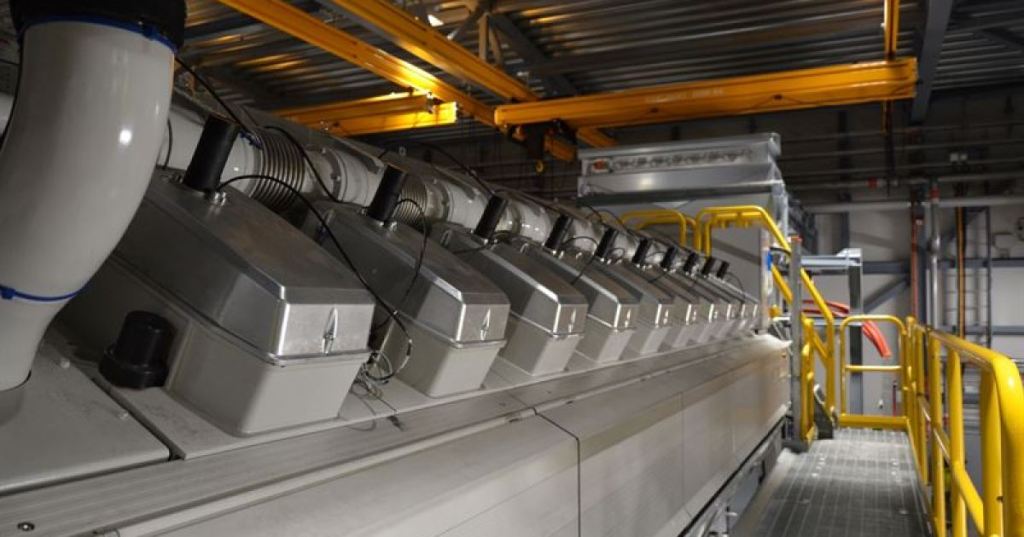
Featured photograph: EPV Energy, via Wärtsilä’s November 12 announcement. The image depicts the operating Tornio facility, not the future Mertaniemi plant.
BitcoinVersus.Tech Editor’s Note: We volunteer daily to ensure the credibility of the information on our platform is Verifiably True. If you would like to support our independent research, please scan the QR code below.

BitcoinVersus.tech is not a financial advisor. The platform reports on financial subjects purely for informational purposes.


Leave a Reply