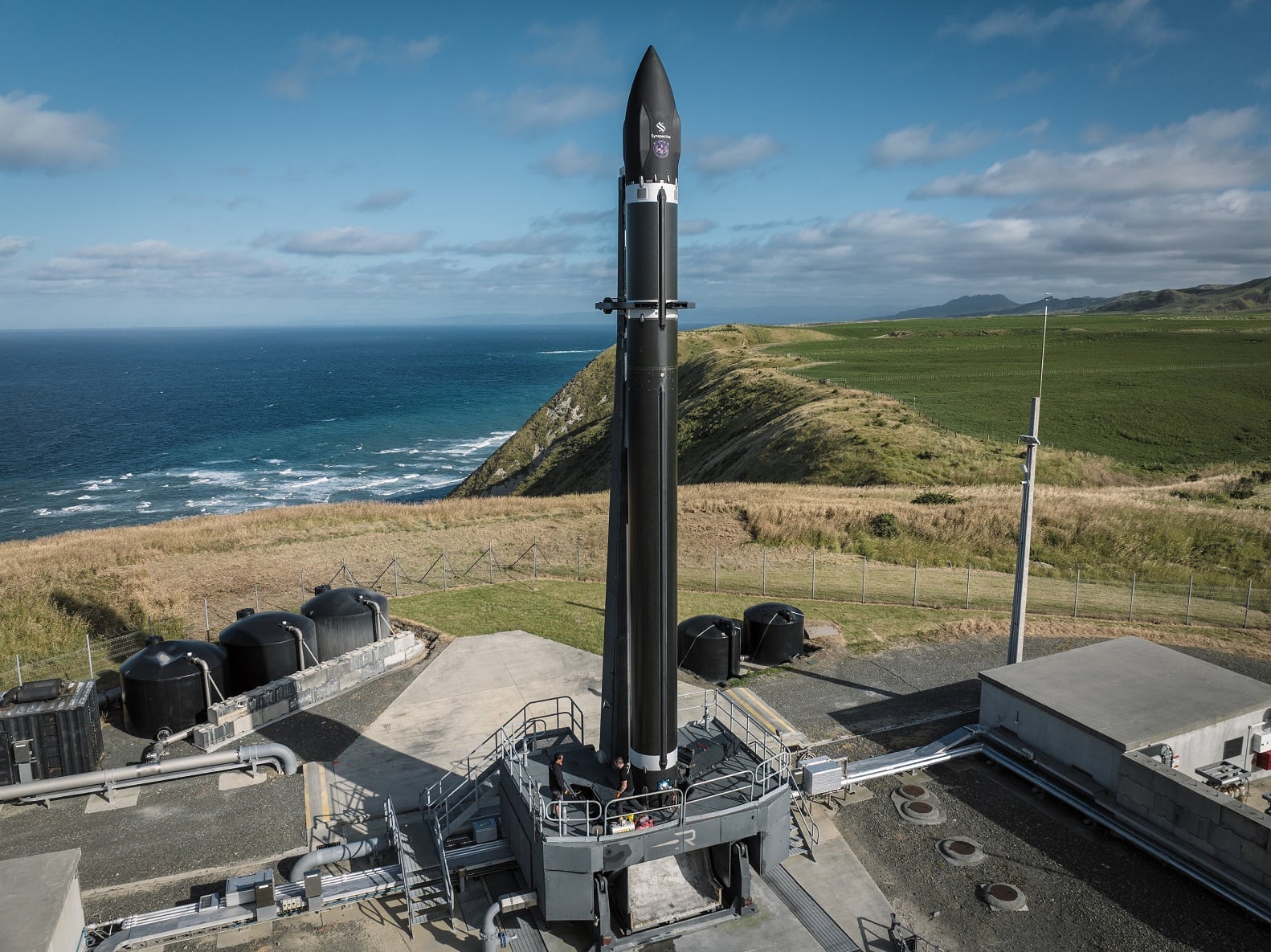
Rocket Lab successfully delivered the Japanese Earth-observation company Synspective’s 14th StriX synthetic aperture radar (SAR) satellite into low Earth orbit on November 27, 2026 UTC. The launch provider’s announcement identifies the flight as Electron’s 101st mission and Rocket Lab’s 22nd launch of 2026, a new annual record. Synspective independently confirmed deployment and planned commissioning before commercial observation begins. The mission placed the payload at approximately 569 km altitude.
Why radar satellites can observe through clouds
Unlike optical cameras, synthetic aperture radar actively transmits microwave signals and measures the echoes returning from Earth’s surface. Processing the phase and amplitude of successive observations along the satellite’s trajectory synthesizes a larger effective antenna aperture than the physical antenna alone. The resulting imagery depends on wavelength, viewing geometry, surface roughness and material properties. Radar can collect useful observations at night and through many cloud conditions, although precipitation and atmospheric effects may affect measurements.
SAR complements optical and thermal imaging systems such as the Sentinel-3C thermal mapping mission. Combining multiple observation modalities can help distinguish changes in temperature, physical structure and surface moisture. Radar interferometry can also support displacement monitoring by comparing phase information across suitable acquisitions. Such analysis requires accurate orbital knowledge, stable reference conditions and careful treatment of atmospheric interference.
A constellation built through dedicated launches
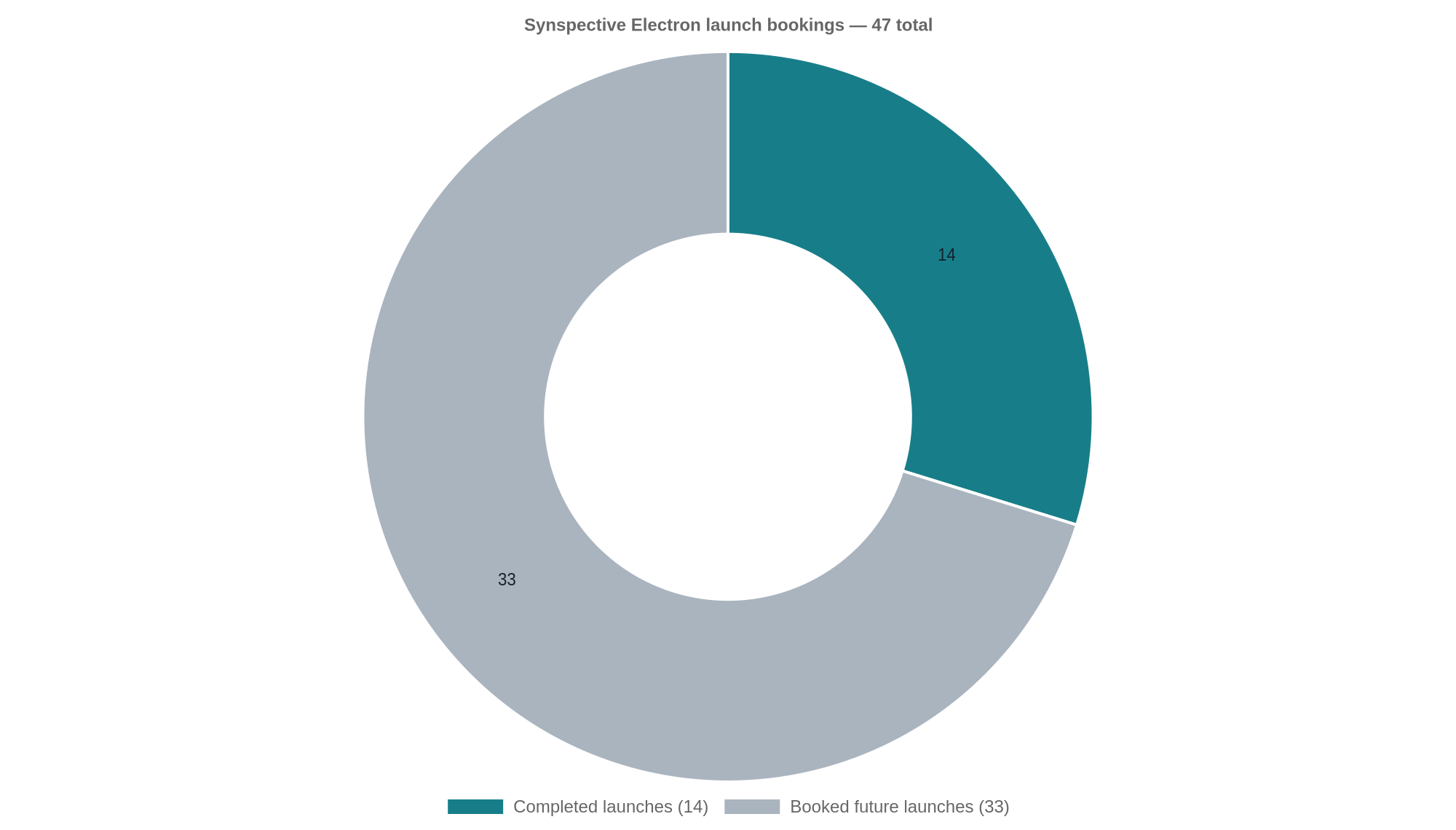
Rocket Lab reports 47 total Synspective mission bookings, of which 14 have been completed and 33 remain on the manifest through 2031. Consequently, approximately 29.8% of the contracted launch count has been completed. The remaining 70.2% represents scheduled future business rather than deployed or operational satellites. The operator says the newest spacecraft still requires testing over the coming months.
Constellation operators seek frequent observations by coordinating multiple spacecraft. The interval between useful passes depends on orbital geometry, geographic coverage, pointing capability and scheduling. Additional satellites do not automatically guarantee uniform revisit times. Our coverage of Hydrosat’s four-satellite calibration program illustrates the work needed to produce consistent measurements across a fleet.
The infrastructure behind commercial Earth observation
Stable spacecraft pointing, orbital knowledge and data downlinks are essential to converting radar echoes into usable products. The reaction-wheel engineering guide explains spacecraft orientation, while our reporting on ESA’s Genesis geodesy project examines the importance of precise reference frames.
Synspective’s latest launch strengthens its planned imaging infrastructure. The next technical milestones are commissioning, validated image acquisition and commercial service. Rocket Lab’s launch record demonstrates manufacturing and operational cadence, but it does not establish future mission success or the performance of the entire constellation.
Featured image: official Rocket Lab launch broadcast thumbnail, cropped for editorial presentation.
We volunteer daily to ensure the credibility of the information on our platform is Verifiably True. If you would like to support to help further secure the integrity of our research initiative, please scan the QR code below.



Leave a Reply