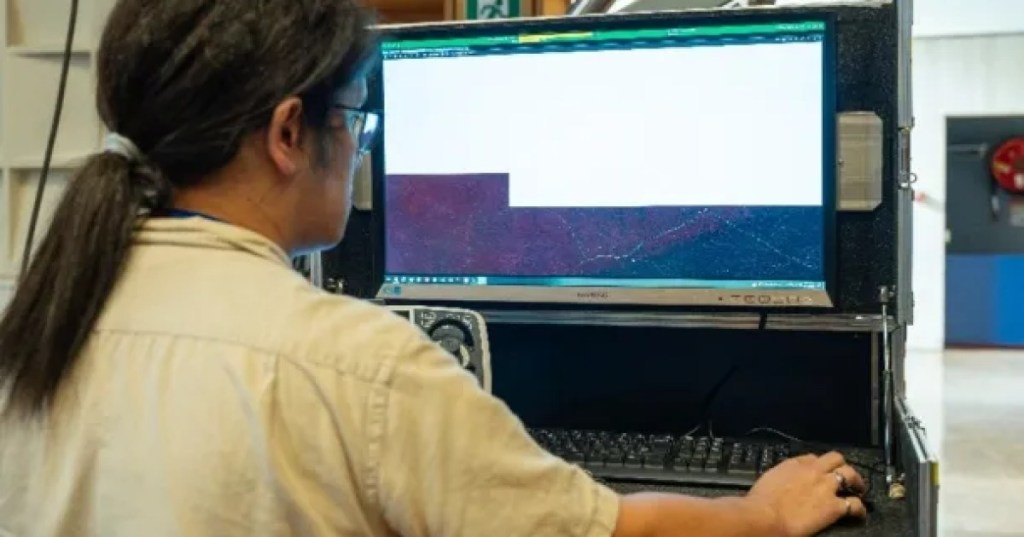
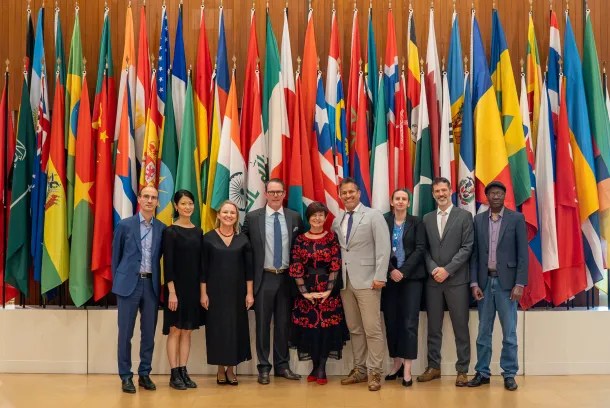
UNESCO and Arius Technology have begun digitizing selected artworks and historical documents at the organization’s Paris headquarters. The November 18, 2026 UNESCO announcement, updated November 24, confirms an agreement signed October 2 and an initial digitization campaign launched that month. The collaboration extends preservation beyond flat photographs by recording fine surface geometry. It complements the archival work described in our coverage of Radio Mogadishu’s historical audio collection.
Recording the physical surface
A conventional photograph records light reaching a camera sensor. It can document color and composition, but illumination alone does not provide a calibrated measurement of surface height. A three-dimensional optical scanner instead captures geometric information alongside color. For a painting, a digital surface representation can help conservators examine raised pigment, cracks and canvas texture. Repeat measurements under controlled conditions may reveal changes that warrant closer investigation.
Arius says its specialized scanning system targets surface features that ordinary imaging may miss. The technique differs from the X-ray computed tomography examined in our Manchester digital heritage laboratory coverage. Optical surface measurements cannot establish an artifact’s hidden internal structure without additional evidence. Calibration, material reflectivity, alignment and measurement uncertainty remain important constraints.
Open formats and long-term access
UNESCO plans to receive high-resolution files in software-independent formats, including Stanford Polygon (PLY). A PLY file can describe three-dimensional vertices, faces and associated attributes, such as color. Storing geometry in an openly documented format reduces dependence on a particular vendor’s viewing application. Preservation also requires recording capture settings, calibration information, provenance and access rights.
Digital records can support educational interpretation of the physical objects, including the materials and manufacturing practices discussed in our ancient Egyptian glassmaking lesson. Redundant storage, integrity checks, periodic restoration tests and migration planning are needed to keep the records usable. A digital copy is not a substitute for conservation of the original.
A wider record of cultural heritage
The initial collection includes historical guest books, the original register of the 1954 Hague Convention on cultural-property protection, selected artworks, posters and early UNESCO Courier issues. Arius provides its digitization services pro bono, with support from technology partners including ABB Robotics, AWA Piql and Kamanga.io. The partnership also provides a possible route toward digitizing additional heritage sites. Our examination of the Pantheon’s engineering illustrates why recording geometry can complement historical research.
UNESCO has not published comparative scanner accuracy measurements or a completed public inventory in its November announcement. Long-term success should therefore be evaluated through documented capture quality, accessible archival records and repeatable conservation measurements, rather than the mere creation of digital files.
We volunteer daily to ensure the credibility of the information on this platform is Verifiably True. If you would like to support to help further secure the integrity of our research initiative, please scan the QR code below.

For mobile scanning, open the article on another display and scan the QR code with a Bitcoin wallet. The voluntary donation amount is 5,000 sats. Verify the receiving address 3C9o19EH5HSiwEPyCTmEKzxhNCbo2X6TTb before sending.
BitcoinVersus.tech is not a financial advisor. This media platform reports on financial subjects purely for informational purposes.


Leave a Reply