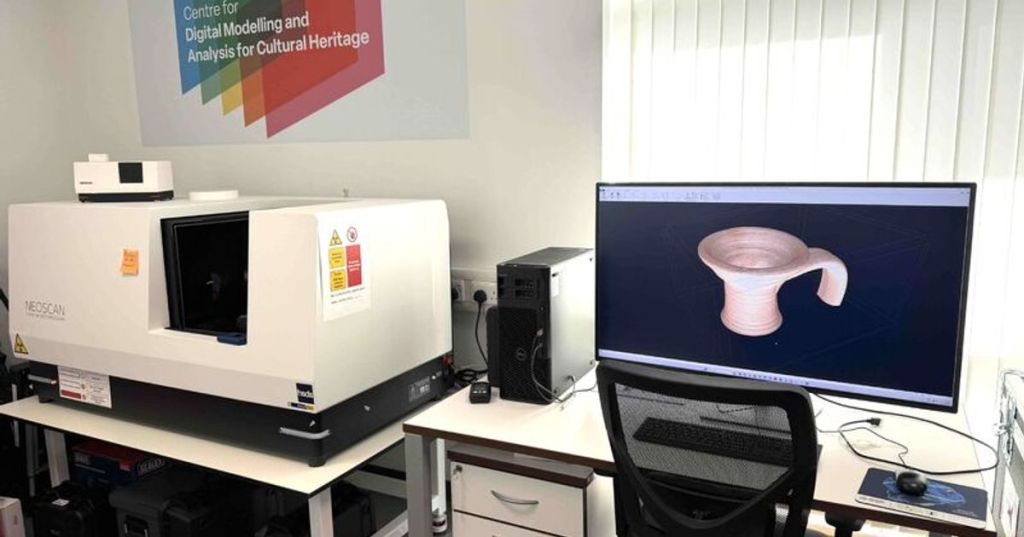
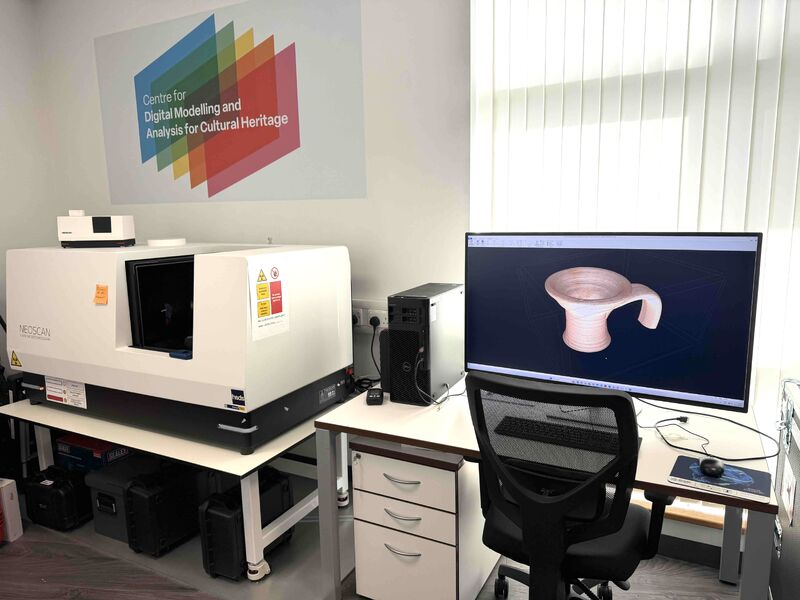
Manchester Metropolitan University’s new digital heritage lab is open to museums and researchers, according to a November 2, 2026, announcement from the UK-funded RICHeS programme. Called D-MACH, the Centre for Digital Modelling and Analysis for Cultural Heritage operates inside the university’s PrintCity facility in Manchester, England. Its equipment can image fragile artifacts, reconstruct their hidden structures and create replicas for exhibitions.
The centre celebrated its launch on October 14, bringing together museum specialists, conservators and heritage organisations. Nearly £1 million of support from the Arts and Humanities Research Council, through RICHeS, helped establish its specialist equipment and services, according to Museums + Heritage. This is infrastructure funding, not a measured cost per scan.
How the scanner sees inside an artifact
One key instrument is a Neoscan NXL micro-computed tomography scanner. It takes multiple X-ray projections from around an object and uses differences in X-ray absorption to reconstruct internal features in three dimensions. Researchers can examine clay pores, cracks or hidden components without cutting apart a historical specimen. The university says its machine uses a 160-kilovolt, 75-watt X-ray source; those figures describe different electrical properties, not competing performance scores.
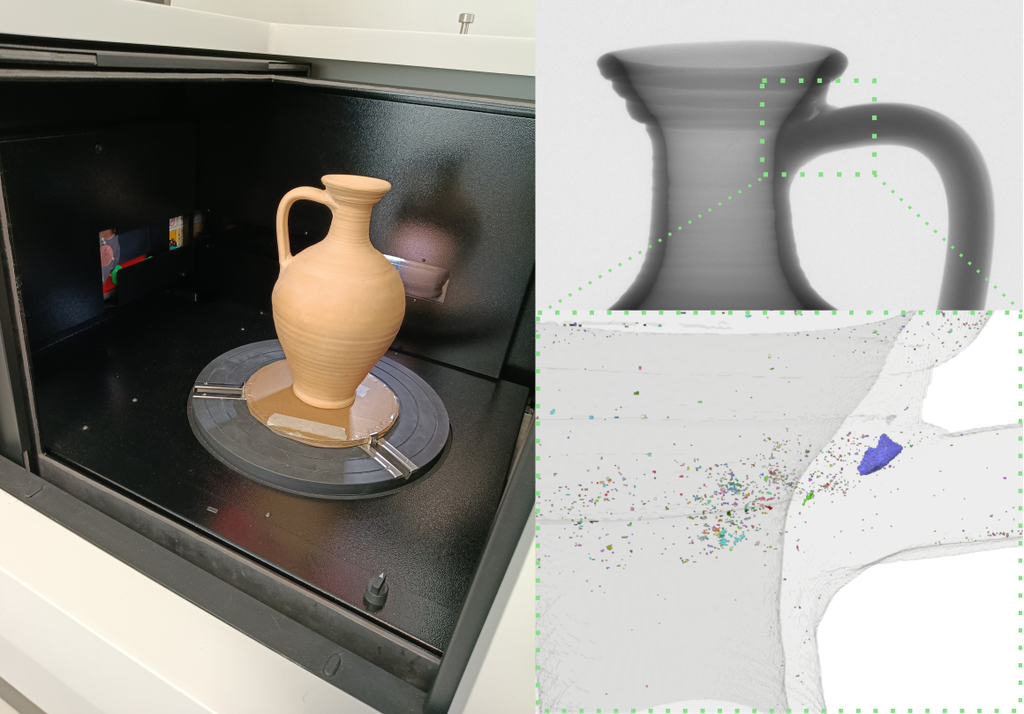
A ceramic-vessel demonstration shows the value of this technique: an X-ray image exposes an air bubble within a handle, while a digital volume reveals tiny voids inside the clay. Such findings can help conservators distinguish manufacturing features from potential damage. Our coverage of early pottery technologies provides historical context for studying ceramics.
Printed replicas bring objects closer
D-MACH is also changing how museum visitors encounter objects. Researchers scanned artifacts from Greater Manchester’s Portland Basin Museum and produced three-dimensional printed replicas that people can hold. The team is testing raised Braille on some prints, supporting tactile exploration for blind and partially sighted visitors.
That adds a physical-access layer to the digitisation discussed in our reports on AI-assisted museum archives, preserving Radio Mogadishu recordings and digital art collections. Different media demand different conservation tools; scanning does not replace original objects, provenance records or expert interpretation.
The programme says the centre now welcomes proposals from organisations of different sizes. The next useful evidence will be documented projects showing how scans inform conservation decisions, how faithfully the replicas reproduce source objects, and whether visitors can use the tactile displays effectively.
BitcoinVersus.Tech
BitcoinVersus.Tech Editor’s Note: We volunteer daily to ensure the credibility of the information on this platform is Verifiably True. If you would like to support our work and help further secure the integrity of our research initiatives, please scan the QR code below to donate 5,000 sats. For best results, scan the QR code from a laptop or larger screen.

Bitcoin address: 3C9o19EH5HSiwEPyCTmEKzxhNCbo2X6TTb. On a phone, open the QR image on another screen or copy and verify the address in your wallet before sending.
BitcoinVersus.tech is not a financial advisor. This media platform reports on financial subjects purely for informational purposes.


Leave a Reply