
Vietnam’s Ministry of Finance is preparing prospective Bitcoin trading platforms for an extensive reporting regime. Circular 165/2026/TT-BTC, signed October 31, takes effect December 18, 2026. The State Securities Commission published a November 19 introduction to the rules. Unlike Bitcoin’s network-level consensus, the new obligations govern commercial intermediaries that maintain customer balances, process orders and safeguard assets. The approach builds on the five-year market pilot established under Resolution 05/2025/NQ-CP and complements the custody-focused policy examined in our Zambia report.

Reporting deadlines become software requirements
Article 13 of the circular sets a daily 15:00 deadline for reporting the preceding trading session. Article 14 requires weekly custody reporting on Mondays and advance notification of certain changes affecting client asset segregation or hot and cold wallet allocation. Article 17 requires notification within 24 hours of detecting an information-technology incident that affects customer trading. Article 4 specifies retention of submitted and disclosed records for at least ten years, and publicly disclosed material must remain accessible on the provider website for at least five years.
An exchange architecture can satisfy such requirements through an append-only order-event journal, deterministic reconciliation, time-stamped incident monitoring and versioned reports. A matching engine processes buy and sell orders, while an accounting ledger updates balances. The blockchain provides a separate record of deposits and withdrawals. A database failure can prevent customers from placing orders even while Bitcoin continues producing blocks. Reporting duties consequently extend beyond blockchain security to application availability, storage integrity and operational recovery. Our earlier coverage of Zimbabwe’s incident-reporting rules illustrates a comparable regulatory concern.

Proof of reserves and order-book transparency
The circular defines proof of reserves as a comparison of controlled on-chain balances with obligations to customers at a specified moment. For example, an exchange controlling 120 BTC against customer liabilities of 100 BTC has an illustrative gross coverage ratio of 120%. That figure alone cannot establish solvency: encumbered assets, undisclosed liabilities and control over signing keys remain relevant. Bitcoin wallets manage cryptographic credentials, while exchange account records establish customer entitlements. As discussed in our Bitcoin Core wallet privacy article, public blockchain data does not automatically reveal reliable legal identities.
Article 10 also calls for displaying at least three bid and ask price levels during trading. A Bitcoin order book can therefore expose aggregate market depth without publishing every customer’s identity. For compliance, an exchange needs a consistent sequence of order events so cancellations, fills and remaining quantities can be reconstructed. Article 4 distinguishes public disclosure from separate tax-related reporting of customer identities and transactions.
A rulebook ahead of licensed operations
The November 5 report by The-Delta describes a delayed launch and no operating licences issued as of early November. November industry reporting identifies five preliminary applicants, but preliminary review does not authorize live trading. The pilot framework requires at least VND 10 trillion in charter capital. Vietnam News previously reported that Bitcoin and other widely traded assets were expected to be traded in Vietnamese dong. Actual Bitcoin listings, liquidity and operating performance remain unverified. The regulatory infrastructure represents a different engineering problem from the noncustodial merchant software covered in our BTCPay Server article.
Further viewing: VTV24’s explainer on the pilot market (2025) and a September 2026 discussion of licensing and stock-market-style rules. Both predate Circular 165. Original video links are provided because in-article playback was not independently tested.
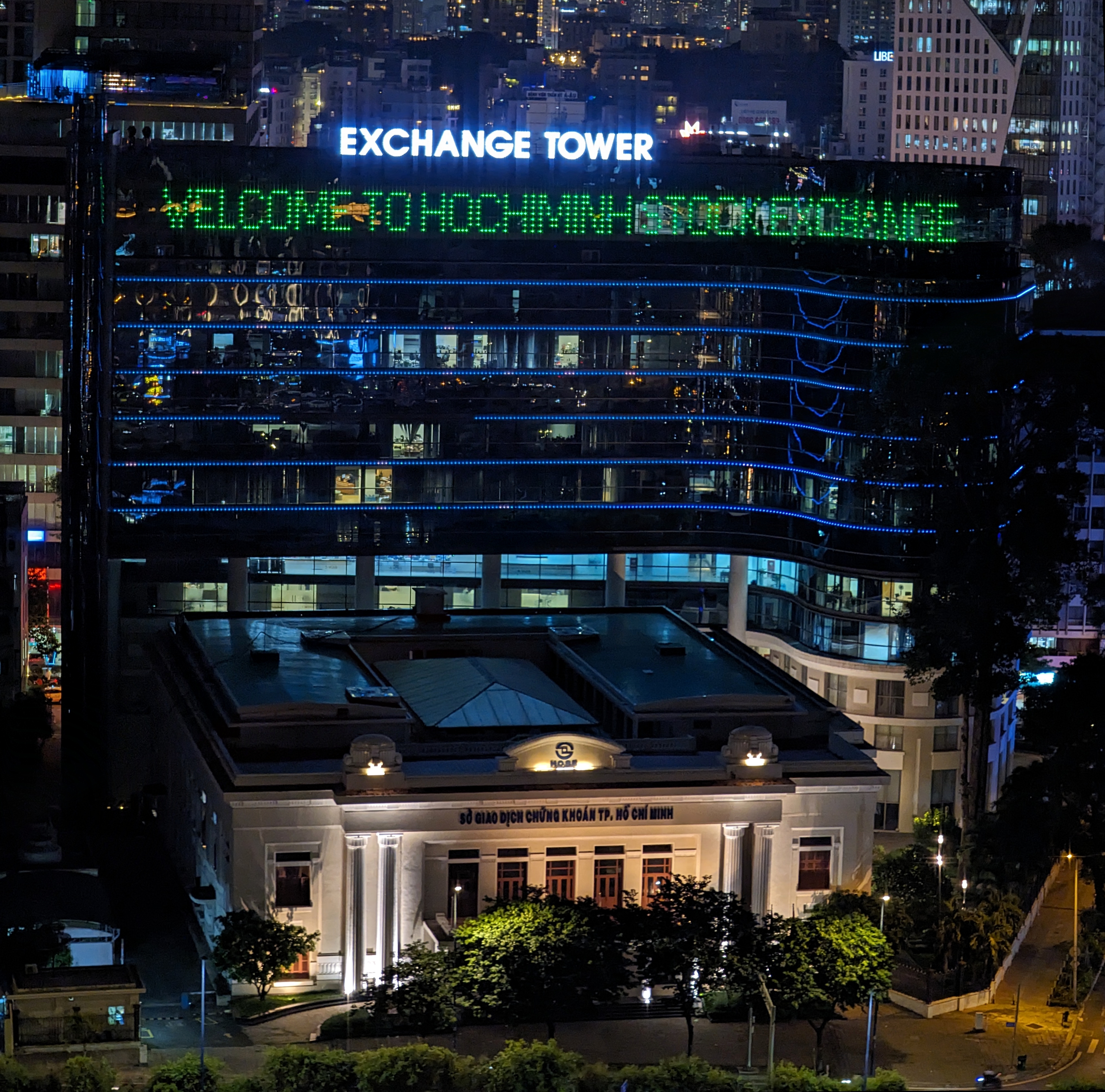
Featured photograph: Hanoi Stock Exchange, May 2015, Michael Coghlan, CC BY-SA 2.0. Historical context.
We volunteer daily to ensure the credibility of the information on our platform is Verifiably True. If you would like to support our independent research, please scan the QR code below.



Leave a Reply