Tech Docs
-

A p-type semiconductor is formed by doping a pure semiconductor, such as silicon, with trivalent elements like boron, gallium, or indium. These dopants have only three valence electrons, one fewer than silicon, which creates a vacancy or “hole” in the crystal lattice. Holes act as positive charge carriers because electrons from neighboring atoms can move…
-

The valence band is the highest range of electron energies in a solid where electrons are normally present at absolute zero temperature. These electrons are bound to atoms and participate in chemical bonding, such as covalent or metallic bonds. In crystalline solids, the valence band is formed by the overlap of atomic orbitals, creating a…
-

An n-type semiconductor is created by doping a pure semiconductor, such as silicon, with pentavalent elements like phosphorus, arsenic, or antimony. These dopants have five valence electrons, one more than silicon, and the extra electron becomes loosely bound and available for conduction. As a result, electrons become the majority charge carriers in n-type materials, while…
-

Semiconductors are materials whose electrical conductivity lies between that of conductors and insulators, and they are unique because their properties can be controlled and modified. Semiconductors are chemically diverse materials whose electrical conductivity lies between that of conductors and insulators, and their behavior can be precisely engineered. The most common elemental semiconductors are silicon (Si),…
-

Conductors are materials that permit the easy flow of electric current due to the presence of free or loosely bound electrons in their atomic structure. In metals such as copper, silver, and aluminum, the outermost electrons are not tightly attached to their atoms, allowing them to move freely when a voltage is applied. This mobility…
-

Resistivity is a fundamental property of materials that describes how strongly they oppose the flow of electric current. Unlike resistance, which depends on the dimensions of a conductor, resistivity is an intrinsic characteristic that remains constant for a given material under specific conditions. It is mathematically expressed as, where is the resistance, is the cross-sectional…
-

Photon absorption and emission are fundamental processes in semiconductor physics that enable the operation of optoelectronic devices like solar cells, LEDs, and lasers. Absorption occurs when a photon strikes the semiconductor and excites an electron from the valence band to the conduction band, leaving behind a positively charged hole. This transition creates an electron–hole pair,…
-

Mobility measures how quickly charge carriers move through a semiconductor when an electric field is applied. Electron mobility (μe): the speed of electrons per unit electric field. Hole mobility (μh): the speed of holes per unit electric field. High mobility means faster current flow and better device performance. Mobility depends on factors such as temperature,…
-

Photoelectric measurement in industrial robotics is a high-precision sensing technique that relies on the detection of light to determine the position, movement, or presence of objects within an automated system. It typically involves a light source, optics, a scanning grid, and a photoelectric sensor that responds to changes in illumination caused by transitions between light…
-

In robotics engineering, gearboxes play a crucial role by regulating torque, speed, and mechanical stability within a robot’s motion system. Engineers rely on gearboxes to ensure that robotic arms and actuators deliver precise, controlled movements under varying loads and operating conditions. Common gear types used in robotics include planetary gears, harmonic drives, and spur gears,…
-

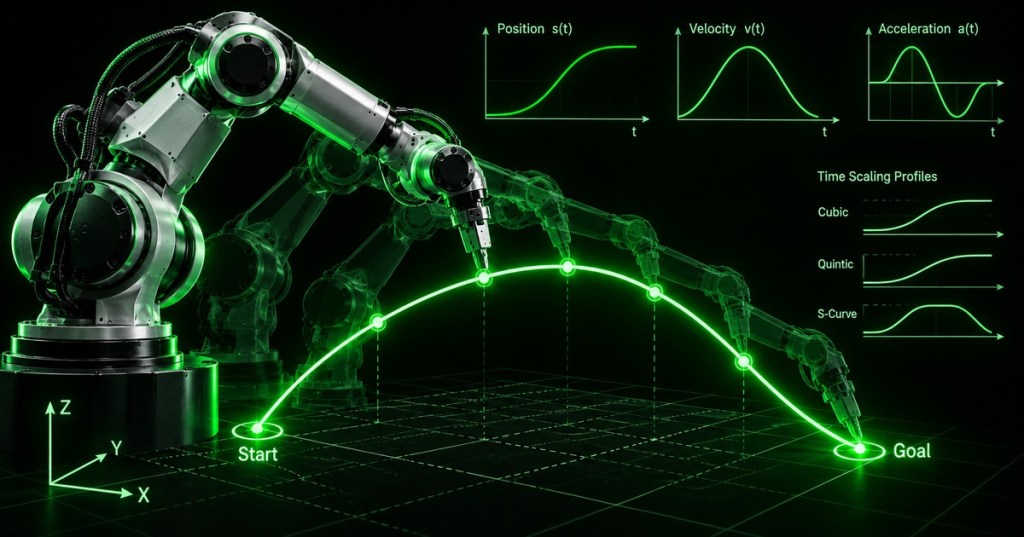
Robot kinematics refers to the mathematical and geometric study of how robots move. It focuses on the relationships between joint angles, link lengths, and the position and orientation of the robot’s end effector (such as a gripper or tool). In industrial robots, kinematics helps engineers determine how to move a robotic arm from one point…
-

Drive systems are the mechanisms that power a robot’s joints and enable movement. They act like the robot’s muscles, converting energy into motion. The three main types are electric, hydraulic, and pneumatic drive systems. Electric drives, using motors like servos or steppers, are common due to their precision and control. Hydraulic systems offer high force…