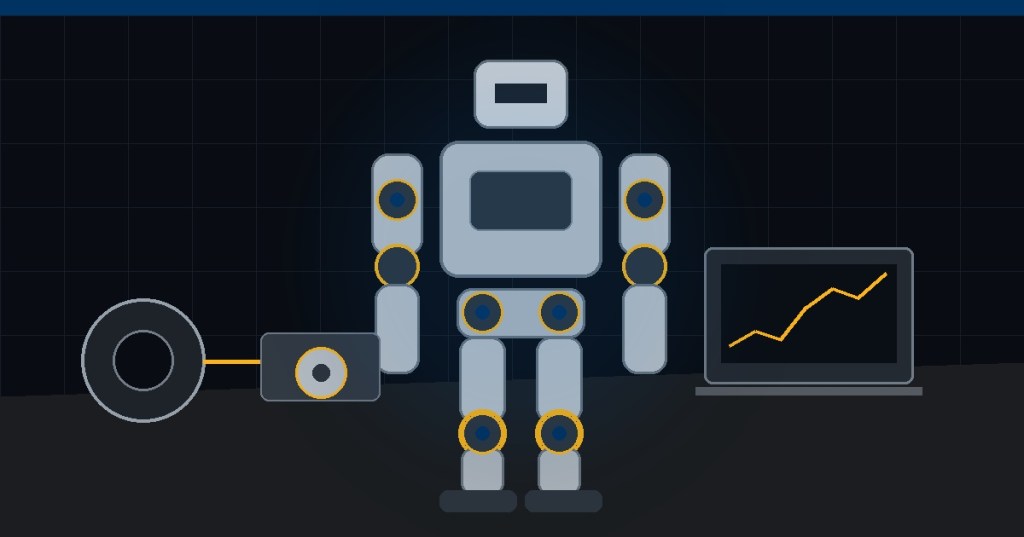
A humanoid robot platform developed at the University of California, Berkeley is drawing renewed attention because it attacks one of the biggest barriers in robotics research: cost. Berkeley Humanoid Lite was introduced in 2025, but an August 30 revisit and a fresh wave of social sharing on September 30 have pushed the project back into the spotlight.
Berkeley’s project documentation describes Humanoid Lite as a fully open-source humanoid built around modular 3D-printed gearboxes, widely available components and standard desktop 3D printers. The team says total hardware cost can remain below $5,000 at U.S. market prices. Hardware design, embedded code, reinforcement-learning training and deployment frameworks are all openly available.
A Humanoid Robot Built for the Workbench
The design matters because a serious humanoid research platform can easily become too expensive for an individual builder, classroom or small lab. Humanoid Lite shifts more of the mechanical bill into printable parts. Its actuators use cycloidal gearboxes designed to spread mechanical loads more effectively than conventional printed gearing, helping plastic components survive locomotion and manipulation testing.
That lower barrier is what made Simplifying AI’s September 30 post resonate. The post highlighted the combination of printed gearboxes, hobby-accessible parts, CAD, firmware and a reinforcement-learning stack, effectively contrasting a research platform that can live on a workbench with far more expensive commercial humanoids.
Humanoid Lite arrives as robotics software and hardware are becoming more modular across the industry. BitcoinVersus.Tech recently covered Google Intrinsic opening core industrial robotics software, a separate move that also lowers the cost of experimentation by exposing more of the development stack.
Open Hardware Meets Reinforcement Learning
The robot is not only a mechanical kit. Berkeley’s researchers demonstrated reinforcement-learning locomotion with zero-shot transfer from simulation to hardware, along with teleoperated manipulation. That makes the platform useful for people who want to study the full pipeline from printed mechanism to controller training to physical deployment.
The same trend is appearing higher in the robotics software stack. NVIDIA Isaac ROS 5.0 is expanding AI-agent tooling for robot development, while the Berkeley project takes a complementary approach by making a complete physical humanoid platform inexpensive enough for more developers to own and modify.
Open hardware also changes repair economics. A damaged printed component can often be fabricated again rather than ordered as a proprietary replacement. That does not remove the limitations of plastic parts, but it gives builders a much shorter path between failure, redesign and another test. The approach fits a broader shift toward increasingly accessible physical AI, including Universal Robots’ Gen 7 platform.
The Open-Source Advantage
The most important part of Humanoid Lite may be reproducibility. Builders can inspect the mechanical design, study the control software, modify the robot and train their own policies without waiting for a commercial humanoid vendor to expose a closed development environment. The result is closer to a robotics development platform than a finished consumer product.
For students, hobbyists and small research teams, the difference is practical. A humanoid that costs less than many professional workstations can move from something watched in a demonstration to something disassembled on a bench. Berkeley Humanoid Lite does not make humanoid robotics cheap in absolute terms, but it materially lowers the price of learning how a complete humanoid system works.
BitcoinVersus.Tech
Advertisement
Editor’s Note:
We volunteer daily to ensure the credibility of the information on this platform is Verifiably True. If you would like to support our research initiatives, please donate here: 3C9o19EH5HSiwEPyCTmEKzxhNCbo2X6TTb
BitcoinVersus.tech is not a financial advisor. This media platform reports on financial subjects purely for informational purposes.


Leave a Reply