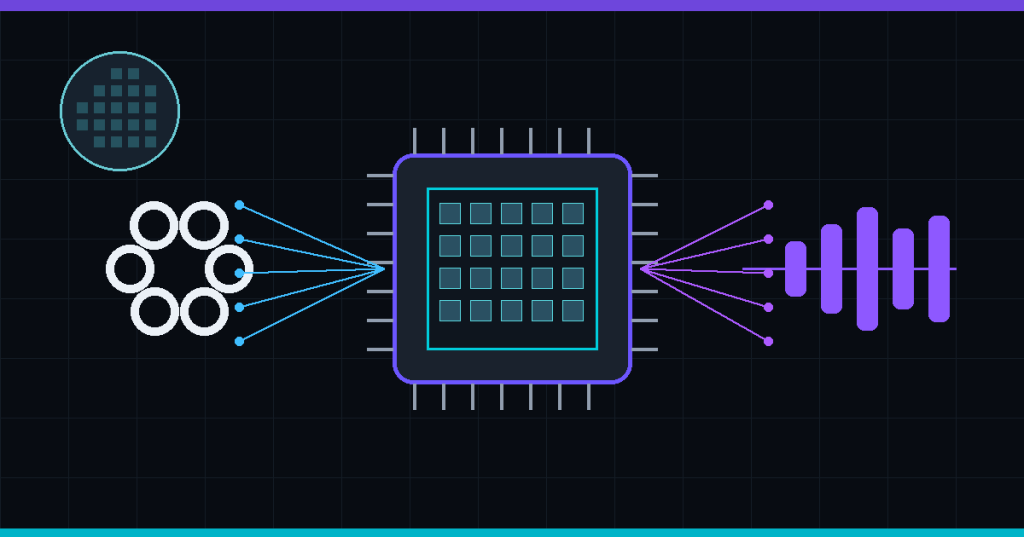
OpenAI and Synopsys are taking agentic AI directly into one of the most technical parts of the computing stack: semiconductor design. The companies announced GPT-Synopsys, a specialized frontier model built to use electronic design automation tools, interpret their outputs and iterate on chip designs under engineer supervision.
In its announcement, Synopsys said the multi-year partnership will combine OpenAI frontier models with Synopsys EDA technology and domain expertise. The goal is not merely to answer questions about chip design, but to let the model operate design tools directly, evaluate results and keep iterating toward power, performance, area, timing and verification targets.
Synopsys framed the move publicly in a September 30 X post, describing GPT-Synopsys as a specialized frontier model for AI-native chip design.
From AI Assistant to Tool-Using Chip Designer
The important shift is from generative assistance to tool execution. Today, engineers can already use AI to summarize logs, write scripts or propose fixes. GPT-Synopsys is being designed to go further by running Synopsys tools, reading the resulting timing, verification and implementation data, making changes and repeating the loop before handing the result back for engineer review.
That direction builds on work BitcoinVersus.Tech covered when Synopsys and TSMC brought agentic AI into A14 chip design. The new OpenAI partnership pushes the idea another step by training a specialized model around the actual EDA workflow rather than treating the design software as an external utility.
Independent reporting adds an important commercial detail: OpenAI will pay Synopsys a training subscription fee, and the two companies expect to share revenue once the model is in use. Reuters also reported that GPT-Synopsys outputs will continue to go through traditional sign-off verification, preserving the deterministic checks needed before a design can become physical silicon.
The Model Still Has to Pass Engineering Reality
That sign-off requirement matters. A language model can propose an optimization, but semiconductor manufacturing cannot rely on a plausible-looking answer. Timing closure, electrical constraints, physical rules and verification still have to resolve to exact, machine-checkable results. GPT-Synopsys is therefore being positioned less like an autonomous replacement for engineers and more like a high-speed design operator that works inside established engineering guardrails.
The industry is already moving toward this pattern elsewhere. BitcoinVersus.Tech recently covered how MIPS and Xcelsa are using AI to optimize custom RISC-V silicon, showing how specialized models and agent workflows are beginning to reach deeper into architecture and implementation decisions.
The second-order effect could be speed. Engineers routinely explore tradeoffs across power, performance and area while also dealing with increasingly complex packaging, memory and interconnect choices. A model that can operate tools continuously could test far more alternatives than a human team can manually queue, especially when the search space becomes too large for traditional hand-tuned iteration.
AI Is Moving Deeper Into the Semiconductor Stack
The timing also fits a broader industry transition. More advanced chips increasingly depend on co-optimization across logic, memory, packaging and system architecture. BitcoinVersus.Tech recently examined how Applied Materials and KIOXIA are bringing AI-memory research into the EPIC Center, another sign that AI hardware development is becoming a tightly coupled systems problem rather than a single-chip problem.
Synopsys says early technology engagements are already underway with leading semiconductor customers. GPT-Synopsys is planned to run on OpenAI-hosted infrastructure, integrate with Synopsys.ai and Synopsys Autopilot, and protect customer-specific design data with enterprise controls. The companies say customer data will not be used to train the model.
If the approach works, the competitive advantage may come less from asking AI what a chip should look like and more from letting AI spend thousands of machine-hours proving which version actually closes. That is a very different use of generative AI: fewer clever paragraphs, more timing reports.
BitcoinVersus.Tech
Advertisement
Editor’s Note:
We volunteer daily to ensure the credibility of the information on this platform is Verifiably True. If you would like to support our research initiatives, please donate here: 3C9o19EH5HSiwEPyCTmEKzxhNCbo2X6TTb
BitcoinVersus.tech is not a financial advisor. This media platform reports on financial subjects purely for informational purposes.


Leave a Reply