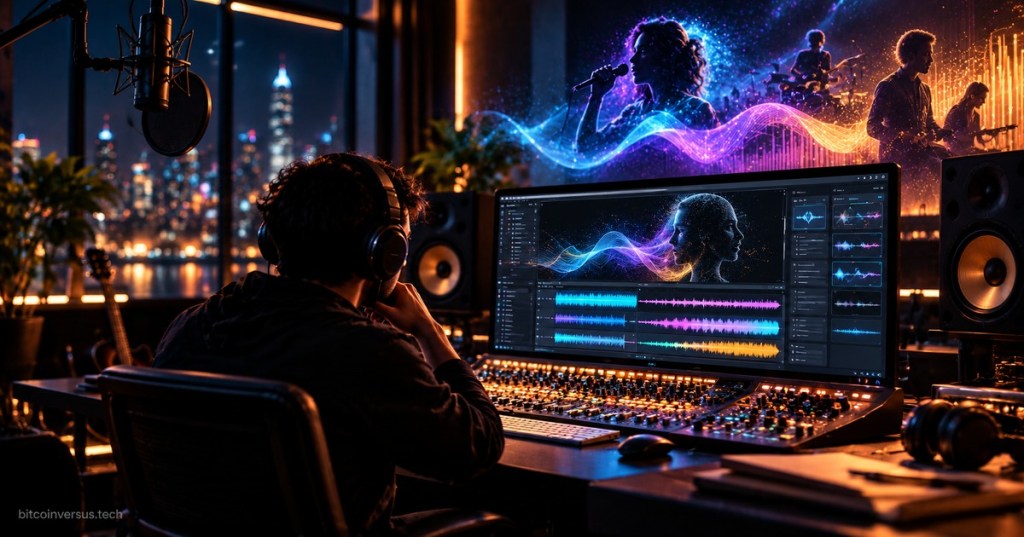
Universal Music Group and ElevenLabs are building a licensed AI music platform that will let fans remix, mash up and reinterpret songs from participating artists instead of treating commercial recordings as an unlicensed raw material for generative AI.
The September agreement is important because it shifts one of the music industry’s biggest AI arguments from whether the technology should exist to what a permissioned version of it should look like. The answer UMG and ElevenLabs are testing is a separate fan-creation platform built around licensed music, artist participation and revenue sharing.
The major-label AI experiment starts with remixes
In its September 10 announcement, Universal Music Group said ElevenLabs will launch a new AI-powered platform where fans can create remixes, mashups, new track interpretations and personalized vocal experiences using music from participating artists and songwriters.
The companies also plan to develop additional AI-audio products for artists and songwriters. The agreement is ElevenLabs’ first with a major music company, and both sides say the system is intended to respect human artistry while allowing participating rights holders to share in the value created.
ElevenLabs summarized the deal in a specific X status, describing the new platform as the first product in development under its partnership with UMG.
This is not the same product as ElevenMusic
Music Business Worldwide reported that the UMG fan platform is being developed as a distinct product rather than simply opening the existing ElevenMusic generator to Universal’s catalog. That separation is central to the strategy: licensed catalog experimentation gets its own rules, rights structure and participating repertoire.
The distinction matters because AI music is already creating cultural questions that go beyond model quality. BitcoinVersus.Tech recently covered Kelly Clarkson’s argument that AI artists should compete on a separate music chart. Her position comes from a different part of the debate, but the underlying issue is similar: once machines can generate convincing cultural products, the boundaries between human work, machine-assisted work and synthetic work become important to audiences.
The music industry is trying to turn conflict into licensed participation
For years, the internet’s relationship with commercial music has repeatedly moved through the same cycle: a new technology makes copying, remixing or distribution easier, rights holders fight the uncontrolled version, and eventually some of the behavior is rebuilt inside licensed services.
BitcoinVersus.Tech’s recent LimeWire story is a reminder of how hostile that relationship once became. File-sharing platforms treated access and duplication as the breakthrough; record companies treated them as mass infringement. The new AI agreements are trying to avoid replaying that entire history by negotiating rights before the fan tool scales.
AI is moving from studio assistant to fan instrument
The cultural shift may be larger than the technology itself. Traditional music software was mainly built for musicians, producers and engineers. A licensed generative platform can treat the fan as a participant who changes the work rather than only streams it.
That creates a continuum between listening, remixing and performance. BitcoinVersus.Tech has already looked at digital concerts built around hyper-realistic music avatars, where the performance layer itself becomes programmable. Licensed AI remixing pushes the same idea into recorded music: the audience gets tools to manipulate the experience while rights holders decide which material is available and under what terms.
Licensing changes the question from “can AI make this?” to “who agreed?”
That may become the most meaningful difference between the next generation of music-AI products. The technical ability to synthesize vocals, instrumentation and arrangements is spreading quickly. What remains scarce is permission: access to recognizable songs, artist identities and commercial catalogs under terms the rights holders have actually accepted.
The UMG–ElevenLabs platform is therefore less interesting as another AI generator than as a test of whether licensed fan creativity can become its own product category. If participating artists see useful revenue and fans see enough freedom to make genuinely new interpretations, the model could offer the music business a third path between banning AI use and surrendering control of the catalog.
It also puts responsibility on the platform to make participation visible. Fans should be able to tell which artists opted in, what uses are permitted, what is synthetic, and how closely an output is tied to an existing recording. A licensed system is only meaningfully different from an unlicensed one if those boundaries remain clear after the product becomes easy to use.
BitcoinVersus.Tech
Advertisement
Editor’s Note
We volunteer daily to ensure the credibility of the information on this platform is Verifiably True. If you would like to support to help further secure the integrity of our research initiatives, please donate here: 3C9o19EH5HSiwEPyCTmEKzxhNCbo2X6TTb
BitcoinVersus.tech is not a financial advisor. This media platform reports on financial subjects purely for informational purposes.


Leave a Reply