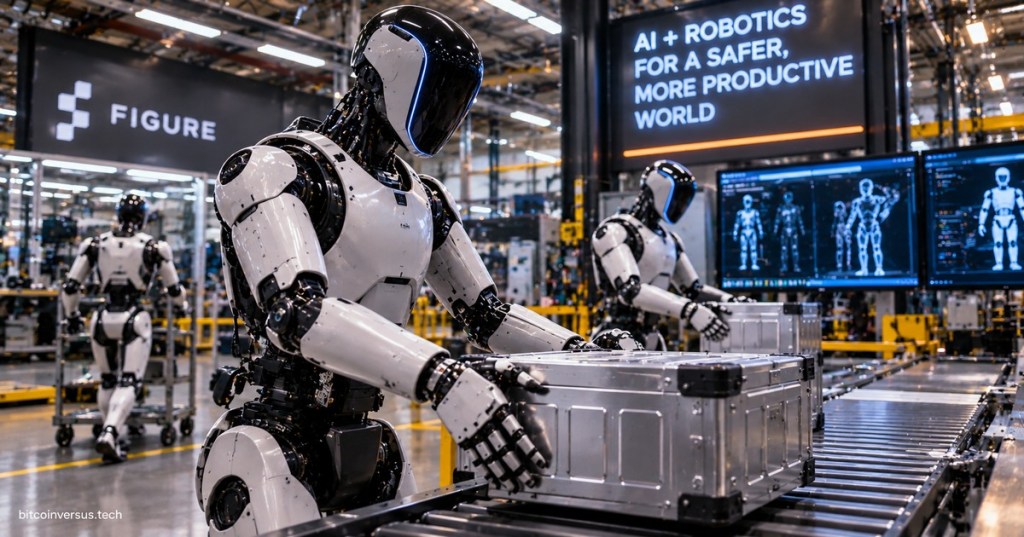
Figure AI says its Helix 2.5 humanoid control system can carry learned household skills into homes it has never seen before, without collecting new data or retraining on each location.
The September 17 test matters because generalization is one of the hardest problems in physical AI. A robot can look impressive after engineers tune it for one factory cell, one kitchen or one carefully mapped route. The harder test is whether the same policy still works when the bed is a different height, the furniture moves, the towels look different and the objects are scattered in unfamiliar ways.
Thirty homes with no site-specific training
In its Helix 2.5 technical announcement, Figure says it rented 30 Bay Area homes and sent its humanoid robots into them without collecting additional training data from those locations. The company framed the experiment around a simple question: can a neural policy trained elsewhere walk into an unfamiliar physical environment and immediately perform useful work?
The test included everyday chores such as tidying rooms, folding towels and making beds. Those jobs sound simple until a robot has to deal with different floor plans, object positions, fabrics, furniture geometry and visual clutter without a technician rebuilding the policy for every address.
Figure announced the experiment in a specific X status, saying the robots arrived at 30 homes with no additional training and began doing useful work.
The result is progress, not solved home robotics
TechRepublic’s independent review puts the result in useful perspective: Figure reported a 56% task-success rate across the unseen-home evaluation. That is a meaningful demonstration of transfer, but it also means the robot still failed a large share of attempts.
That gap is important. A household robot is not useful merely because it can sometimes fold a towel or clear a room. It eventually has to behave predictably around fragile objects, pets, children, stairs, narrow spaces and all the other messy edge cases that do not exist in a benchmark video.
The value of the Helix 2.5 experiment is therefore not that Figure has “solved” the home. It is that the company is measuring how much behavior survives when the robot leaves the environment where the training data was collected.
Figure is trying to move from memorization to transferable behavior
Earlier humanoid systems were often trained around a fixed deployment site. Figure says Helix 02 could execute long-horizon whole-body tasks, including logistics work, but those systems still depended heavily on data gathered where they would operate.
Helix 2.5 changes the target. The goal is to build a broader prior about objects, motion and human environments so that a new room looks like another instance of a problem the model already understands rather than an entirely new robotics project.
That shift connects directly with BitcoinVersus.Tech’s coverage of NASA’s ASTRA robotic science fleet, where machines also have to make useful decisions under changing field conditions rather than follow one rigid script.
Humanoid robotics now has two scaling problems
The industry is attacking two different bottlenecks at once. One is intelligence: can the robot generalize to new places and tasks? The other is manufacturing: can companies build enough reliable machines for the software to matter?
BitcoinVersus.Tech recently covered how UBTECH is building a factory designed around a 10-minute humanoid production cadence. Figure’s Helix work attacks the opposite end of the stack. Manufacturing scale is less useful if every robot still needs expensive site-specific programming after delivery.
Figure’s own hardware lifecycle is moving quickly as well. The company recently gave retired F.02 machines a dramatic final test, which BitcoinVersus.Tech covered in Figure Trains Retired Humanoid Robots to Jump Into Molten Steel. Helix 2.5 is the more consequential side of that same development cycle: extracting software capability that can survive across successive robots and environments.
The real benchmark is boring reliability
Humanoid robotics demos tend to reward spectacular moments—running, dancing, lifting heavy objects or executing a long autonomous sequence. Home deployment creates a much less glamorous standard. A useful robot needs to succeed repeatedly at mundane jobs even when the room, object and lighting conditions change.
That is why the 56% figure may be more informative than a flawless highlight reel. It exposes both sides of the technology at once: Helix 2.5 appears capable of transferring real behavior into environments it has never seen, yet it remains far from the reliability people will expect from an appliance working inside their homes.
If that success rate keeps climbing without requiring new training for every building, humanoid deployment could start looking less like systems integration and more like installing general-purpose computing hardware into the physical world. Helix 2.5 is not there yet, but 30 unseen homes is a much harder test than one perfectly rehearsed room.
BitcoinVersus.Tech
Advertisement
Editor’s Note
We volunteer daily to ensure the credibility of the information on this platform is Verifiably True. If you would like to support to help further secure the integrity of our research initiatives, please donate here: 3C9o19EH5HSiwEPyCTmEKzxhNCbo2X6TTb
BitcoinVersus.tech is not a financial advisor. This media platform reports on financial subjects purely for informational purposes.


Leave a Reply