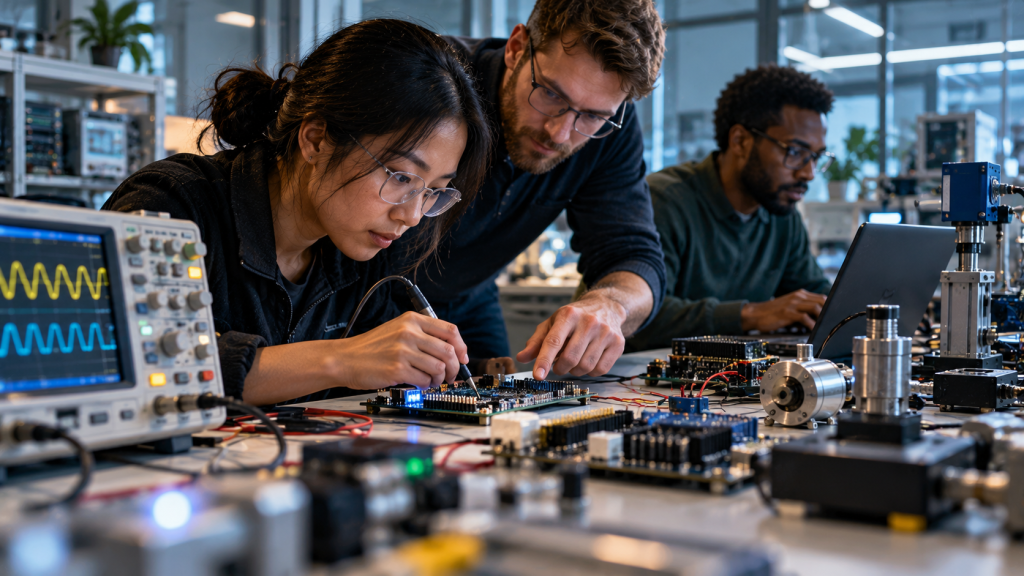
Two of the world’s biggest chipmakers are increasing their investment in an open-source operating system built for small computers. Texas Instruments and Infineon have upgraded to Platinum membership in the Zephyr Project, strengthening a shared software foundation for sensors, industrial controllers, connected devices, and automotive electronics.
The Zephyr Project announcement, issued October 1 ahead of its October 7–9 developer summit in Prague, describes the commitment as support for hardware compatibility, security, testing, and long-term embedded development.
What Is Zephyr?
Zephyr is a real-time operating system, or RTOS. Unlike a full desktop operating system, it is designed for constrained devices that need to read sensors, respond to interrupts, control hardware, and meet timing requirements with limited memory and processing power. It is maintained as an open-source project under the Linux Foundation.
That makes it especially relevant to the firmware work behind everyday technology: factory automation, connected medical and industrial equipment, smart-home devices, wireless modules, and vehicles. Developers working through BitcoinVersus.Tech’s hardware and firmware compatibility guide will recognize the challenge: a software stack must understand the board, peripherals, drivers, and boot process beneath it.
Why the Chipmakers Are Investing
Texas Instruments says Zephyr now supports its broad microcontroller, microprocessor, and wireless connectivity portfolio. The goal is to let developers reuse familiar open-source tools when changing hardware rather than rebuilding an application around a new proprietary software environment.
Infineon says its higher membership level will support secure updates, device lifecycle management, safety-related work, and long-term software maintenance. Its supported families include PSoC and TRAVEO, with work extending toward AURIX microcontrollers.
The business advantage is not that every chip becomes interchangeable. Electrical interfaces, performance, peripheral capabilities, and board configurations still differ. The advantage is a more consistent application and tooling layer, which can reduce repeated engineering work.
Security and Reliability Matter
An embedded device may stay deployed for years without anyone seeing its operating system. That makes signed firmware updates, recovery paths, vulnerability response, and testing especially important. These are the same practical concerns explored in BitcoinVersus.Tech’s bootloader and firmware update architecture lesson and hardware debugging guide.
Why It Matters
Zephyr is ten years old in 2026, and the project says its Prague summit featured more than 40 technical sessions. Its growing backing suggests open-source firmware is moving further into commercial hardware development, where manufacturers care about portability and long support lifetimes as much as getting an LED to blink.
For students, technicians, and engineers, this is also a useful reminder: open source is not limited to Linux servers and desktop applications. Some of its most important work happens inside the small processors that run physical machines.


Leave a Reply