By Jules Porter | October 10, 2026
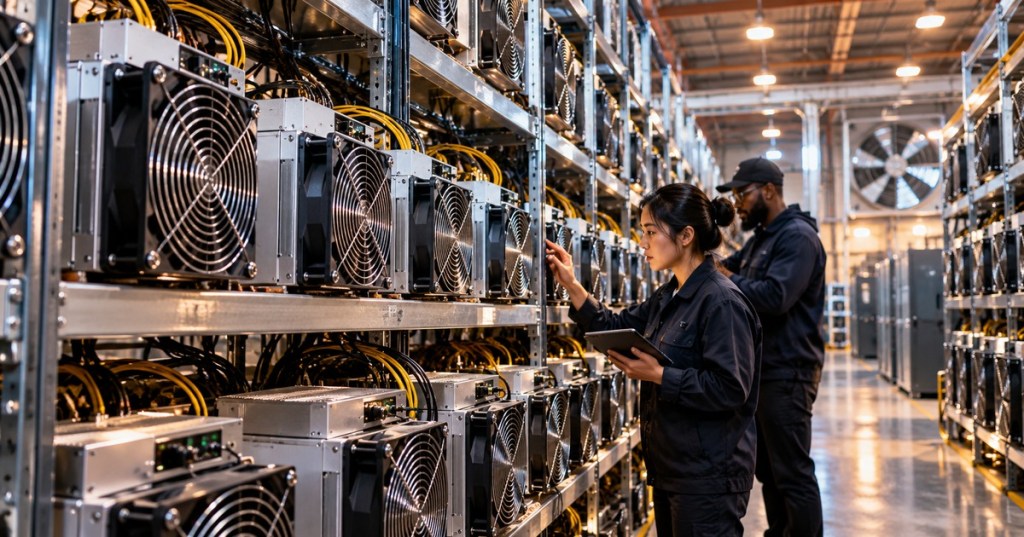
Air-cooled Bitcoin mining has finally pushed below 11 joules per terahash. That matters because air remains the simplest way to deploy full-size ASICs: no coolant distribution unit, no facility water loop, no immersion tank, and no extra plumbing between the miner and the heat-rejection system.
This ranking covers full-size fan-cooled SHA-256 Bitcoin miners only. Hydro and immersion models are excluded. Machines are ranked by published nominal efficiency, with lower J/TH ranked higher. Figures were rechecked on October 10, 2026 against manufacturer specifications and current hardware references.
| Rank | Miner | Hashrate | Power | Efficiency |
|---|---|---|---|---|
| 5 | Bitmain Antminer S21 XP Air | 270 TH/s | 3,645 W | 13.5 J/TH |
| 4 | Canaan Avalon A16XP | 300 TH/s | 3,850 W | 12.8 J/TH |
| 3 | Bitdeer SEALMINER A3 Pro Air | 290 TH/s | 3,625 W | 12.5 J/TH |
| 2 | Bitmain Antminer S23 Air | 318 TH/s | 3,498 W | 11.0 J/TH |
| 1 | Bitdeer SEALMINER A4 Pro Air | 336 TH/s | 3,662.4 W | 10.9 J/TH |
5. Bitmain Antminer S21 XP Air — 13.5 J/TH
The S21 XP remains one of the most important air-cooled Bitcoin miners in operating fleets. BITMAIN rates the machine at 270 TH/s, 3,645 W, and 13.5 J/TH at 25°C inlet air temperature. The company also specifies a 220–277 V AC input range and a maximum noise rating of 76 dBA. BITMAIN’s specification page provides the full nameplate data.
The S21 XP is no longer the efficiency leader, but it remains a useful benchmark because it is already familiar to operators upgrading older S19-class air-cooled sites. BitcoinVersus.Tech previously looked at how S21-generation machines are replacing S19 fleets.
4. Canaan Avalon A16XP — 12.8 J/TH
Canaan’s A16XP moves the Avalon line into the sub-13 J/TH air-cooled class. Canaan rates the machine at 300 TH/s and 12.8 J/TH, with current references putting nameplate power around 3,850 W. Canaan introduced the A16XP as the higher-performance member of its A16 generation. Canaan’s launch announcement confirms the 300 TH/s and 12.8 J/TH figures.
We covered the operational significance of the A16XP separately in Canaan Avalon A16XP Pushes Air-Cooled Mining to 300 TH/s. The machine is especially interesting for sites that want to increase rack-level hashrate without adding a water loop.
3. Bitdeer SEALMINER A3 Pro Air — 12.5 J/TH
The SEALMINER A3 Pro Air reaches 290 TH/s at 3,625 W and 12.5 J/TH in Bitdeer’s current product listing. Bitdeer’s launch specifications allow normal manufacturing and operating tolerances around those nominal numbers, so the nameplate should not be treated as a guaranteed field measurement at every ambient temperature. Bitdeer’s A3 Pro Air page lists the 290T, 3,625 W and 12.5 J/T configuration.
The A3 Pro Air was one of the first machines to make 12.5 J/TH practical in a conventional fan-cooled chassis. It now sits behind newer A4 and S23 hardware, but it remains materially more efficient than the S21 XP.
2. Bitmain Antminer S23 Air — 11.0 J/TH
The air-cooled Antminer S23 pushed Bitmain’s conventional chassis to approximately 318 TH/s at 3,498 W, or 11.0 J/TH. That is roughly an 18.5% reduction in energy per terahash compared with a 13.5 J/TH S21 XP, before accounting for facility overhead.
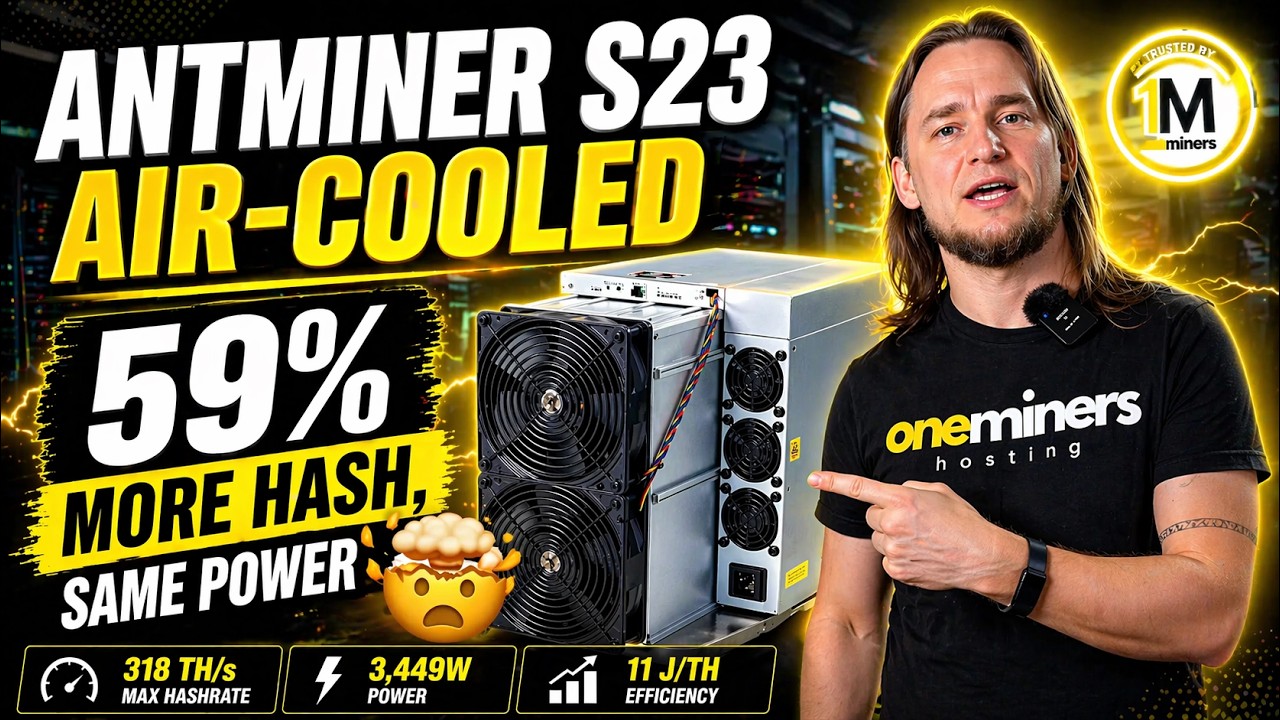
The S23 is important because it gets extremely close to the best current air-cooled efficiency without changing the facility into a hydro deployment. Operators still have to move roughly 3.5 kW of heat per machine, but the infrastructure remains familiar: fans, ducts, pressure management, filtration and hot-air rejection.
1. Bitdeer SEALMINER A4 Pro Air — 10.9 J/TH
The most efficient air-cooled Bitcoin miner in this ranking is Bitdeer’s SEALMINER A4 Pro Air. The company lists it at 336 TH/s, 3,662.4 W, and 10.9 J/TH. That makes it the first machine in this list to break below the 11 J/TH line while retaining a conventional air-cooled form factor. Bitdeer’s official product page confirms the specification.
Bitdeer’s published launch configuration is 336 TH/s, although demonstration units and event reports have shown higher observed hashrate. For a ranking like this, the correct comparison is the manufacturer’s nominal specification—not a favorable individual test result.
Why Air Cooling Still Matters
Hydro miners now reach lower J/TH and much higher rack density, but the facility becomes more complex. Pumps, coolant distribution, heat exchangers, water chemistry, leak detection and external cooling power become part of the mining system. Air cooling keeps the deployment mechanically simpler and can make upgrades much easier at existing sites.
That simplicity does not make air free. Every watt consumed by the ASIC ultimately becomes heat that the building has to remove. Fan power, exhaust systems, transformers, conductor losses, clogged filters and hot-air recirculation can all push real facility efficiency above the miner’s nameplate J/TH. Our explainer Your ASIC’s J/TH Is Not Your Site’s J/TH explains why.
Why the M70S+ Is Not in This Top Five
Some public listings place MicroBT’s M70S+ near this efficiency range, but the available listings conflict on exact hashrate, power, operating mode and even cooling configuration. Rather than force an uncertain model into a precision ranking, BitcoinVersus.Tech is leaving it out until an exact manufacturer configuration can be verified cleanly.
Bottom Line
The air-cooled efficiency frontier has moved from the S21 XP’s 13.5 J/TH to roughly 11 J/TH in a surprisingly short period. Bitdeer’s A4 Pro Air currently edges Bitmain’s S23 Air by just 0.1 J/TH on published nominal specifications.
That gap is small enough that purchase price, uptime, repairability, firmware behavior, fan life, ambient temperature and delivered hardware quality can matter more than the ranking position. Efficiency should be the first filter—not the only one. For the separate economics question, see our Bitcoin miner profitability ranking at $0.08/kWh.
Methodology: Full-size commercially marketed SHA-256 miners using conventional fan-driven air cooling. Hydro and immersion machines are excluded. One nominal manufacturer configuration per model is used. Rankings are based on published machine-level J/TH, not site-level PUE or measured fleet averages. Figures checked October 10, 2026.
Editor’s Note: Nameplate efficiency can change with inlet temperature, voltage, firmware, silicon variation and operating mode. Always verify the exact model, batch and power profile before procurement.
BitcoinVersus.Tech independently researches Bitcoin mining hardware, semiconductor technology, data centers and computing infrastructure. Donations help fund additional open technical publishing: 3C9o19EH5HSiwEPyCTmEKzxhNCbo2X6TTb
BitcoinVersus.tech is not a financial advisor. Content is provided for informational purposes.


Leave a Reply