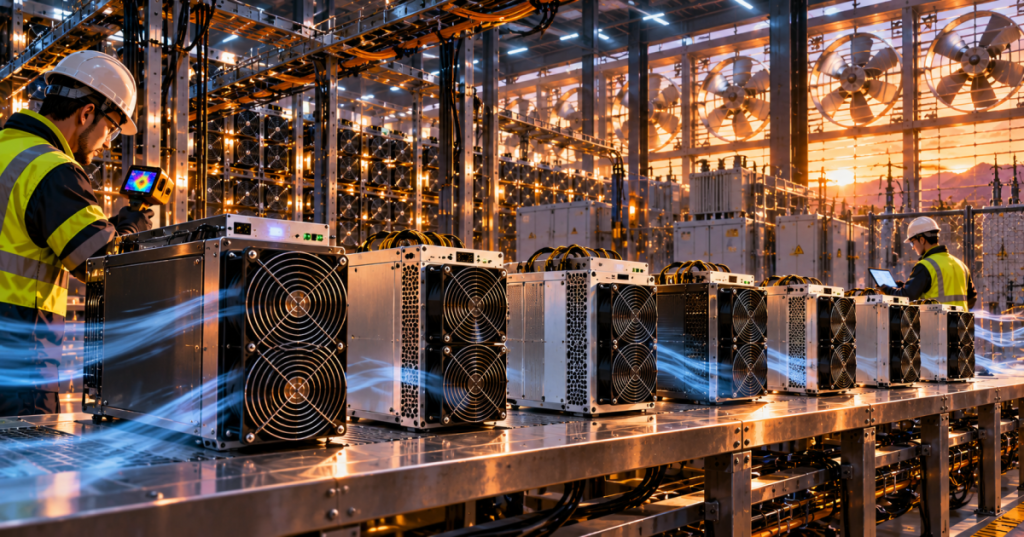
Air-cooled Bitcoin ASICs now span roughly 10.3–13.5 joules per terahash among the seven profiles below, but the efficiency leader depends on a crucial distinction: whether a machine is operating in its normal performance mode or a manufacturer-supported power-saving mode. Our October 27, 2026 countdown expands our earlier Top 5 air-cooled ranking with Auradine’s third-generation Teraflux eco-mode data and a comparison across more vendors.
We rank SHA-256 machines that use air cooling, not hydro or immersion, by their best published manufacturer-supported complete-miner J/TH profile. Smaller is more efficient. Eco-mode results are clearly identified and not confused with full-speed outputs. Ties are broken by the named configuration’s higher hashrate. We exclude laboratory chip-only SEAL04 efficiency figures, custom overclocking, and miner ratings that lack a comparable machine specification.
| Rank | Air-cooled ASIC / mode | TH/s | Watts | J/TH |
|---|---|---|---|---|
| 1 | Auradine third-gen Teraflux Air, eco | 240 | ≈2,472 | 10.3 |
| 2 | Bitdeer SEALMINER A4 Pro Air | 336 | 3,662 | 10.9 |
| 3 | BITMAIN ANTMINER S23 Air | 318 | 3,498 | 11.0 |
| 4 | Bitdeer SEALMINER A3 Pro Air | 290 | 3,625 | 12.5 |
| 5 | MicroBT WhatsMiner M70S+ (high bin) | Up to 280 | ≈3,500 | 12.5 |
| 6 | Canaan Avalon A16XP | 300 | 3,850 | 12.8 |
| 7 | BITMAIN ANTMINER S21 XP | 270 | 3,645 | 13.5 |
7. BITMAIN ANTMINER S21 XP — 13.5 J/TH
The proven ANTMINER S21 XP still sets a useful fleet-upgrade baseline at 270 TH/s, 3,645 W and 13.5 J/TH under BITMAIN’s reference conditions. Its familiar fan-cooled chassis is compatible with conventional air-handling layouts, though it needs dedicated electrical distribution and can produce industrial noise. As network difficulty increases, an existing machine’s purchase cost and repairability may matter as much as its nominal efficiency.
Watch how the hardware is physically deployed, but distinguish demonstrations from an independently calibrated power-efficiency benchmark. For a fair fleet comparison, record measured watts and pool-validated hashrate over the same temperature window.
6. Canaan Avalon A16XP — 12.8 J/TH
Canaan’s October 2025 launch rates the air-cooled Avalon A16XP at 300 TH/s and 12.8 J/TH. Its roughly 3,850 W nameplate consumption yields a strong alternative to Bitmain and Bitdeer for traditional air-cooled sites. Buyers should verify whether an offered unit is actually an A16XP rather than the less-efficient baseline A16; the model suffix changes the power budget.
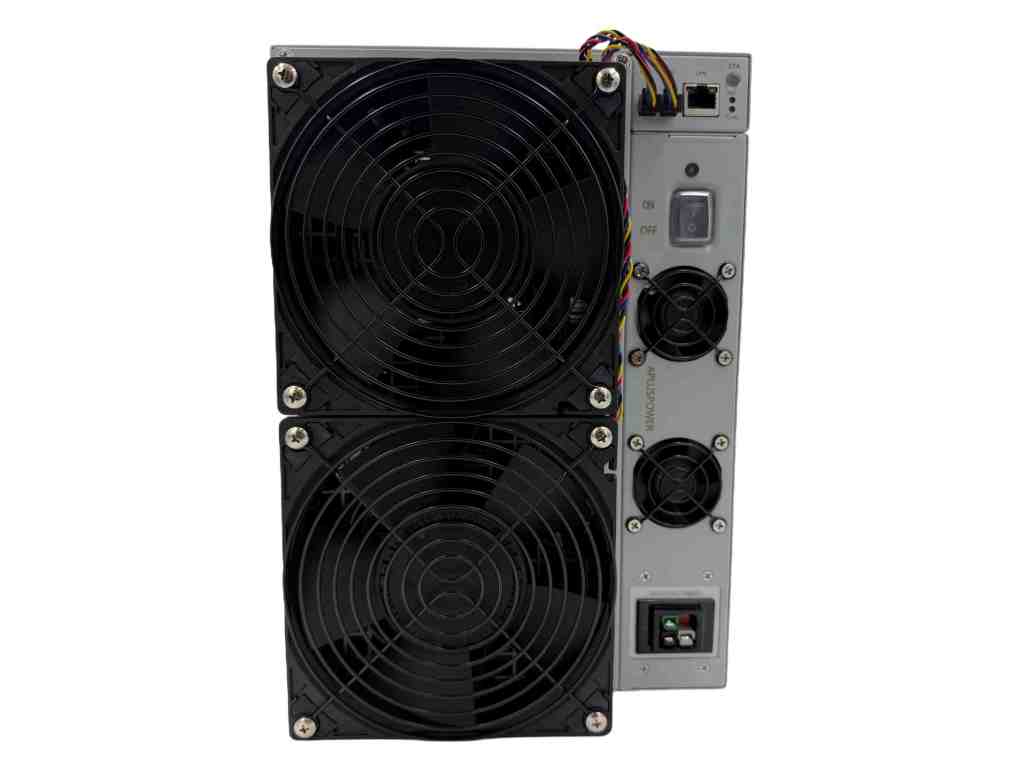
The A16XP’s efficiency advantage is more meaningful at 24-hour uptime than during an isolated benchmark. Check intake-temperature requirements, airflow path, supply voltage, fan maintenance and vendor documentation before assuming nominal figures in a hot container.
5. MicroBT WhatsMiner M70S+ — 12.5 J/TH in the efficient bin
MicroBT’s WhatsMiner M70S+ can reach around 12.5 J/TH in higher-binned configurations, with up to approximately 280 TH/s and 3.5 kW. Smaller 244-TH/s listings show about 3,140 W or 12.87 J/TH instead. Both claims are explained here rather than silently treating different factory bins as interchangeable.
For procurement, insist on the exact model suffix, bin, rated power and power-supply configuration. A general family presentation does not prove that every production unit runs at the best theoretical J/TH.
4. Bitdeer SEALMINER A3 Pro Air — 12.5 J/TH
Bitdeer’s September 2025 A3-series announcement specifies 290 TH/s at 12.5 J/TH for the A3 Pro Air, implying about 3,625 W at the nominal point. Its higher named hashrate gives it the tie-break over the M70S+ high-bin profile. The release lists production tolerances, so field measurements may differ.
As with any ASIC, rack density, exhaust-air recirculation and ambient temperature can shift actual wattage. The manufacturer’s 12.5 J/TH number is not a guarantee of entire-site efficiency.
3. BITMAIN ANTMINER S23 Air — 11.0 J/TH
The standard ANTMINER S23 air-cooled model reaches 11 J/TH, with early rated configurations around 318 TH/s and 3,498 W. Later factory and storefront listings may specify a 305 TH/s, 3,355 W bin with essentially the same efficiency. These are air units—not the much more efficient S23 XP Hydro at 8.9 J/TH. Mixing those cooling variants would mislead buyers.
At 1 PH/s of sustained hashrate, 11 J/TH corresponds to about 11 kW of miner electrical load before the site’s separate ventilation and power-distribution losses. That is why reducing fractions of a joule has an appreciable effect at industrial scale.
2. Bitdeer SEALMINER A4 Pro Air — 10.9 J/TH
Bitdeer’s April 7, 2026 manufacturer release gives the SEALMINER A4 Pro Air 336 TH/s, 3,662.4 W and 10.9 J/TH. Its finished-machine efficiency is independent of the 6–7 J/TH experimental SEAL04 chip figure: silicon test results are not complete-miner ratings.
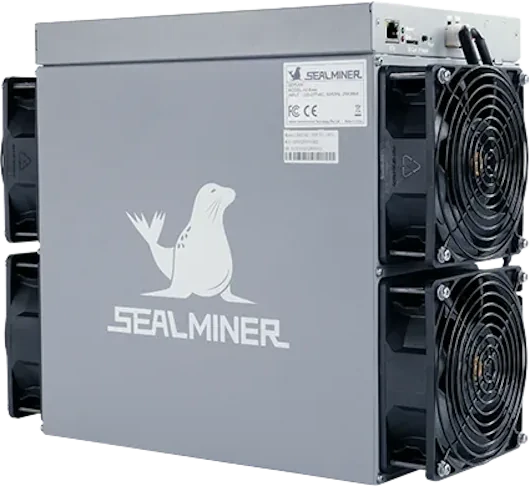
The A4 Pro Air is noteworthy because its low J/TH does not require installing water pipes, coolant distribution units or immersion tanks. Site-specific airflow and exhaust management remain essential, especially when thousands of roughly 3.7 kW machines share a building.
1. Auradine Third-Generation Teraflux Air, Eco — 10.3 J/TH
The most efficient published air-cooled operating mode in this comparison is Auradine’s third-generation Teraflux Air eco profile: 240 TH/s at 10.3 J/TH, equivalent to roughly 2,472 W. Auradine’s November 2025 release also lists 310 TH/s at 11 J/TH in normal mode. Therefore, Auradine leads only under the stated lowest-J/TH ranking method—not at the highest standard-mode output.

Auradine initially targeted samples in Q2 2026 and volume shipments in Q3. Publicly announced specifications are not the same as an independently confirmed production-fleet test; availability and delivered silicon revisions should be checked directly. The 10.3-J/TH claim deserves attention because it points to further savings in familiar forced-air infrastructure.
What the efficiency numbers actually mean for an operating site
J/TH measures the energy cost of a unit of hashrate at a specified machine operating point. For example, a 1 EH/s theoretical miner fleet at 10.3 J/TH draws about 10.3 MW, versus 13.5 MW at 13.5 J/TH—a 3.2 MW difference before auxiliary systems. That comparison holds hashrate constant, not machine count. Real facilities must also include fans, transformers, curtailment, downtime, power-supply efficiency and temperature. See our ASIC-versus-site J/TH analysis for the necessary distinction.
This ranking extends rather than replaces our cross-cooling Top 10 and the earlier air-cooled Top 5. Readers comparing product listings should match exact SKU, cooling technology, power mode, ambient reference and firmware before comparing advertised joules per terahash.
Editor’s Note: BitcoinVersus.Tech ranks complete machine specifications, separately labels eco mode and treats manufacturer claims as specifications rather than independently verified field performance. If you value this research, consider supporting our reporting with a donation of 5,000 sats. Scan the QR code below using your Bitcoin wallet.

For easy scanning, open this page on a separate display and scan the QR using your wallet.


Leave a Reply