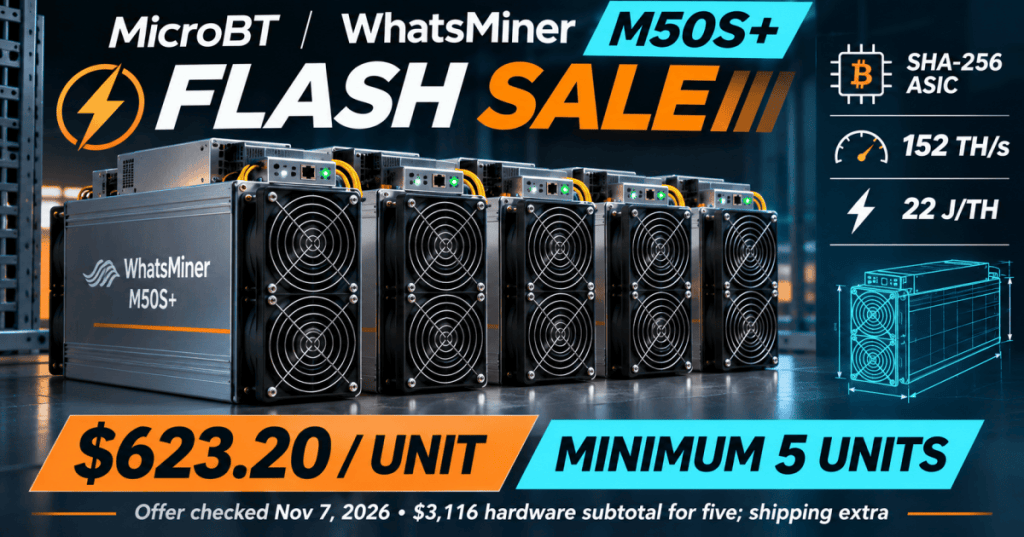
MicroBT is advertising its existing WhatsMiner M50S+ Bitcoin ASIC at a $623.20 flash-sale price for the 152 TH/s configuration, according to the manufacturer’s official storefront checked November 7, 2026. The low headline price comes with a significant condition: buyers must order at least five machines. For five identical 152 TH/s units, the hardware subtotal reaches $3,116 before shipping, import fees or site installation.
The listing is a new dated sales offer, not evidence that MicroBT launched the M50S+ hardware family in November. Three advertised configurations range from 152 to 156 terahashes per second (TH/s), each with a stated energy efficiency of 22 joules per terahash (J/TH). Their different hashrates and electricity consumption must be paired accurately when evaluating a fleet.
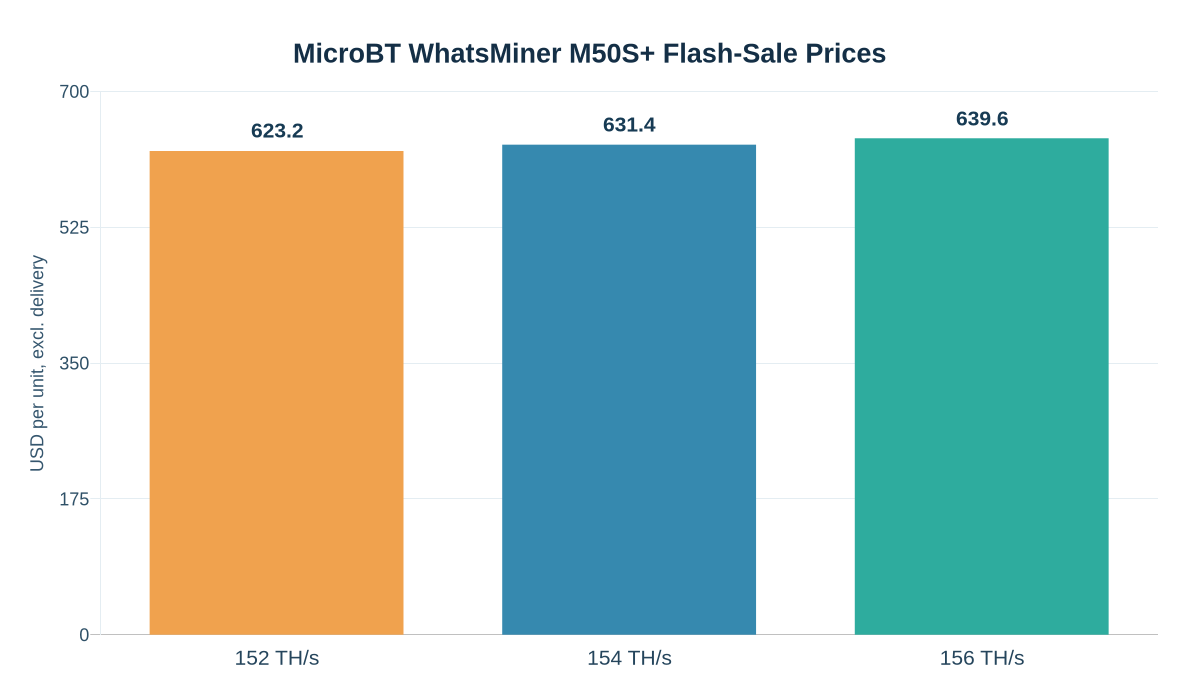
Three versions, one $4.10-per-terahash offer
The 152 TH/s configuration costs $623.20 and draws 3,344 watts; the 154 TH/s model costs $631.40 at 3,388 W; the 156 TH/s version is listed at $639.60 and 3,432 W. Each pairing follows the relationship between hashrate and a 22 J/TH power rating. MicroBT’s 152 TH/s detail page and separate 154 TH/s and 156 TH/s listings confirm the values.
A buyer comparing ASIC generations should look beyond the low purchase price. The M50S+ uses more electricity per unit of computing work than newer hardware. BitcoinVersus.Tech has examined MicroBT versus Canaan cooling strategies and ranked efficient air-cooled mining models. For reference, MicroBT’s current M70 listing states 14.5 J/TH, approximately 34% less energy per unit of hashrate than the 22 J/TH M50S+ rating. Capital costs and cooling needs differ.
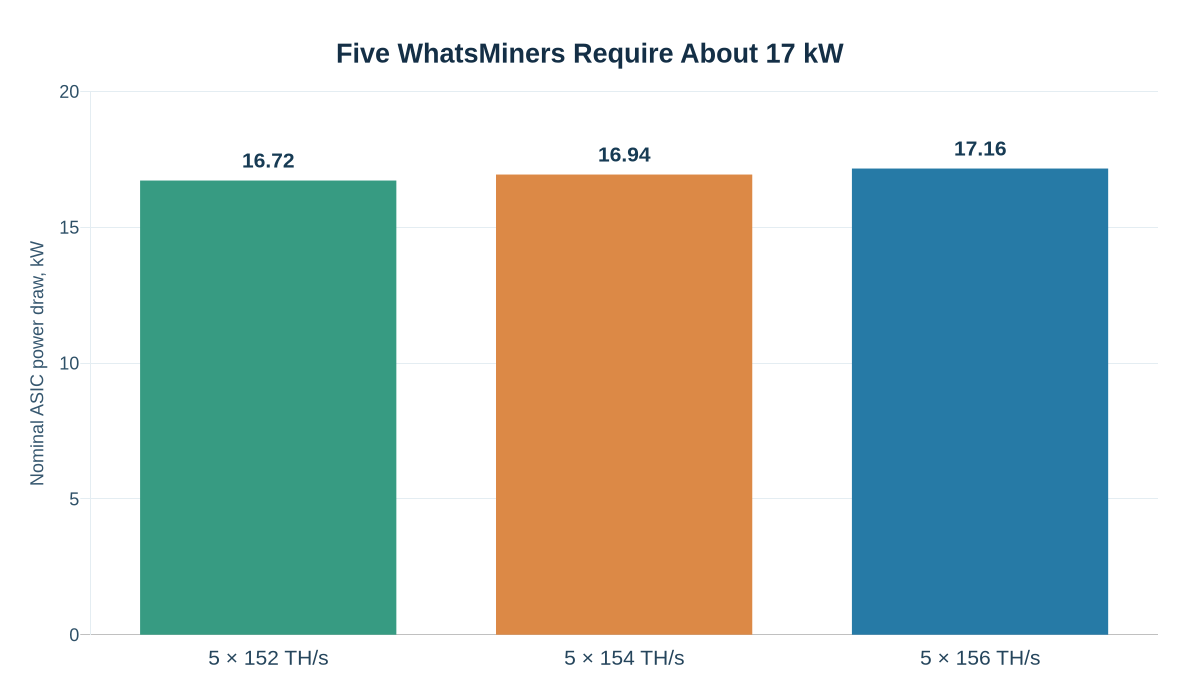
Five miners create a 16.72 kW electrical load
Five identical 152 TH/s devices would deliver a nominal 760 TH/s while demanding 16.72 kW at the miners. Operating continuously for 24 hours consumes 401.28 kWh, before external fans, networking and electrical distribution losses. The 154 TH/s and 156 TH/s five-machine examples would require 16.94 kW and 17.16 kW respectively. No actual installation or energy measurement was performed.
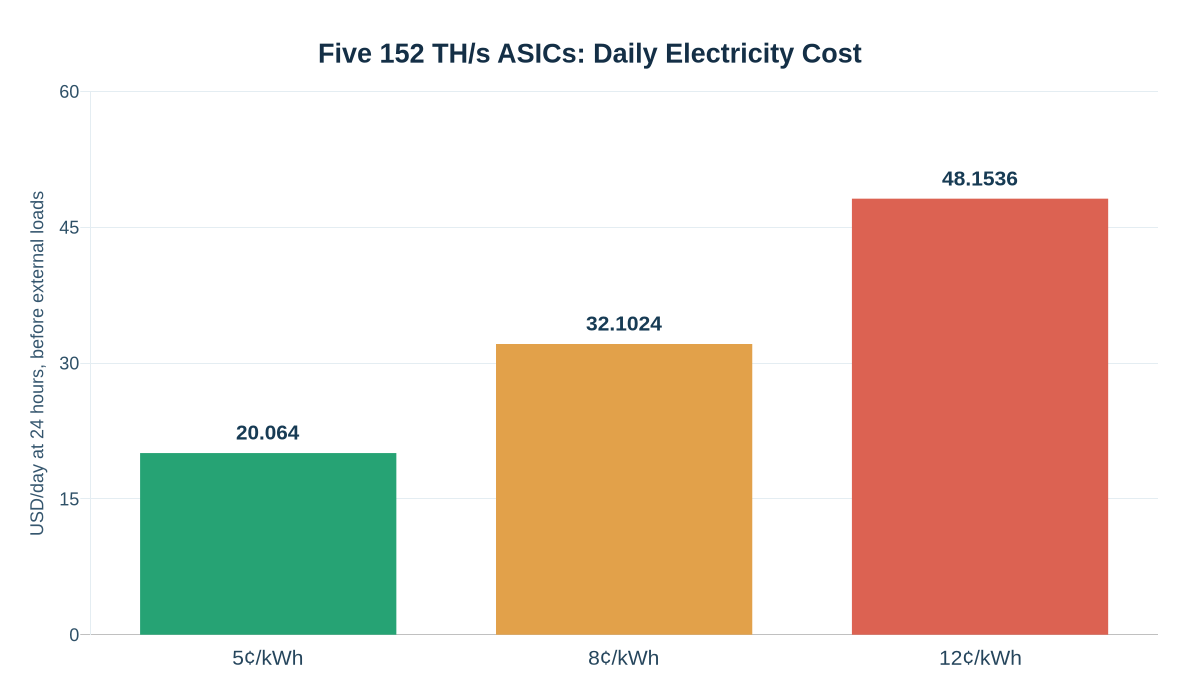
At a hypothetical electricity tariff of 8 cents per kWh, operating the five lowest-priced units continuously would consume about $32.10 per day in miner electricity alone. At 5 cents the cost falls to $20.06, while 12 cents raises it to $48.15. Those amounts are operating-expense examples, not profit predictions; network difficulty, Bitcoin price, uptime and mining-pool fees determine potential earnings. BitcoinVersus.Tech recently covered mining hashprice forward-market pricing for additional revenue context.
Delivery and warranty matter as much as the sticker
The manufacturer states that delivery follows seven days after full payment, but the wording does not independently establish dispatch, customs clearance or arrival at a particular destination. Its storefront shows Hong Kong warehouse listings. MicroBT specifies a 220–240 V AC power supply and an IEC C19 connection; electrical contractors must size circuits for continuous load and local code.
The company advertises a one-year warranty with exclusions that include damage from unauthorized modifications, certain accessories and unsupported firmware. Earlier BitcoinVersus.Tech reporting on WhatsMiner firmware compatibility and ASIC compute density provides technical context for maintenance and fleet planning.
The practical finding is a low-priced, multi-unit offer for established hardware—not proof of a profitable mining opportunity. The published unit price can change without notice, and buyers must verify the actual invoice, warehouse, delivery terms and electricity economics before making decisions.
Primary sources: MicroBT official product catalogue; M50S+ 152 TH/s sale and warranty terms; 154 TH/s configuration; and 156 TH/s configuration. All displayed prices represent a November 7, 2026 manufacturer-shop snapshot.
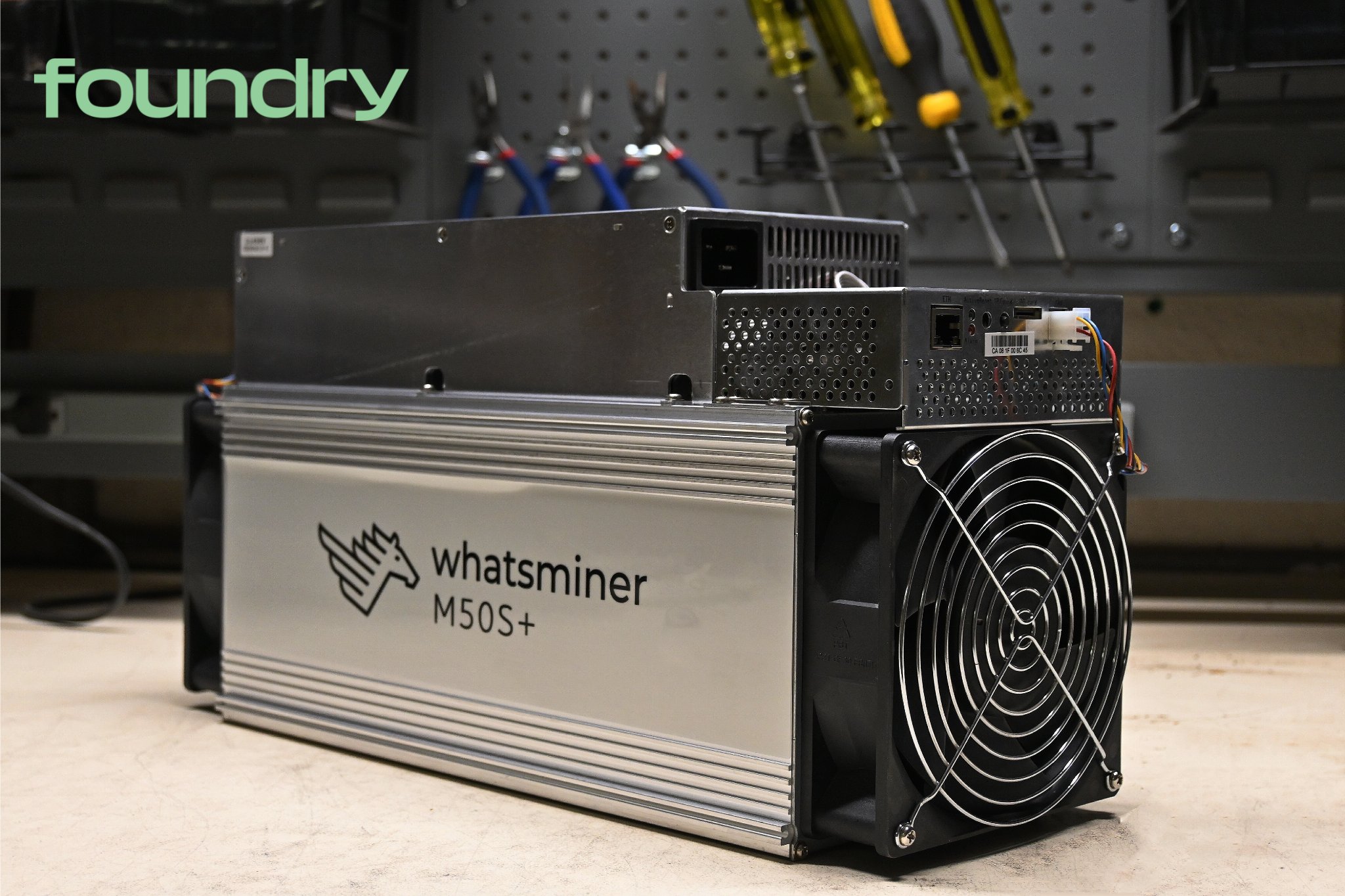
Editor’s Note: MicroBT’s M50S+ flash-sale listing was checked November 7, 2026. The product line existed before the promotion; first shipment of the listed batches was not independently verified. Hardware prices exclude tax, freight and import costs. Nominal hashrate, miner power and J/TH are manufacturer figures, while calculated five-unit totals and electricity scenarios are original arithmetic, not field measurements or financial forecasts. The featured cover is conceptual hardware artwork and the in-story product photograph was published historically by WhatsMiner.
Support BitcoinVersus.Tech
Support independent reporting using the original approved QR below for an optional 5,000-satoshi contribution. On a mobile phone, view the article on another device and scan the QR with a compatible Bitcoin wallet, or use the wallet’s image-scanning function if supported. Verify the receiving address and amount before authorizing payment.

We volunteer daily to ensure the information on this platform is Verifiably True. If you would like to support the research, please scan QR code.


Leave a Reply