
Connecticut has no confirmed new gigawatt-scale data-center campus under construction, yet three named projects show how developers are attempting to bring large computing capacity to the state. For the seventh installment of BitcoinVersus.Tech’s state-by-state data-center series, we rank the largest non-cancelled publicly documented proposals with disclosed capacity as of October 27, 2026. Connecticut’s top entry claims over 300 MW of potential IT power; the others are markedly less advanced.
Methodology: This is a ranking of publicly proposed capacity—not operational load or signed utility service. Global Common explicitly quotes critical IT power, Beacon Falls is marketing a nominal 100 MW opportunity, and New Britain’s figure comes from a historical high-performance computing redevelopment plan. All have material permitting, financing or tenant uncertainty. A project with a denied permit is excluded rather than treated as active.
3. New Britain Energy & Innovation Park — 44 MW proposed computing phase
At 480 Myrtle Street, the former Stanley Black & Decker complex has already received a substantial piece of energy infrastructure: a 19.98 MW fuel-cell installation. But the associated 44 MW high-performance-computing center was described separately as a future phase in EIP Investment’s Connecticut Siting Council petition. It would reuse older industrial buildings and be followed by additional generation, computing and technology development. The originally discussed $1 billion figure covered the broader redevelopment vision, not an already funded data center.
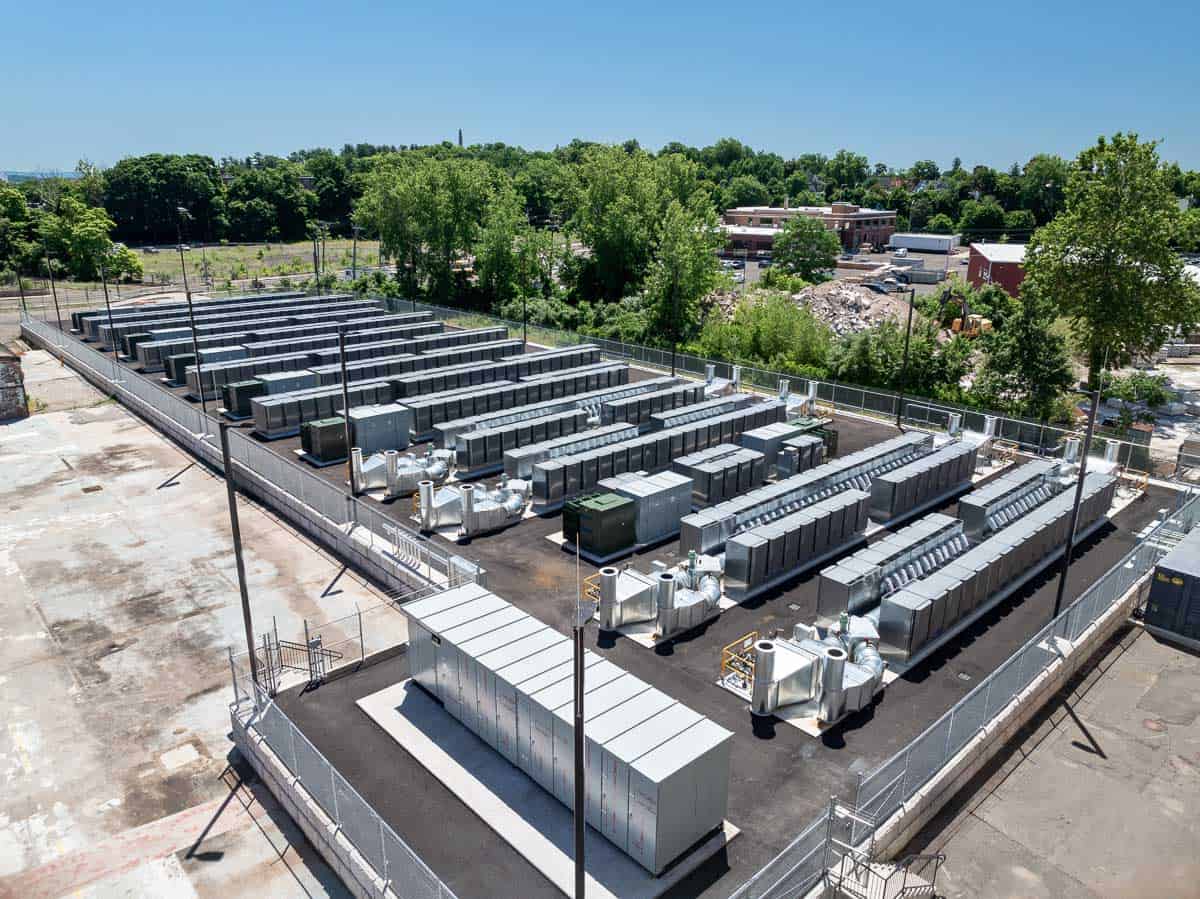
O&G Industries confirms completion of the initial 19.8 MW fuel-cell plant and describes the computing center as a later-stage concept. The September 2026 project registry still classifies the 44 MW computing phase as proposed, with no confirmed tenant or data-center construction. The 2018 origin makes this the least current proposal in the Top 3; the first phase’s completion must not be mistaken for completion of the separate data center.
2. O&G Industries Beacon Falls — 100 MW marketed capacity
A former quarry near Lopus Road and Route 8 is being offered for a data center that 2026 commercial marketing materials describe as 100 MW and approximately 294,000 square feet. The concept includes on-site natural-gas fuel cells, but neither a named hyperscale tenant nor a firm 100 MW IT-power contract is established. The property was previously the subject of a 32 MW municipal agreement in 2022. That agreement expired in 2023 without a buyer.
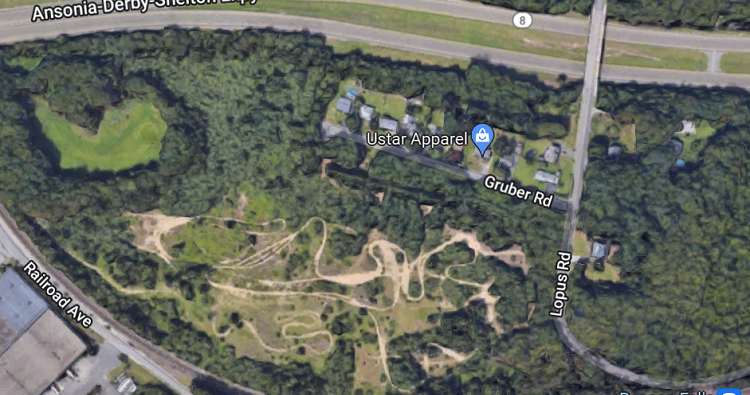
The status is more tentative than the new brochure might suggest. In an October 25 CT Mirror investigation, First Selectman Gerry Smith said there was no active municipal proposal. He acknowledged a summer inquiry from O&G, but said no specifics followed. Neighbors have requested clearer zoning rules and scrutiny of emissions, water, noise and community benefits. This entry ranks a marketed opportunity, not an approved or funded 100 MW construction project.
1. Global Common Cromwell — more than 300 MW potential IT power
Global Common is marketing a 159-acre campus around Geer Street in Cromwell with approximately 40 MW of initial IT power and a possible full buildout exceeding 300 MW IT. Unlike the other entries, the developer explicitly identifies the power figure as computing load. The plan would use natural-gas fuel cells supplied through interstate pipeline infrastructure. Global Common says it has a gas supply agreement with Emera Energy and is seeking long-term firm transportation service from Enbridge.
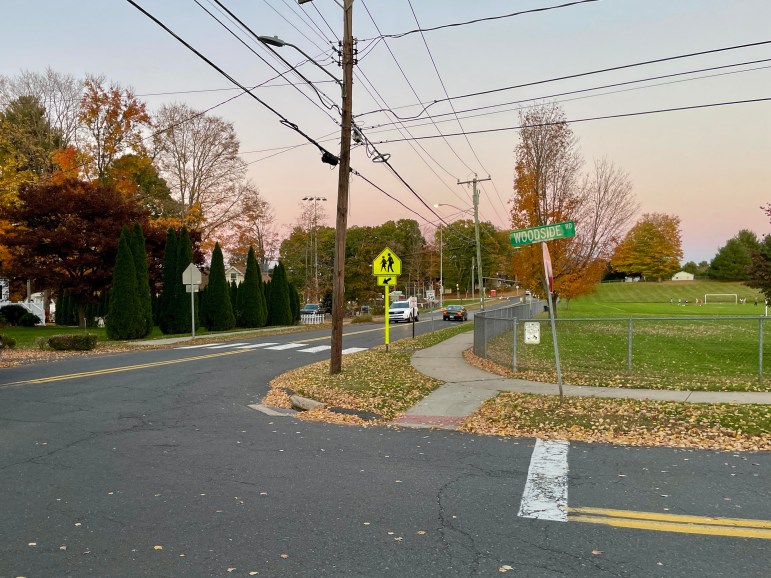
Global Common estimates initial computing power could be delivered 18–21 months after equipment deposits, with 300+ MW available 26–32 months after deposits or over multiple phases. Those timelines are developer projections, not an announced commissioning date. WFSB’s October 24 reporting confirms no formal site-plan application had been filed. The company expects to seek site-plan approval in early 2027, while neighbors near schools and homes question potential noise, air emissions, zoning procedures and land-use compatibility. A proposed 2026 moratorium failed by a 5–2 commission vote; that is not approval of the campus itself.
Video: Connecticut’s growing restrictions, directly from a public meeting
The regulatory context extends beyond the three ranked sites. In East Lyme, the zoning commission advanced restrictions on data centers during an August 6, 2026 meeting. The public recording below comes directly from the Town of East Lyme’s official YouTube channel; discussion of the data-center prohibition begins around the 14-minute mark, as cited by CT Mirror. This is an authentic municipal recording, not an illustration or video of one of the proposed facilities.
East Lyme’s subsequent indefinite ban took effect October 24, according to CT Mirror. Other towns have enacted moratoria or considered restrictions on where data centers may be sited. Such local decisions do not automatically apply to Cromwell, Beacon Falls or New Britain. Separately, state-level data-center tax incentives have not by themselves produced large numbers of operational hyperscale campuses.
What is excluded from the ranking—and why
The roughly 300 MW NE Edge Millstone concept in Waterford does not belong in an active-project ranking: Connecticut’s siting regulator denied the associated Millstone boundary request in January 2024. Some older databases still label it planned. A 100 MW Gotspace Bozrah project also appears in older proposed-project directories, but Cleanview marks it cancelled; no convincing active 2026 application was found. Smaller active concepts in Bristol and Colchester lack comparable large confirmed power figures.
The three listed capacities are not additive as operational MW. The 300+ MW Cromwell figure is proposed IT load, 100 MW in Beacon Falls is commercial marketing, and 44 MW at New Britain is an unbuilt historical phase. Fiber access, natural-gas supply, electrical switchgear, equipment financing, zoning and the identity of the final computing tenant are still unresolved. Compare with the much larger project scale in our Colorado Top 3, California Top 3 and national AI megaproject ranking.
Editor’s Note: This report separates marketing figures, design targets and installed electrical capacity. All four in-story media items are individually sourced: three photographs or site images and one authentic municipal YouTube recording. Original diagrams are not used. To support BitcoinVersus.Tech’s independent reporting, donate 5,000 sats by scanning the QR code below.

Scan the QR code with a Bitcoin wallet while viewing the article on a separate screen.


Leave a Reply