
November 2, 2026 — Washington, D.C. The Alliance for Telecommunications Industry Solutions (ATIS) released a 25-page white paper proposing a shared artificial-intelligence foundation for future wireless networks. Its aim is to recognize changing radio conditions and support different network functions without training a separate model for every task. This is an architecture proposal, not a deployed 6G product.
Today’s cellular AI is often fragmented. One model predicts interference, another estimates channel quality, while others recognize signals or support positioning. ATIS argues that a common Wireless Physical Layer Foundation Model (WPFM) could reuse learned knowledge across those jobs, potentially reducing repeated model development.
From Radio Signals to Shared AI Perception
The system would learn from radio-frequency observations including in-phase/quadrature samples, channel-state information and spectra. Self-supervised pretraining can extract structure from data that lack hand-applied labels; task-specific adaptation then turns those representations into predictions or sensing functions.
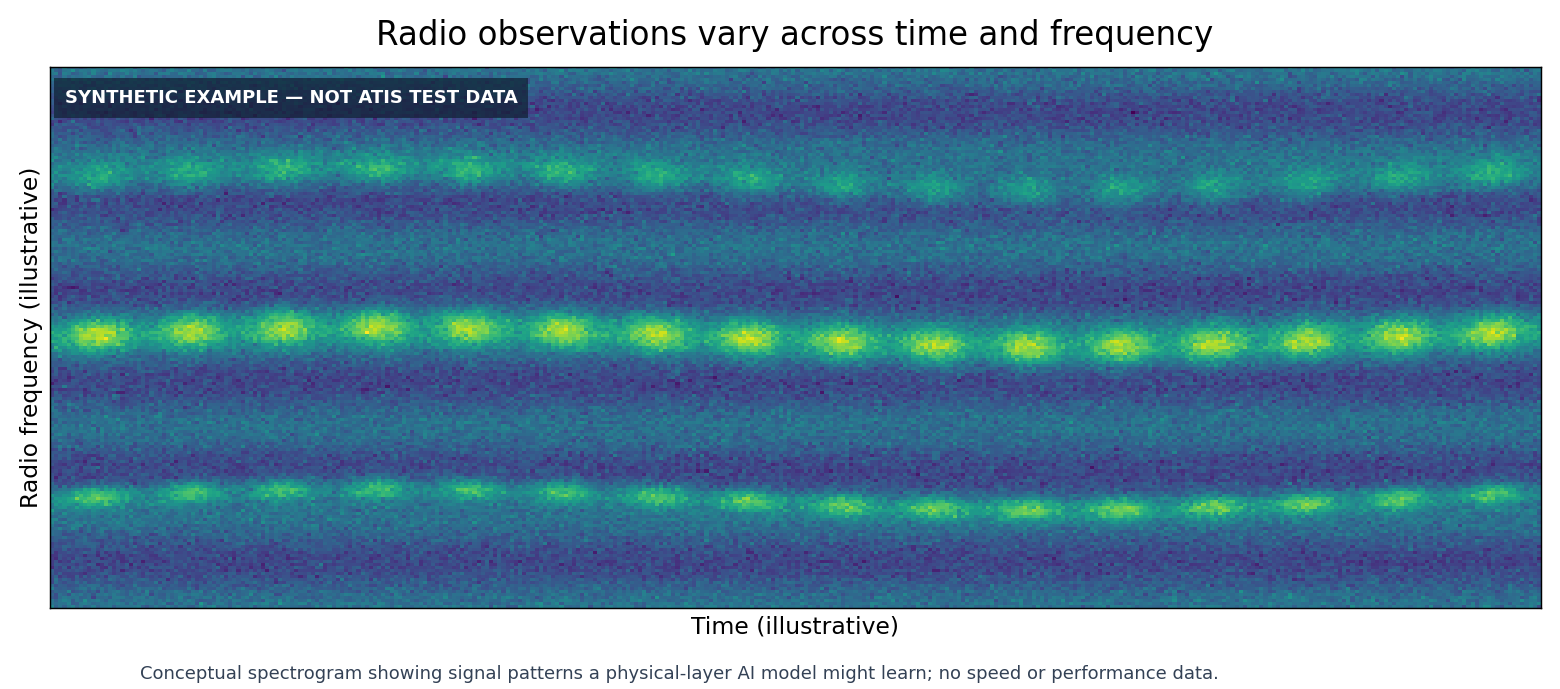
The architectural distinction matters: a foundation model produces a common picture of the wireless environment, while specialized software still decides how that information should influence the network. The accompanying diagram illustrates the proposed workflow; it is not an ATIS experimental result.
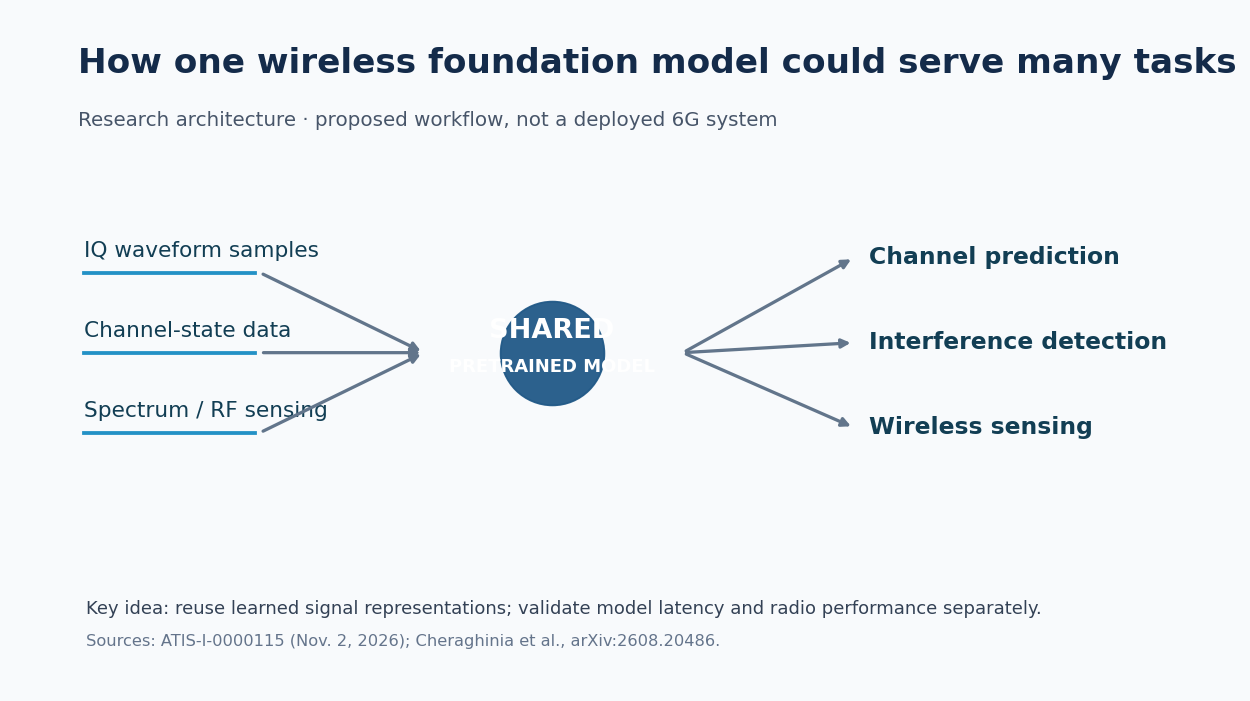
The paper also proposes neuro-symbolic reasoning: connecting neural predictions with explicit rules about spectrum use, operator policy and radio constraints. An AI system might flag interference or recommend changing an antenna beam, but policy and safety checks must govern whether that action occurs.
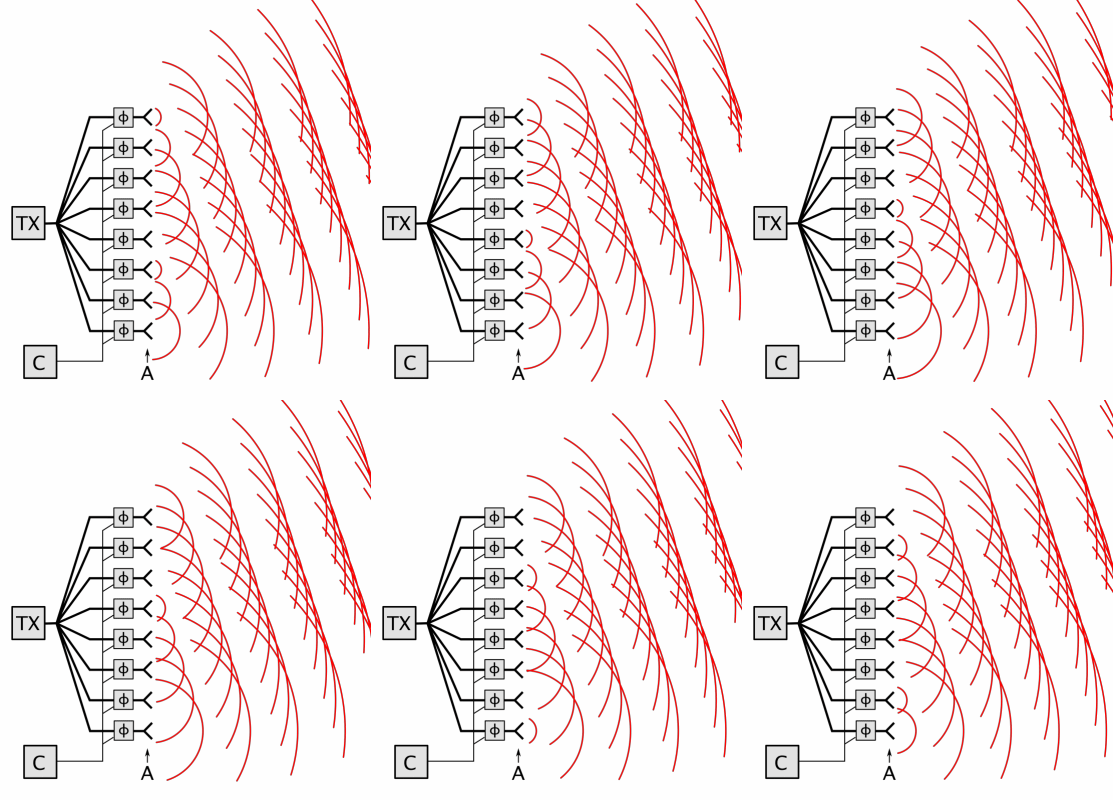
Beam steering is already a conventional antenna technique. The public-domain animation below explains phase-controlled direction changes; it does not demonstrate the newly proposed foundation model. Separate AI reasoning could eventually help decide when such controls should adapt.
Research, Not a Commercial 6G Release
ATIS’s proposal follows its 2025 WPFM research initiative and an August 2026 technical survey of wireless foundation-model training, adaptation and hardware limits. The newest white paper adds a clearer bridge between radio perception, explainable decisions and network operations.
BitcoinVersus.Tech has tracked complementary milestones: Samsung’s AI-native 6G research, Verizon and Ericsson’s outdoor test, and Nokia’s AI-RAN efficiency demonstrations. Those are different experiments; none proves the ATIS architecture works at commercial scale.
Remaining obstacles include strict inference latency, power and memory budgets, interference across diverse environments, shared benchmarks, and interoperability between vendors. As our network performance explainer details, faster predictions alone do not establish better user throughput or lower delay.
ATIS offers no verified WPFM speedup, energy-savings percentage or production schedule. The next meaningful evidence is a reproducible multi-task benchmark followed by real-radio trials, with performance measured against separate task-specific AI models.
BitcoinVersus.Tech
BitcoinVersus.Tech Editor’s Note: We volunteer daily to ensure the credibility of the information on this platform is Verifiably True. If you would like to support our work and help further secure the integrity of our research initiatives, please scan the QR code below to donate 5,000 sats. For best results, scan the QR code from a laptop or larger screen.
Bitcoin donation address: 3C9o19EH5HSiwEPyCTmEKzxhNCbo2X6TTb. On mobile, open the QR on another screen or use your wallet’s saved-image scanner.
Disclaimer: BitcoinVersus.Tech reports technology, energy and financial developments for informational purposes only, not investment advice. Proposed AI architectures and future operational benefits require validation under real-world conditions.


Leave a Reply