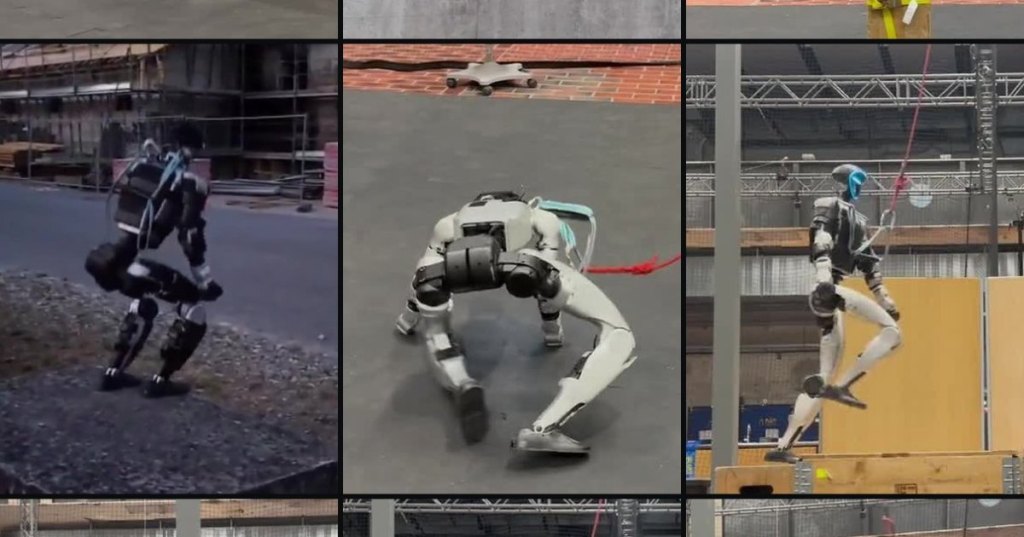
Researchers at ETH Zurich and collaborators released a new humanoid-control study on October 22, 2026, demonstrating a Unitree G1 climbing ladders, vaulting obstacles, crawling and recovering from falls using one learned policy. The research preprint, titled Humanoid Mobility via Attention-based Contacts, describes an experimental method rather than a commercial robot deployment.
The robot plans where to touch
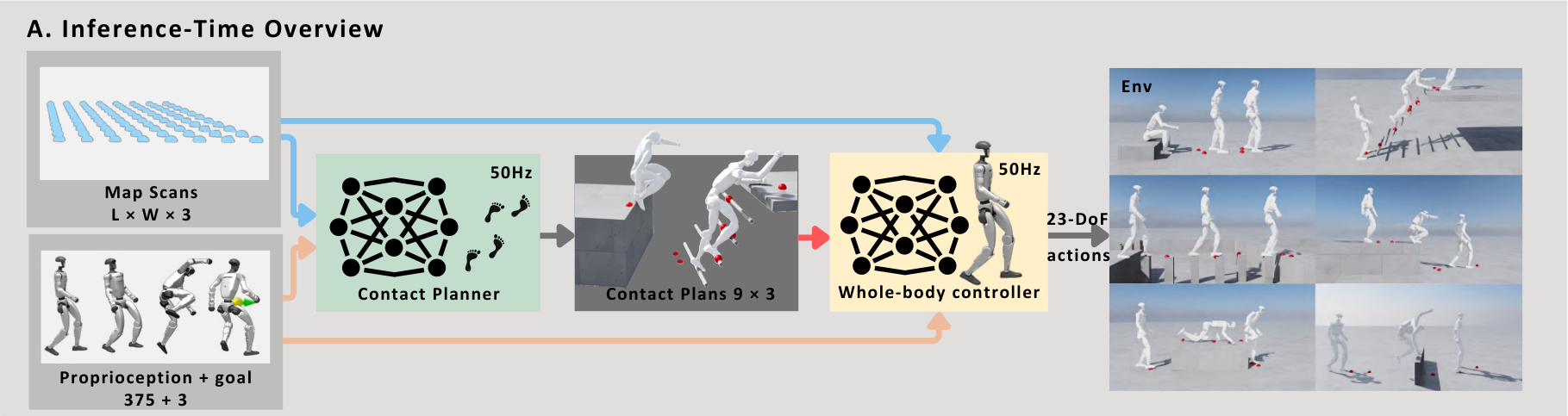
Instead of memorizing complete movements for each obstacle, an attention-based planner chooses where the robot’s hands, elbows, knees, feet and pelvis should contact its surroundings. A second network turns those contact targets into whole-body motion. The project documentation says the two networks run onboard at 50 Hz, direct 23 joints and look up to 1.5 seconds ahead.
ETH Zurich Robotic Systems Lab’s Unitree G1 mobility research video, showing climbing, vaulting and other whole-body movements.
The team used just 13.2 minutes of human motion demonstrations as a training prior before reinforcement-learning refinement. During deployment, the controller uses LiDAR terrain mapping and onboard sensors, not a prerecorded human trajectory. The approach complements whole-body robot control and model-predictive planning.
The simulation benchmark needs context
Across eight simulated composite obstacle courses, researchers report a 92.5% average success rate, compared with 58.8% for the MGMT comparison method: a 33.7-percentage-point advantage. These experiments omit certain real-world sensor noise and action delays. The percentages are not measured reliability rates for robots operating in workplaces.

A single generalist policy can reduce the need for separate controllers and transitions, but local goal-directed mobility is only part of autonomy. The researchers still identify constraints involving overhead contacts, object manipulation and route planning. Prior Unitree G1 demonstrations and ETH Zurich’s walking robotic hand address different control problems.
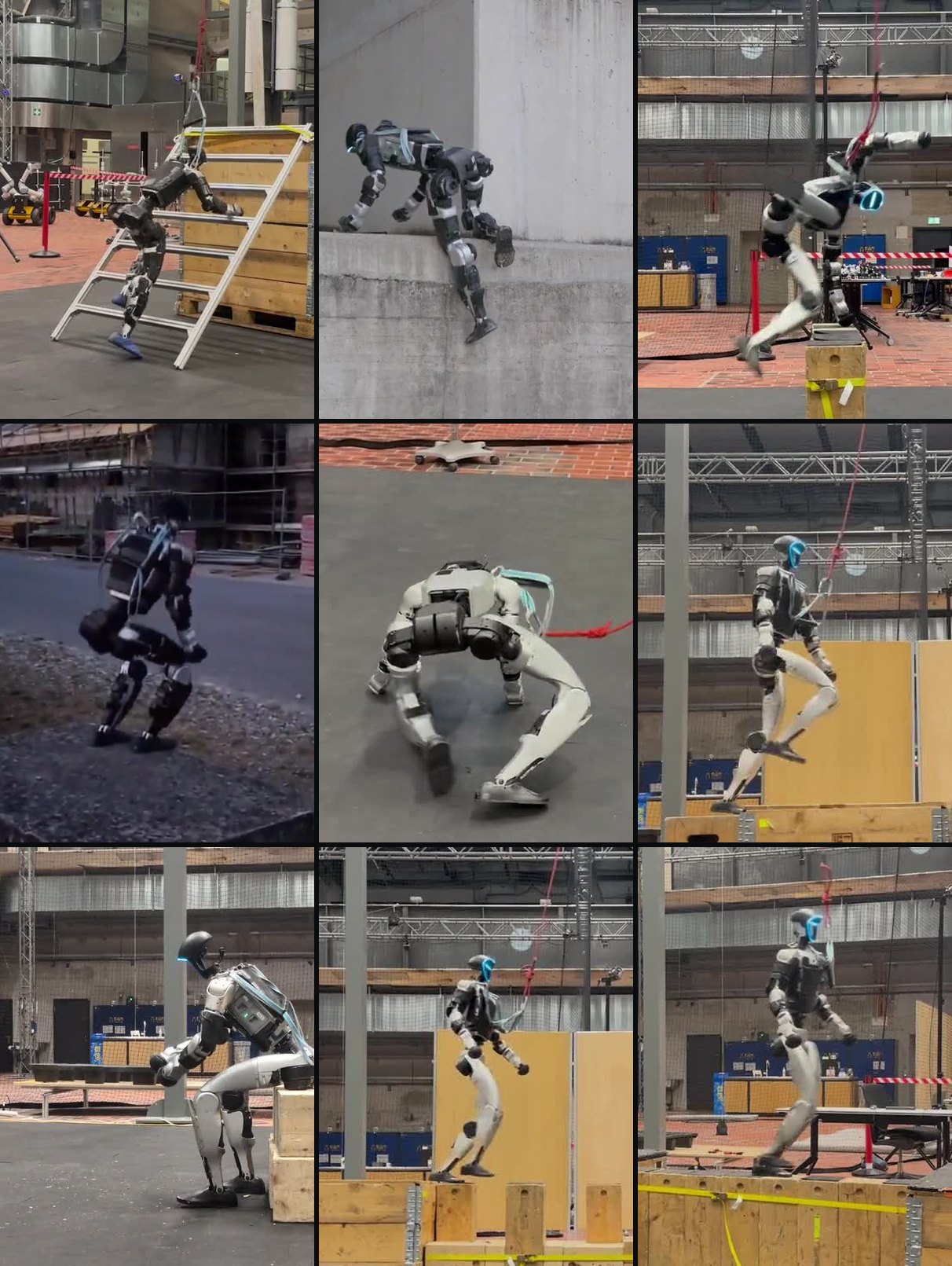
The next test is repeatable performance outside carefully controlled research conditions, including varying sensor quality, obstacle geometry and hardware wear. The paper remains a preprint under review; the published demonstrations show promising skills, not verified industrial deployment.
BitcoinVersus.Tech
BitcoinVersus.Tech Editor’s Note: We volunteer daily to ensure the credibility of the information on this platform is Verifiably True. If you would like to support our work and help further secure the integrity of our research initiatives, please scan the QR code below to donate 5,000 sats. For best results, scan the QR code from a laptop or larger screen.

Bitcoin address: 3C9o19EH5HSiwEPyCTmEKzxhNCbo2X6TTb. On a phone, open the QR image on another screen or copy and verify the address in your wallet before sending.
BitcoinVersus.tech is not a financial advisor. This media platform reports on financial subjects purely for informational purposes.


Leave a Reply