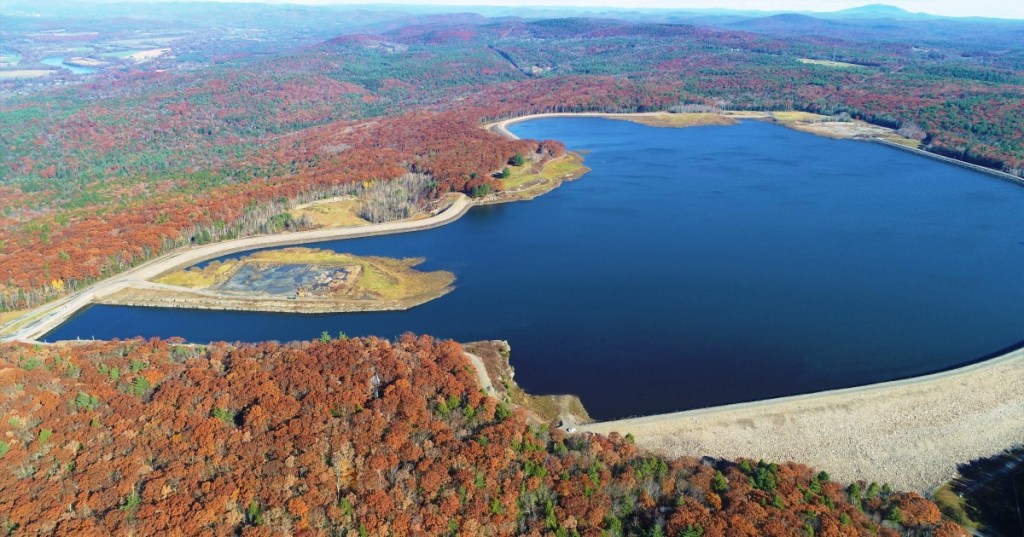
Hull Street Energy completed its acquisition of FirstLight’s U.S. electricity-generation portfolio on November 2, adding nearly 1,400 megawatts of hydroelectric, pumped-storage, solar and battery assets across the Northeast. The transaction transfers the U.S. platform from Canada’s Public Sector Pension Investment Board, known as PSP Investments. Neither party disclosed a purchase price.
The centerpiece is Northfield Mountain, a 1,168 MW pumped-storage hydroelectric facility in Massachusetts that FirstLight describes as New England’s largest energy-storage installation. The acquired fleet also includes 14 conventional hydroelectric stations in Connecticut, Massachusetts and Pennsylvania, plus three operating solar-and-battery facilities.
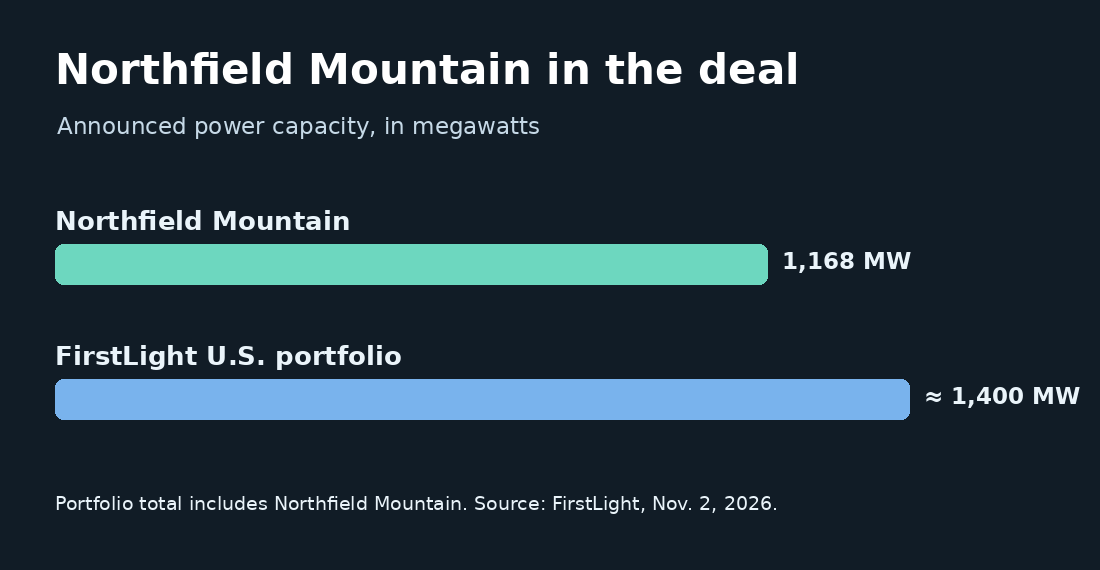
Source: FirstLight’s November 2 acquisition announcement, including the original Northfield Mountain facility photograph.
The completed purchase follows an agreement announced May 19. The distinction matters: the earlier release described a proposed acquisition subject to regulatory approvals, while the November announcement confirms closing. No new power plant or generating capacity was created simply because ownership changed.
Capacity is reported on different regulatory bases. FirstLight and Hull Street cite an operating Northfield rating of 1,168 MW, while the Federal Energy Regulatory Commission’s January 30 environmental summary describes a 1,166 MW project. Neither figure denotes new capacity created by the sale, nor annual megawatt-hour production.
How Northfield stores electricity
Pumped-storage hydroelectricity works by moving water to an elevated reservoir when electricity is available and releasing it through turbines when demand or prices rise. Northfield Mountain’s four generating units are rated at 292 MW apiece. The combined 1,168 MW rating measures maximum electrical power, not how many megawatt-hours the reservoir can deliver during an extended discharge.
The system consumes electricity while pumping water uphill and returns less energy than it uses because of hydraulic, mechanical and electrical losses. Its value lies in moving electricity between hours, providing flexible generation and supporting grid stability. Unlike conventional run-of-river hydro, pumped storage is principally an energy-shifting technology rather than a net source of new electrical energy.
U.S. Department of Energy, “What is Pumped-Storage Hydropower” (2017). Official instructional video, not footage of the Northfield acquisition.
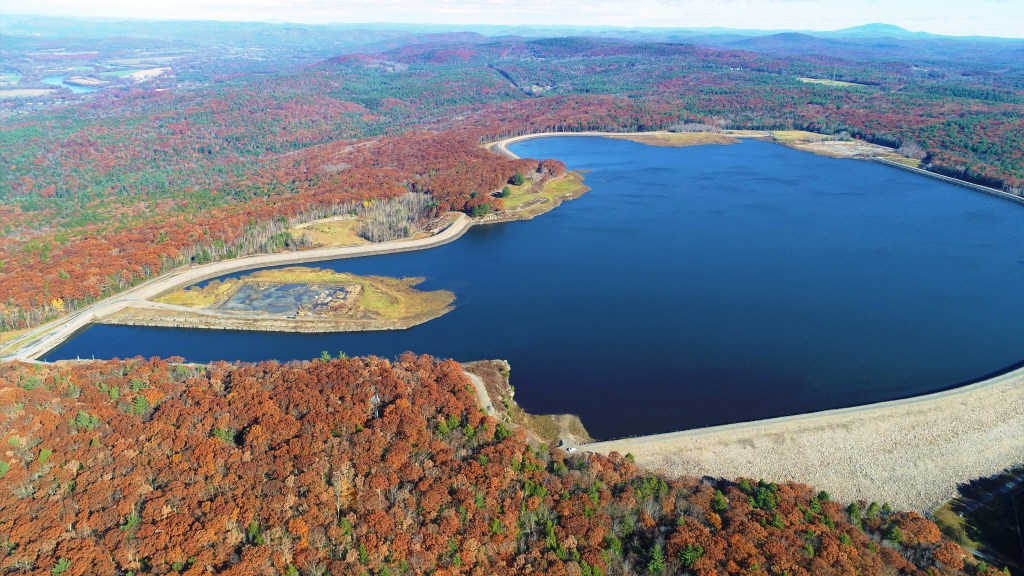
Technical reference: Northfield Mountain pumped-storage assessment, detailing four 292 MW units and operational characteristics.
The transaction arrives as New England faces difficult choices over reliability, fuel dependence and clean-power development. Pumped hydro can complement the growing solar-and-battery market, especially when multi-hour energy shifting is valuable. Conventional hydro stations, meanwhile, can provide generation without direct combustion emissions, although water availability and environmental obligations limit operation.
Hull Street has expanded its exposure to hydropower as investors search for long-lived energy infrastructure. Its earlier agreement involving Michigan hydroelectric dams remains a separate transaction; the November FirstLight closing should not be conflated with the status of those assets. Investors must also evaluate maintenance spending, electricity market revenues and licensing obligations, none of which can be inferred from the undisclosed purchase price.
Hydroelectric infrastructure brings environmental trade-offs. Reservoir operations can affect river flow, fish passage, aquatic habitat and shoreline recreation. Federal relicensing proceedings and site-specific operating conditions influence future capital expenditure. Modernization projects such as the Čierny Váh hydroelectric upgrade illustrate how existing facilities may require substantial engineering investment even when their original generating structures remain useful.
U.S. Department of Energy, “Energy 101: Hydropower.” Archival generator-and-turbine explainer, not a depiction of Northfield Mountain.
The 1,168 MW Northfield rating is also different from annual electricity production. As BitcoinVersus.Tech explains in its capacity-factor guide, nameplate capacity alone cannot establish delivered energy over a year. Comparing Northfield directly with a proposed 1.8 GW pumped-storage development in Scotland therefore requires attention to operating status, usable storage duration and actual dispatch.
Hull Street and FirstLight say the existing management team will continue operating the business. The immediate change is ownership and financial stewardship, not a demonstrated increase in output. Future operating reports, licensing developments and investment announcements will show whether the acquisition improves reliability, plant availability and environmental performance.
BitcoinVersus.Tech Editor’s Note: The November 2 acquisition close, FirstLight’s 1,168 MW rating and FERC’s separate 1,166 MW project reference were checked against primary sources. The approximately 1,400 MW fleet figure is an estimate; the purchase price is undisclosed. The 1200 × 630 featured cover shows the real Northfield Mountain upper reservoir, photographed by FirstLight, rather than an illustration or the acquisition event.
To donate 5,000 sats, open this page on another screen and scan the QR code below with your mobile Bitcoin wallet. If your wallet supports scanning a saved image, you can save the QR image and scan it from your phone instead.

We volunteer daily to ensure the information on this platform is Verifiably True. If you would like to support the research, please scan QR code. Bitcoin receiving address: 3C9o19EH5HSiwEPyCTmEKzxhNCbo2X6TTb. Verify the address before sending.
BitcoinVersus.tech is not a financial advisor. This media platform reports on technical and financial subjects purely for informational purposes.


Leave a Reply