
Credo Technology and Oracle announced on November 4, 2026, that the Open Compute Project has approved two optical-transceiver telemetry specifications intended to help data-center operators detect deteriorating fiber links before disruptions escalate. The companies’ joint announcement identifies the specifications as Enhanced Telemetry Optics Product Software Specification v1.0 and Transparent Remote Optical Transceiver Messaging with ePPS Design Specification v0.9. OCP’s public contribution registry independently lists both versions. Approval provides published technical standards, not evidence of deployment across every vendor or AI cluster.
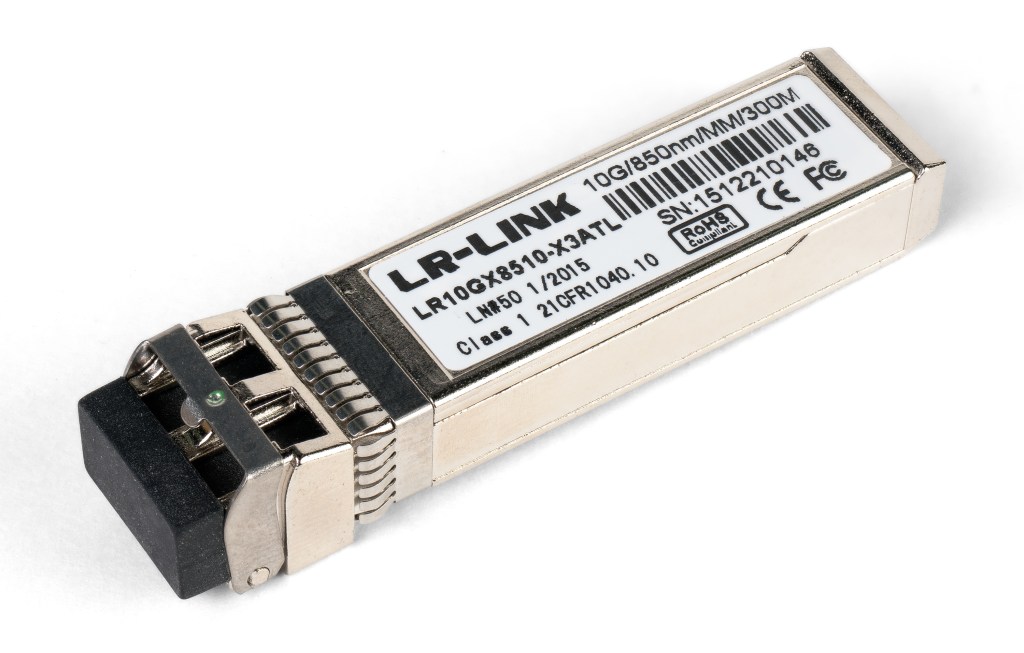
Optical links connect accelerator servers, network switches and memory systems through pluggable modules that turn electrical signals into light and back again. A brief link flap can interrupt traffic even when the cable appears intact. Earlier coverage of SFP and QSFP optical transceivers explains the hardware and form factors underlying large AI networks.
Credo engineer Chris Collins presents “More Signal, Less Noise” at the October 13, 2026 Open Compute Project Global Summit. Original event recording: OCP’s published video, linked by Credo; recorded before the November 4 announcement.
A common language for diagnosing fiber faults
The Enhanced Telemetry specification defines how a transceiver and its host exchange physical-layer measurements, produce a common link-health score, record significant events and support configurable corrective actions. The companion messaging specification allows optical digital signal processors at opposite ends to coordinate diagnostic information over an operating link without disrupting user traffic. Together, the designs seek to distinguish a failing host port from a degraded module, connector or fiber path.
Traditional diagnostics already expose readings such as optical power and error counts. A consistent reporting method could make alert thresholds, fault histories and automated handling easier across mixed equipment fleets. However, an approved interface does not automatically repair damaged fiber or eliminate every network fault. The underlying engineering methods have long been covered in our optical-performance monitoring and telemetry lesson.
The demo shows potential, not universal results
Credo’s October 2026 summit recap describes a controlled demonstration involving 16 switch ports and 48 optical modules. Engineers injected attenuation faults; according to the company, its telemetry isolated the affected link segment in seconds rather than hours. The trial is relevant engineering evidence, but its results are vendor-reported and cannot be extrapolated into a measured fleet-wide uptime improvement.
The new standards build on Credo’s ZeroFlap host specification and the Optics Reliability Workstream it established with Oracle in January. A separate 1.6-terabit ZeroFlap optical-cable announcement concerned link hardware and distance, while the newly approved contribution addresses diagnostics and management interoperability. OCP technical approval is more specific than simply promoting a branded cable.

Adoption is the next reliability test
Credo says its engineers also demonstrated extensions to the open-source SONiC network operating system, including optical telemetry through existing transceiver-management components and diagnostic-monitoring tables. The purpose is to reduce integration barriers without making a wholesale software redesign mandatory. For comparison, earlier 1.6T Ethernet link-recovery testing explored a different remedy: retrying transmissions after errors, rather than diagnosing the optical segment most likely to cause a flap.
Switch makers, optical-module suppliers and operators will still need to implement compatible software, validate interoperability and choose policies for alarms or resets. Incomplete firmware support, inconsistent metric interpretation and excessive automated responses could undermine the goal. The OCP Optics Reliability Workstream remains the authoritative venue for published updates. The meaningful next milestone will be multi-vendor production evidence showing faster fault localization and fewer customer-visible disruptions.
Editor’s Note. The approved OCP documents establish shared technical specifications; they do not prove industry-wide adoption or an independently measured reduction in failures. Credo’s 16-port, 48-module example is a company-reported demonstration. The presentation video predates the November 4 announcement; both optical-hardware images are archival or representative. The featured cover is an editorial illustration.

Scan the donation code from another device if your phone cannot scan its own screen.
We volunteer daily to improve the credibility of the information on this platform. If you would like to support the research, please donate here: 3C9o19EH5HSiwEPyCTmEKzxhNCbo2X6TTb
BitcoinVersus.tech is not a financial advisor. This media platform reports on technical and financial subjects purely for informational purposes.


Leave a Reply