
X-energy, Sweden’s Alleima and South Korea’s Doosan Enerbility announced on November 4, 2026, the first procurement order for steam-generator tubing intended for the Xe-100 advanced nuclear reactor. Alleima will supply specialized steel tubes, and Doosan will form the material into helical coils. The order supports a proposed four-reactor project with Dow in Texas, according to X-energy’s announcement. It confirms supply-chain procurement, not delivery of finished coils or construction of an operating nuclear plant.
What is an Xe-100 reactor? The Xe-100 is a small modular, high-temperature gas-cooled nuclear reactor. Unlike conventional light-water designs, it circulates helium through a core containing fuel pebbles made with coated TRISO particles. Hot helium passes through a separate steam generator, transferring heat across metal tubes into water that becomes steam for power generation or industrial processes. The proposed design targets roughly 80 megawatts of electric output per reactor, or 320 MW across four units; those figures are design capacity, not electricity being generated today.
X-energy’s 2023 official technology overview explains the planned Xe-100 helium-cooled reactor and TRISO fuel concept. The presentation predates the 2026 tubing order and does not show a completed Dow plant.
The new tubing order focuses on a crucial heat-transfer interface. Alleima specializes in corrosion-resistant steels and high-temperature alloys; Doosan plans to bend its tubes into closely spaced helical coils for the Xe-100 steam generator. X-energy says the proposed assembly is designed to produce steam at temperatures up to 565°C. That temperature is a design specification, not a measured result from the unfinished Dow installation. Engineering requirements include thermal expansion, material integrity, weld quality and inspection.
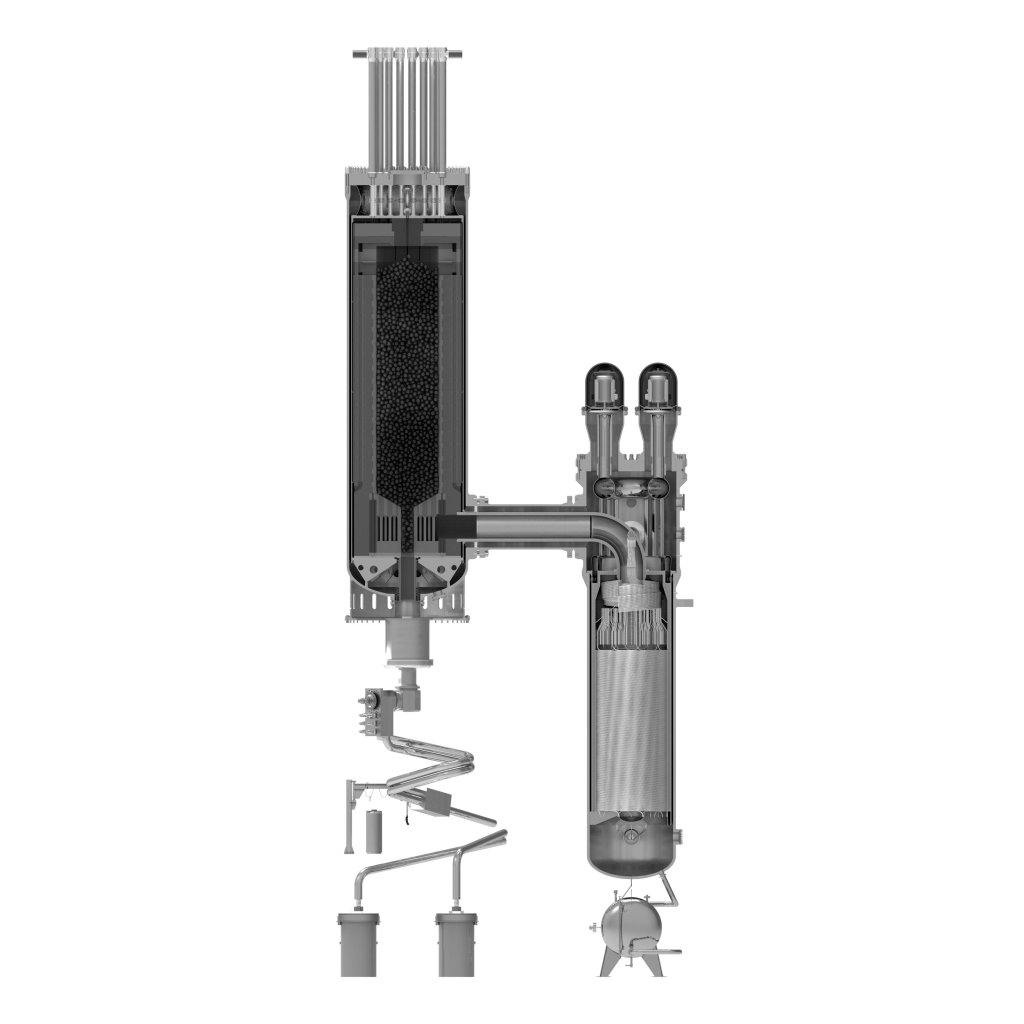
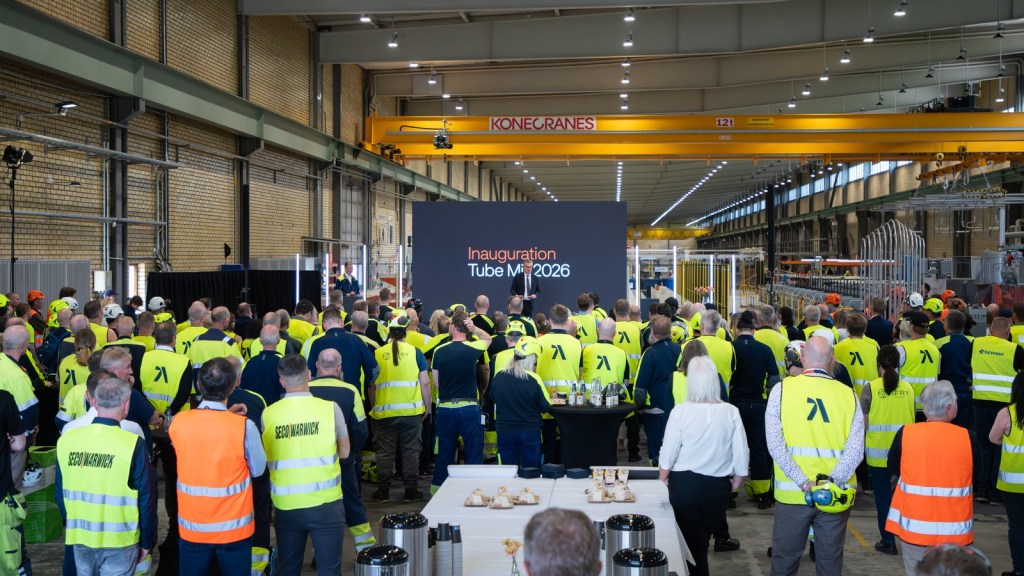
The project has a substantial manufacturing history. X-energy and Doosan began technical work in 2021 and reserved capacity in December 2025 for 16 sets of reactor and steam-generator pressure vessels. The new purchase adds a specific internal component order to that earlier agreement. Alleima opened its Tube Mill 2026 in Sandviken, Sweden, in June, expanding a supply chain that serves established reactors and emerging SMR programs. Doosan previously worked with NuScale, as BitcoinVersus.Tech reported when the companies started another SMR component; those components belong to a different reactor design.
X-energy’s first proposed U.S. installation, the Long Mott Generating Station at Dow’s Seadrift-area industrial complex, remains in licensing and project development. On October 30, the company announced completion of the Nuclear Regulatory Commission staff’s final safety evaluation. A completed safety review is important but does not itself issue a construction permit. The project still requires regulatory approvals, commercial decisions, construction, commissioning and fuel supply before any operating output can be verified.
Small reactors could supply high-temperature process heat without the combustion emissions associated with conventional industrial boilers. The value of placing generation near a major industrial heat load is one reason developers are exploring SMRs beyond electric grids. BitcoinVersus.Tech’s earlier SMR feasibility analysis examined related costs and deployment questions, while X-energy’s proposed 960 MW Indiana project illustrates a separate, earlier-stage agreement. Neither project represents an operating Xe-100 fleet.
Supply-chain reservations and component orders help developers address long manufacturing lead times, but they cannot eliminate construction risk. Tube qualification, nuclear quality assurance, reactor permitting, project finance and integration testing can still change schedules or costs. X-energy has not disclosed the contract’s dollar value or a delivery date for finished coils. Broader nuclear expansion also includes conventional uprates, such as the DOE-backed Constellation modernization plan, which operates on a different technology path.
The next milestones are manufactured and inspected tubing, completed helical-coil assemblies, a formal construction authorization and an updated schedule for Dow’s first four units. Until those steps are documented, the November 4 announcement should be understood as a concrete procurement achievement for a reactor design still moving toward commercial deployment.
BitcoinVersus.Tech Editor’s Note: We volunteer daily to ensure the credibility of the information on this platform is Verifiably True. If you would like to support to help further secure the integrity of our research initiatives, please donate using the QR code provided

For best QR-code scanning results, please scan this donation code from a desktop or larger screen. Mobile screens may prevent camera recognition. Verify the receiving address 3C9o19EH5HSiwEPyCTmEKzxhNCbo2X6TTb before sending.
Disclaimer: BitcoinVersus.Tech is not a financial advisor. This media platform reports on financial subjects purely for informational purposes.


Leave a Reply