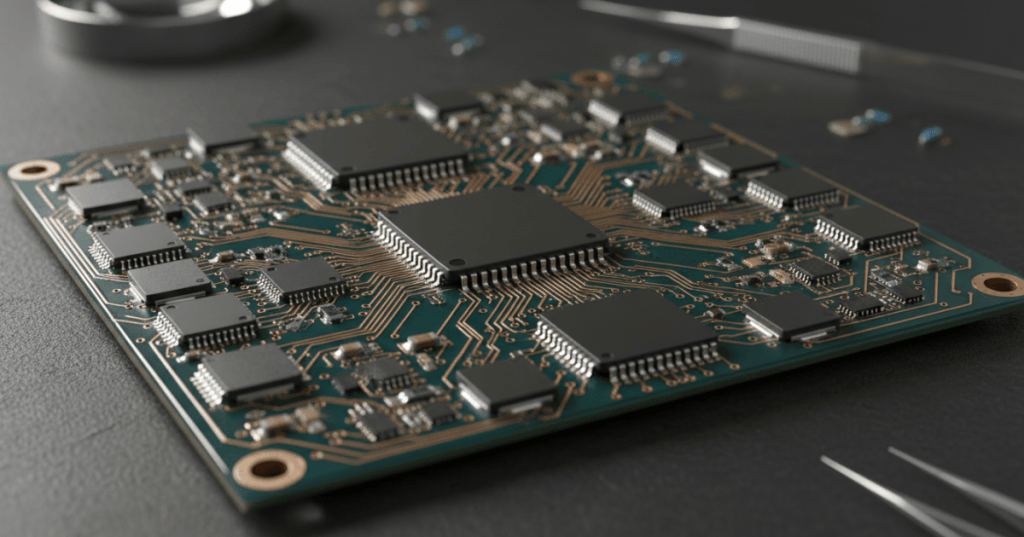
Analog Devices said November 6 that it completed its acquisition of Alif Semiconductor, adding AI-focused microcontrollers and fusion processors to a portfolio built around sensors, analog signal processing, power management and connectivity. The transaction gives the U.S. chipmaker a larger role in systems that process sensor data locally, rather than sending every measurement to remote servers.
The company announced completion in Taipei, describing Alif’s technology as a way to expand its addressable markets across industrial equipment, robotics, energy, defense, healthcare and wearable electronics. A completion announcement confirms the acquisition has closed; it does not establish that newly combined products are already shipping or that projected revenue gains have been realized.

Why Embedded AI Matters
A conventional microcontroller measures inputs and operates devices with tightly constrained memory and power. An AI-capable microcontroller adds acceleration and software support for inference: recognizing patterns, classifying sensor events or making limited decisions from trained models. Local processing can reduce cloud round trips and network dependency, although memory limits, model accuracy and security remain critical design constraints.
Alif’s technology centers on low-power processing and AI inference at the edge. Analog Devices already sells components that acquire and condition physical signals, making the combination potentially useful where sensors, signal-processing software and control logic must operate together. Competing developments include Renesas’s work compressing AI models for industrial edge hardware and BrainChip’s on-device AI development kit.
Robotics and Wearables Are Different Markets
In industrial automation, processors may need to fuse motion, vibration and current readings while responding within strict timing limits. A robot controller can use inference to identify a possible anomaly, but certified safety functions still require independent engineering and validation. Renesas’s newly introduced industrial motor-control chip illustrates how tightly real-time control, communications and software must be integrated.
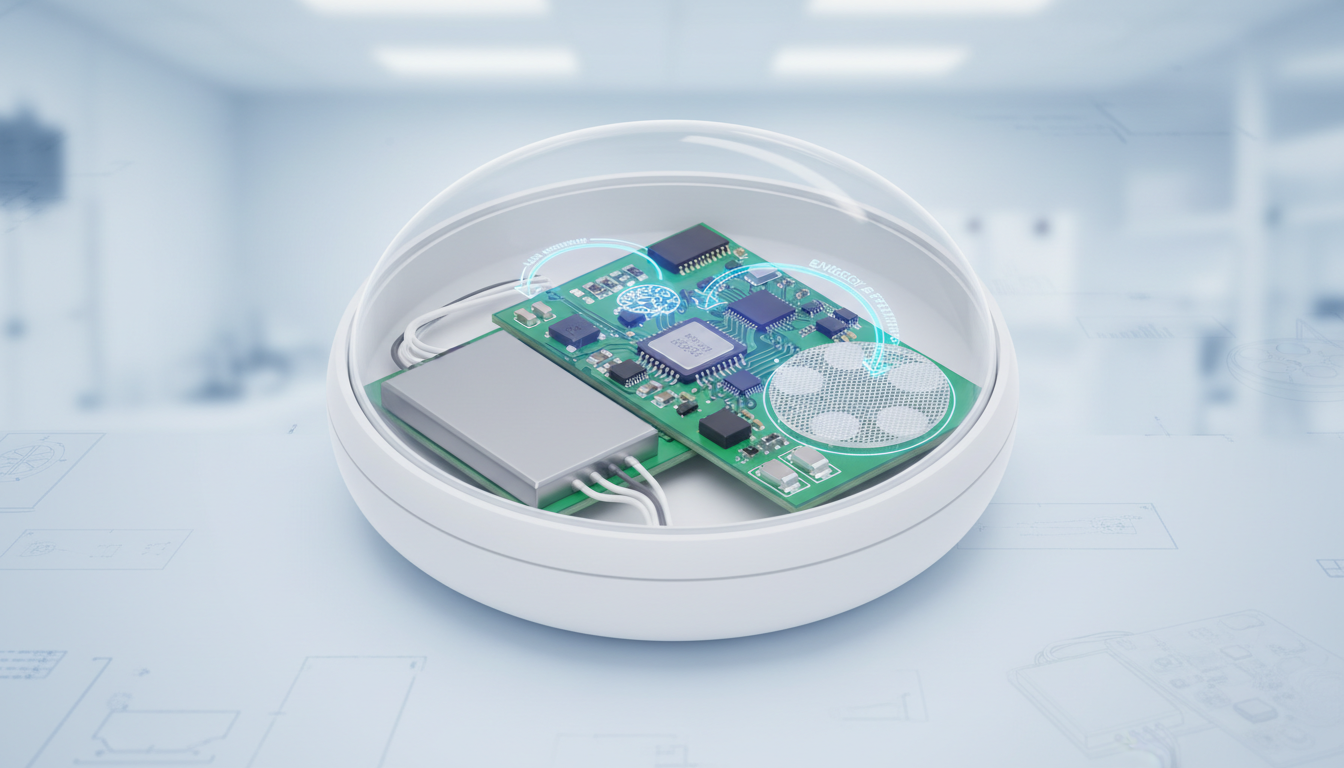
Wearables have a different tradeoff. They must keep battery consumption low while sensing continuously or intermittently, with processing often triggered by events rather than running a large model constantly. Local inference can reduce wireless transmission, but device makers still need to demonstrate usable battery life, accuracy, privacy protections and reliable firmware updates. STMicroelectronics’ recent embedded-chip expansion reflects the broader competition for control and power electronics markets.
Integration Is the Next Test
Analog Devices did not provide detailed product integration dates, customer commitments or acquisition economics in the completion announcement reviewed for the report. The practical test will be whether its engineers can combine Alif’s software and AI processing with Analog Devices’ analog front ends, connectivity and power-management products without raising development complexity or cost for equipment manufacturers.
The acquisition also broadens Analog Devices’ competition with microcontroller and embedded-processing vendors. Hardware designers typically require long product lifetimes, dependable toolchains and stable component availability; new AI features alone are unlikely to displace established controllers without measurable benefits in power, latency, reliability or total system cost.
For semiconductor customers, the milestone is ownership and organizational integration, not a measured breakthrough in AI performance. Future product announcements, design wins and financial disclosures will show whether the acquisition creates a differentiated platform for physical-world computing.
We volunteer daily to ensure the information on this platform is Verifiably True. If you would like to support the research, please scan QR code.

Scan the original BitcoinVersus.Tech donation QR code using another device to support independent research.
Editor’s Note. The November 6 acquisition completion is based on Analog Devices’ company announcement. Potential product and market advantages are analysis, not verified commercial results. In-body illustrations are conceptual. No YouTube video or original social post passed source and embedding verification for the transaction.


Leave a Reply