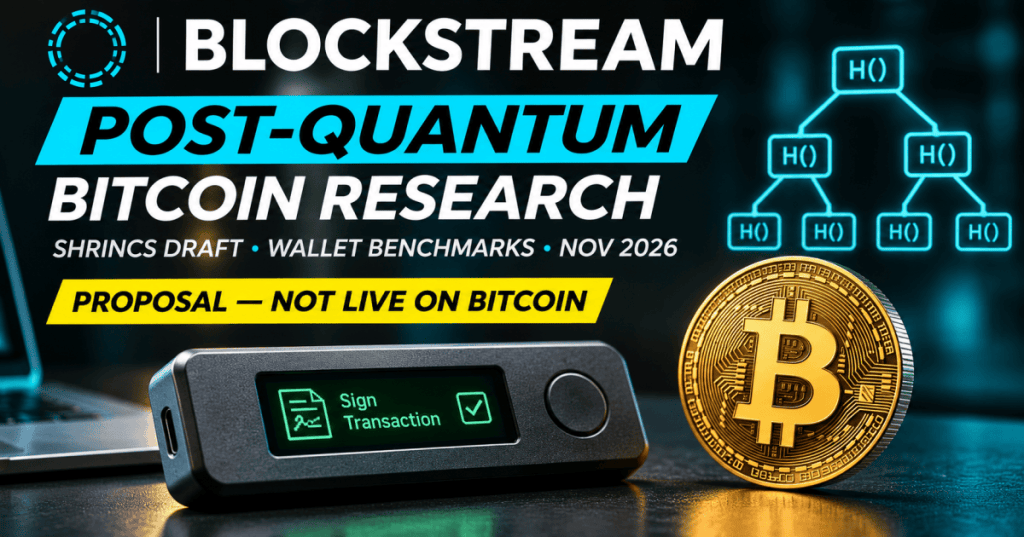
Blockstream’s November 5, 2026, quarterly update places post-quantum Bitcoin security among its research priorities after experiments with hash-based signatures, existing hardware wallets and the Liquid sidechain. The company helped advance SHRINCS to an August 26 draft specification discussed by Bitcoin developers. SHRINCS is not deployed on Bitcoin mainnet, and the document has not received a Bitcoin Improvement Proposal number or completed its formal security review.
Bitcoin currently authorizes spending with cryptographic signatures based on elliptic-curve mathematics, including Schnorr signatures used by Taproot. A sufficiently powerful future quantum computer could undermine their underlying assumptions. BitcoinVersus.Tech previously examined the distinction between theoretical quantum attacks and existing hardware and calls for early migration planning.
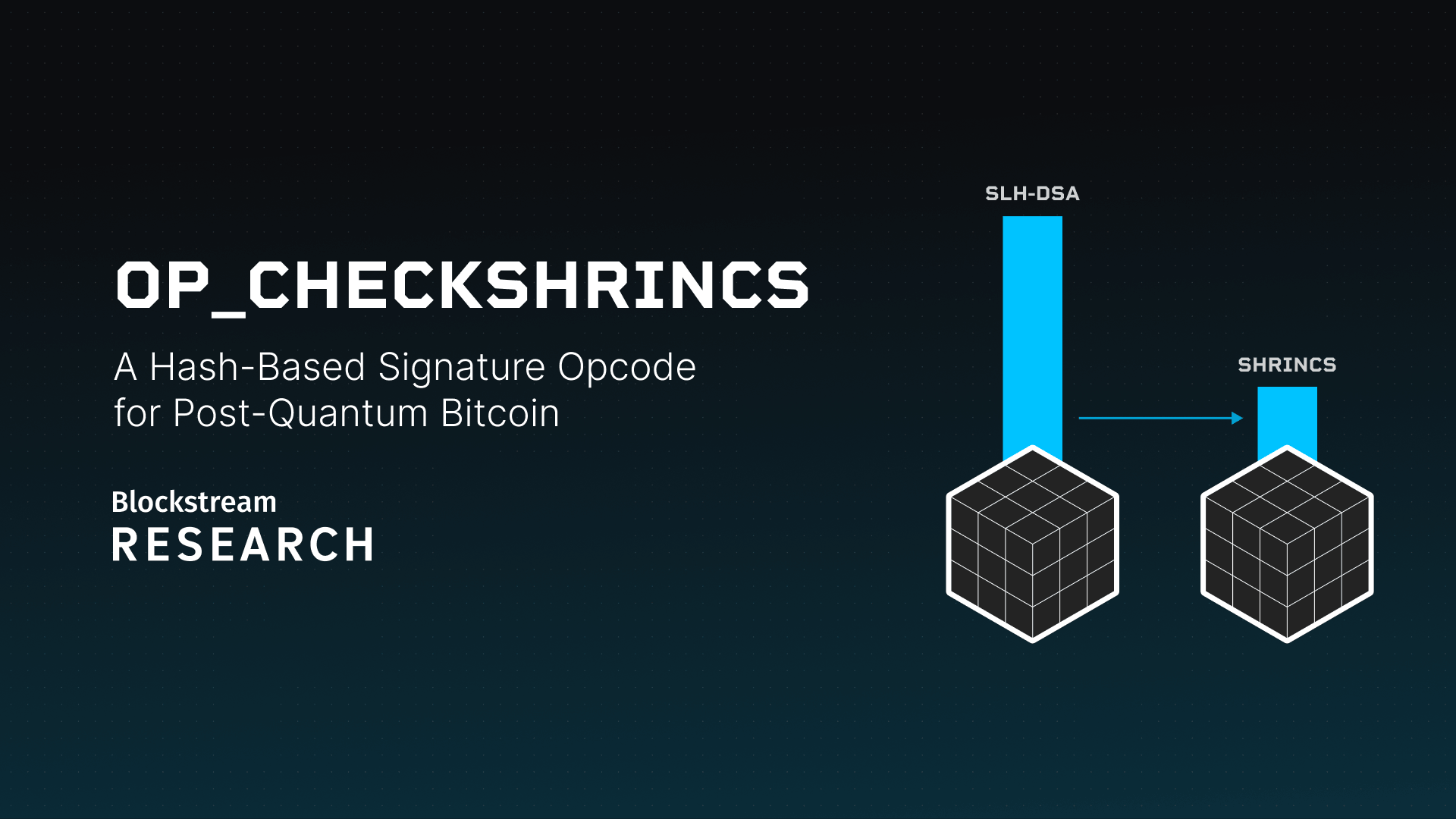
A cryptographic proposal, not a network upgrade
The SHRINCS Working Group’s August draft describes 48-byte public keys, a compact 548-byte stateful signature option and a substantially larger 5,777-byte stateless fallback. The stateful path requires wallet software to track a signature counter reliably. Reusing the same counter improperly can enable signature forgery, making backups, recovery and wallet synchronization difficult engineering problems.
Those draft sizes should not be confused with an earlier 324-byte experimental signature used in Blockstream wallet benchmarks. The research has evolved since the earliest implementation. The working group cautions that security proofs, test vectors and optimized code remain incomplete, with separate consensus rules and a new output type needed before Bitcoin could adopt the scheme. Bitcoin’s existing 64-byte Schnorr signatures are substantially smaller.
Existing hardware can produce prototype signatures
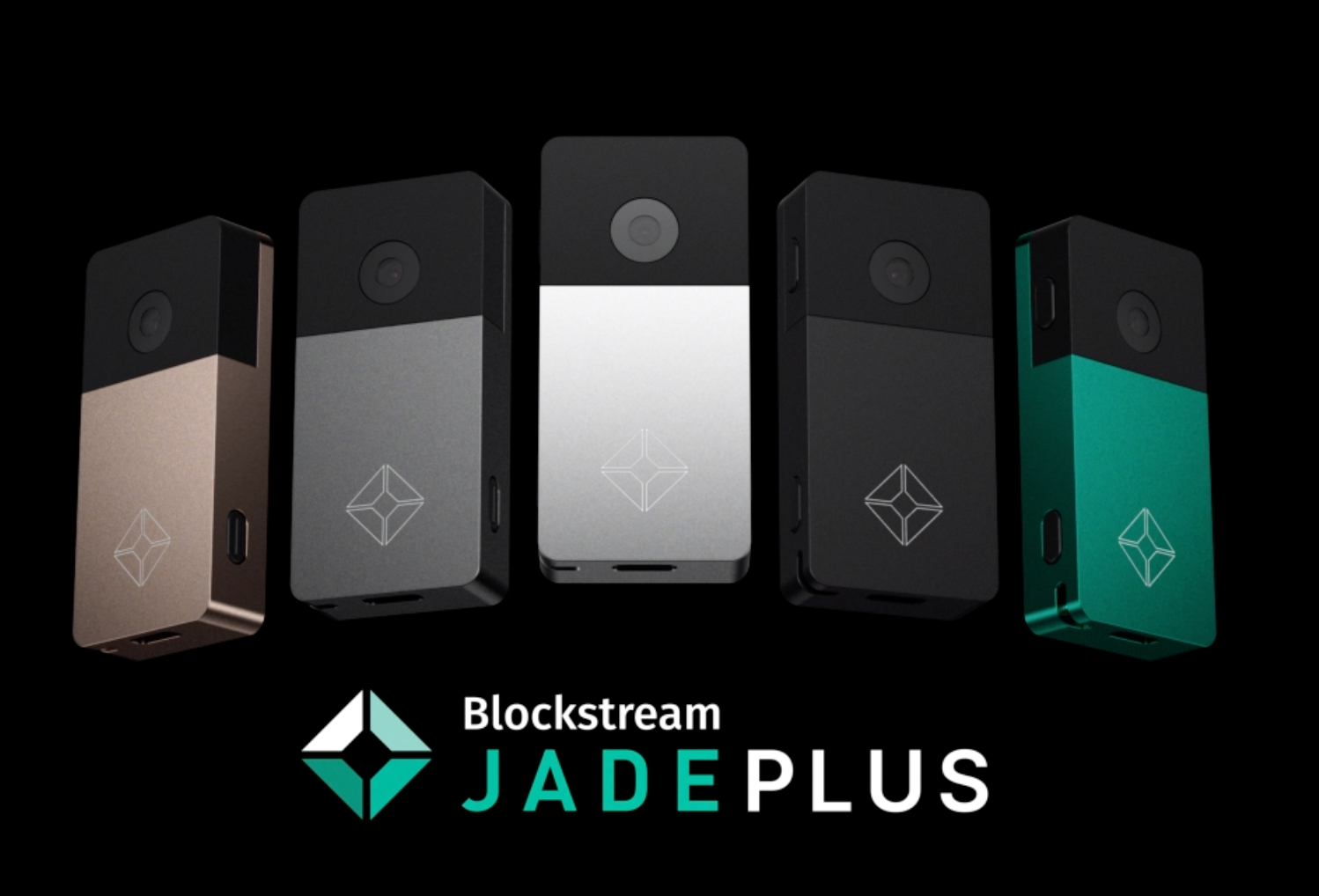
Blockstream’s August 19 hardware study tested hash-based signing on Jade Plus, Trezor Safe models, Ledger devices and BitBox02 Nova. For the earlier 324-byte UXMSS design, the reported average signing time was 21.75 seconds on Jade Plus, 25.82 seconds on Trezor, 41.83 seconds on Ledger and 30.9 seconds on BitBox02. Each result is a prototype laboratory benchmark rather than a shipping wallet feature.
Researchers standardized reference implementations for comparisons, but devices use different chips, firmware, compilers and hashing paths. The study explicitly did not test post-quantum firmware authentication, full wallet migration or consensus verification. Signing time, signature size and secure state management remain substantial adoption barriers, particularly for frequent transactions.
Liquid progress comes with separate security risks
A March 2026 transaction demonstrated hash-based post-quantum authorization on Liquid using Simplicity, a federated Bitcoin sidechain with different rules from Bitcoin mainnet. Blockstream’s November report also states that Liquid’s peg backing was restored by November 2 following a September vulnerability. BitcoinVersus.Tech covered the Liquid incident and withdrawal restrictions separately.
Security work also extended to wallet and node software. Blockstream reported Jade firmware repairs and Core Lightning security releases; earlier BitcoinVersus.Tech reporting detailed Lightning payment security fixes. None of those releases activates SHRINCS on Bitcoin.
The next milestone is independent cryptographic review, followed by standards development and eventual community consideration of any Bitcoin consensus change. The research demonstrates feasibility on constrained hardware, while leaving deployment timing, economics and the final cryptographic design unresolved.
Editor’s Note: Blockstream’s security and research milestones were checked against its November 5, 2026 quarterly report, the August 26 SHRINCS draft announcement, the August 19 hardware-wallet benchmark and Bitcoin’s BIP repository. The older experimental 324-byte signature and newer 548-byte draft are not equivalent specifications. SHRINCS remains prototype cryptography; no Bitcoin mainnet activation is claimed. The featured cover is editorial illustration, official images are historical product/research material and the embedded August interview is technical background. Independent player playback and mobile/desktop visual inspection remain unverified.

To donate 5,000 sats, open the article on a separate display and scan the original QR code with a compatible Bitcoin wallet. On mobile, use another screen or your wallet’s supported image-scanning feature. Verify the destination 3C9o19EH5HSiwEPyCTmEKzxhNCbo2X6TTb before sending.
We volunteer daily to ensure the information on this platform is Verifiably True. If you would like to support the research, please scan QR code.
BitcoinVersus.tech is not a financial advisor. Coverage of Bitcoin and cryptocurrency technologies is informational and not financial advice.


Leave a Reply