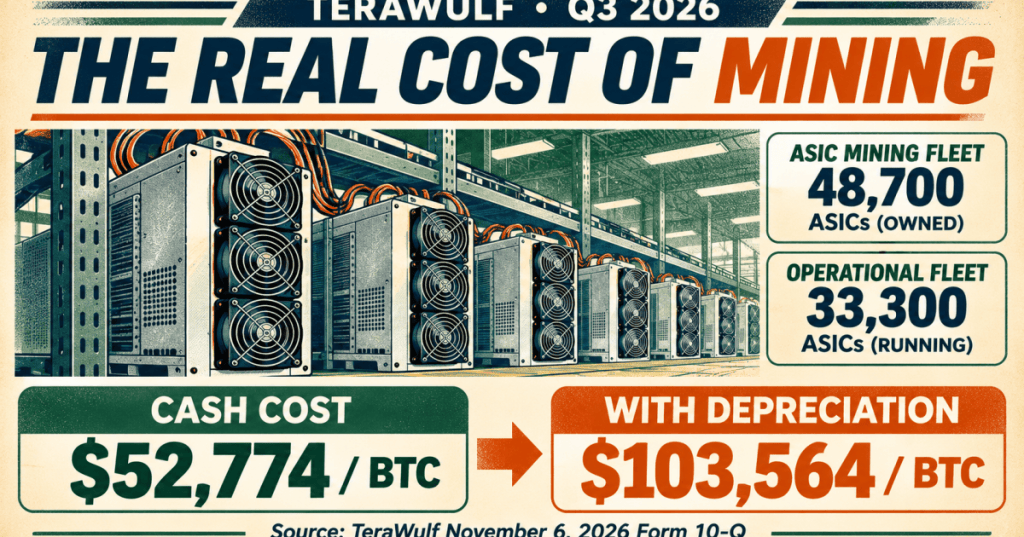
TeraWulf’s newly filed quarterly report places the cost of producing a bitcoin at $52,774 before miner depreciation and $103,564 after including depreciation for July–September 2026. The distinction matters because the company valued each coin mined during the period at an average of $71,204. Based on the November 6 Form 10-Q, the operation covered its stated direct cash mining costs per coin, but not the cost figure including ASIC depreciation.
Bitcoin miners use application-specific integrated circuits, or ASICs, to repeatedly perform SHA-256 calculations while competing for block rewards. Electricity is a major immediate expense, but the machines also lose accounting value as they age. Depreciation does not require a new cash payment each day; excluding it can nonetheless conceal the cost of replacing mining hardware.
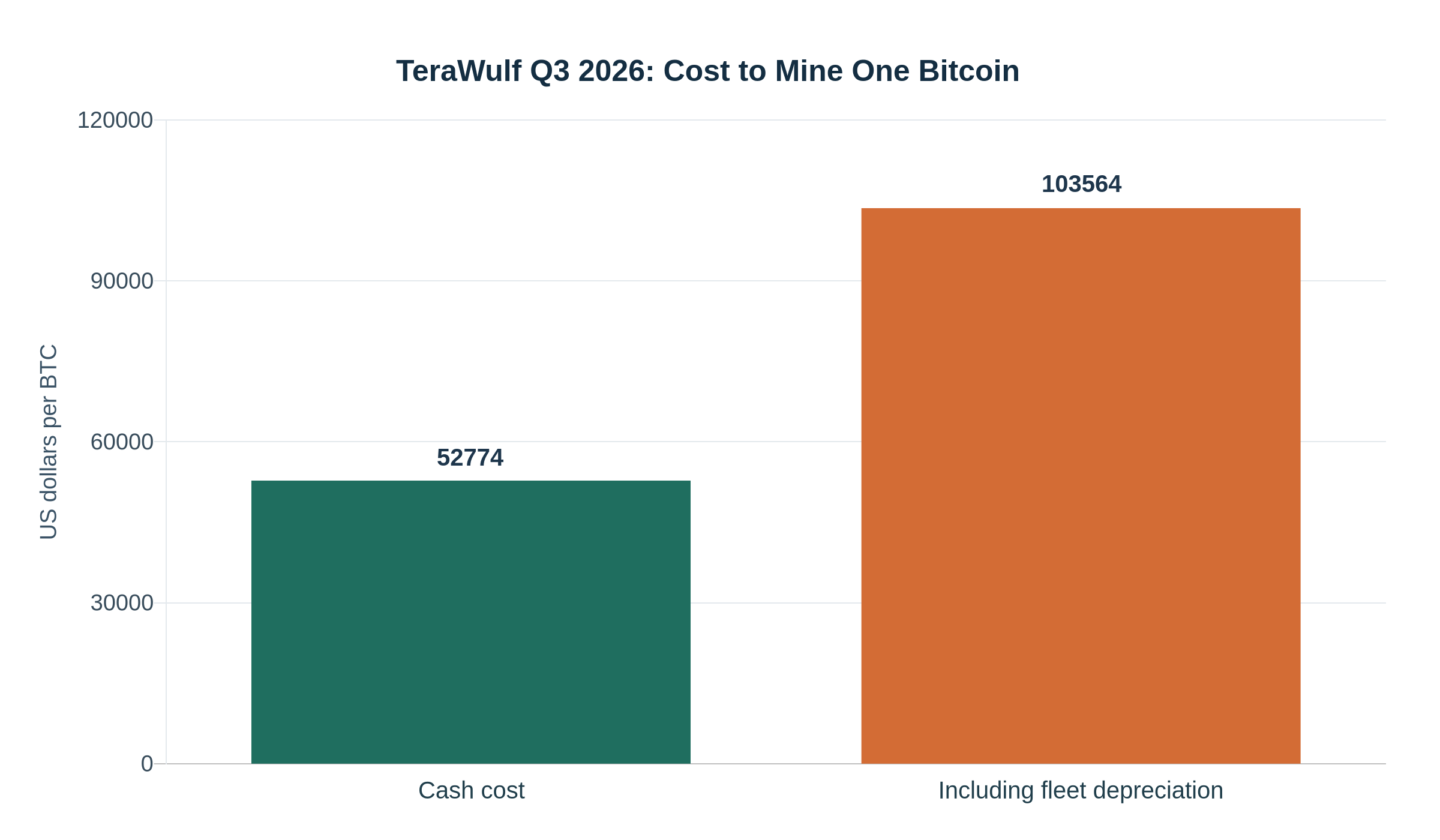
The depreciation gap is larger than the cash margin
The filing assigns approximately $50,790 of fleet depreciation per bitcoin. Against the reported $71,204 average value of production, the difference is a positive $18,430 before depreciation but a negative $32,360 after adding it. Those calculations are comparisons of company-defined figures, not GAAP net profit or an estimate of cash flow from the entire business.
TeraWulf mined 186 BTC in the 2026 quarter, compared with 377 BTC one year earlier. Its stated direct cash mining cost rose from $44,729 per coin in Q3 2025. Yet the depreciation-inclusive figure actually declined from $115,006 in Q3 2025, illustrating why cash economics and equipment accounting can move in different directions. BitcoinVersus.Tech’s earlier TeraWulf earnings story examined the company’s revenue shift toward AI leasing; the hardware-cost detail represents a separate operating issue.
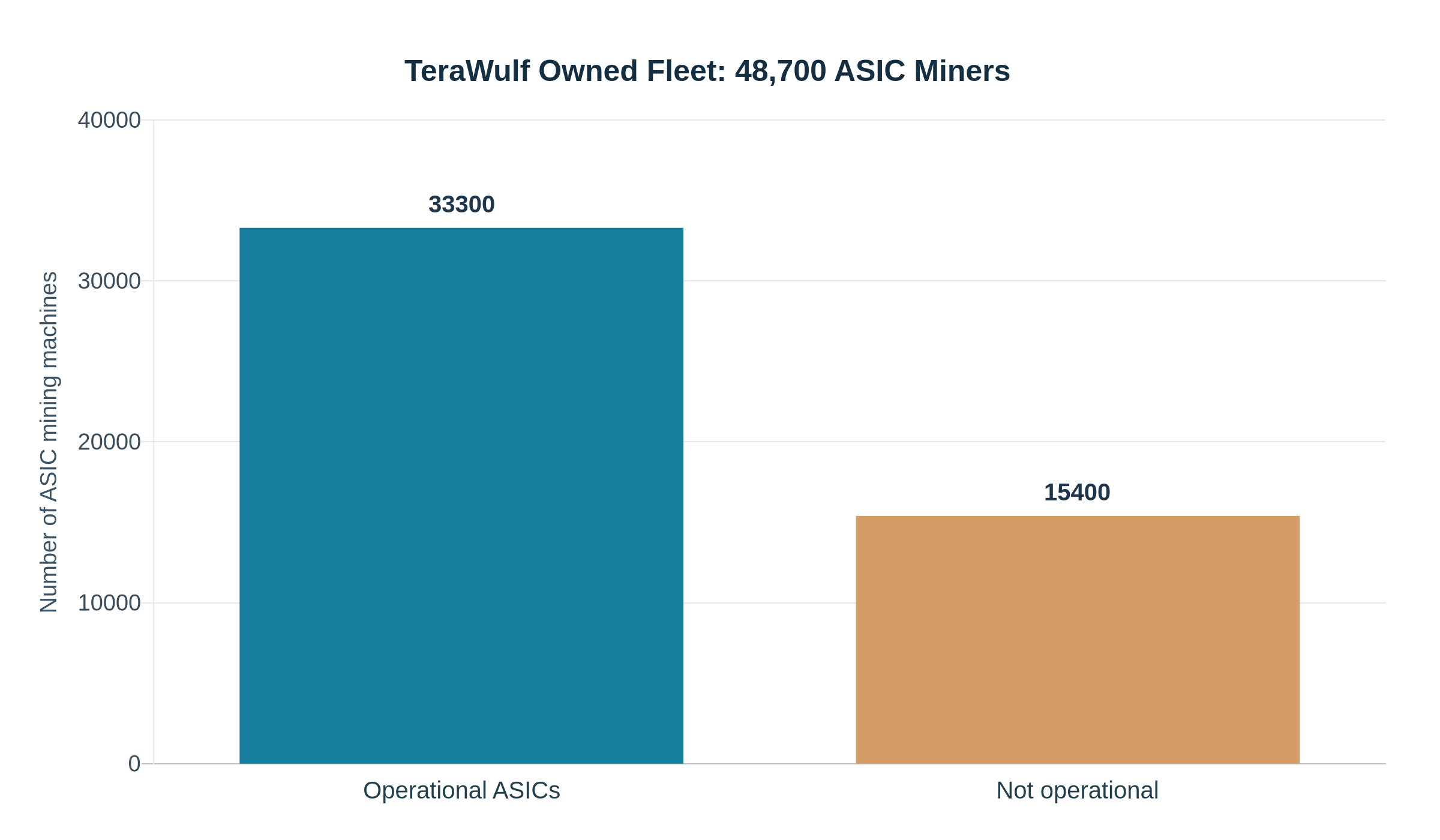
15,400 owned ASICs were outside the active count
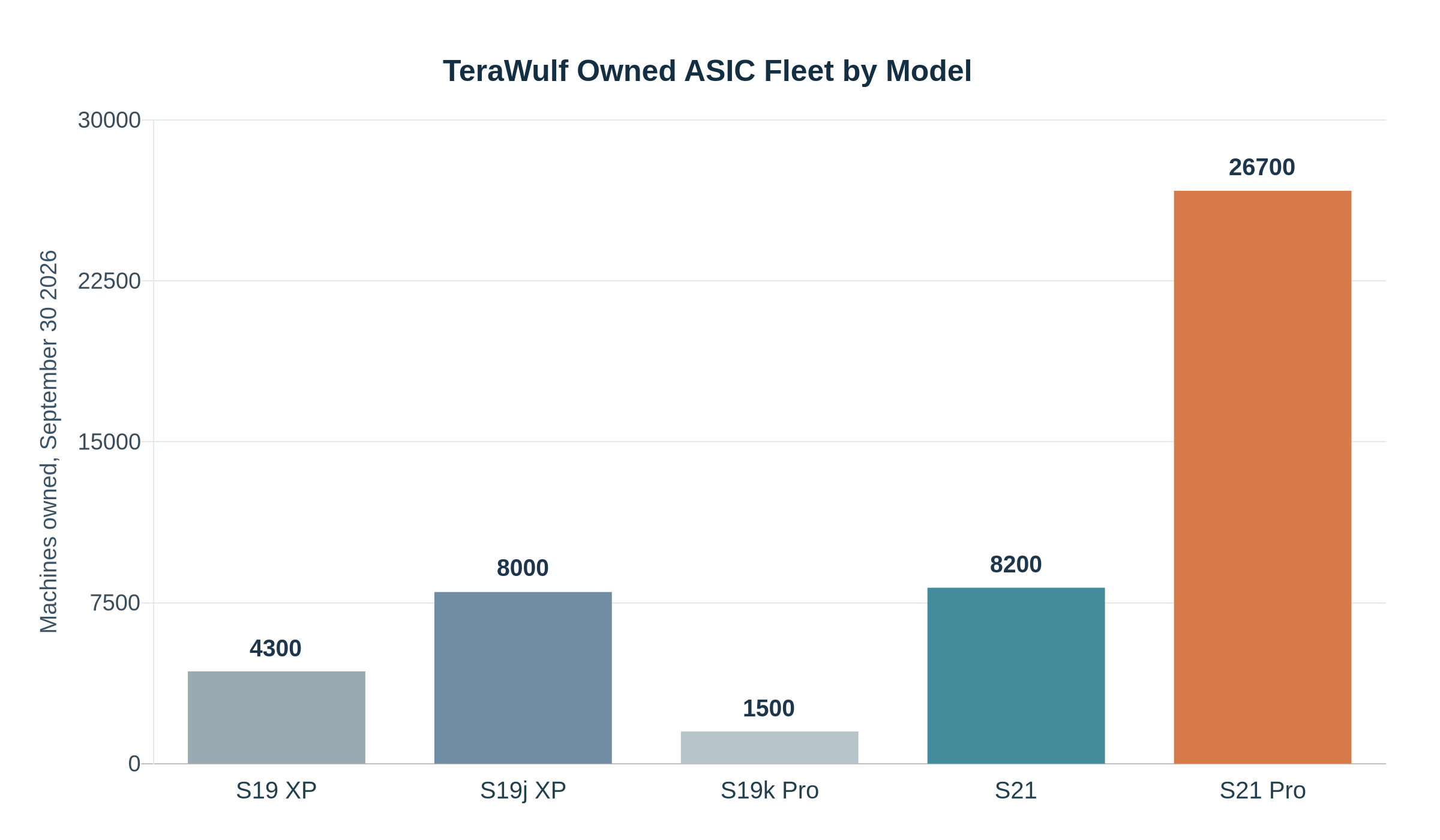
At September 30, TeraWulf owned approximately 48,700 mining machines, of which 33,300 were operational at its Lake Mariner campus. The remaining 15,400 machines, or roughly 31.6% of the inventory, were being maintained, awaiting disposal or held in reserve as replacement units. The company did not provide a breakdown among those groups, so labeling all 15,400 as broken would be incorrect.
The ownership list includes 26,700 Bitmain S21 Pro units, 8,200 S21 miners, 8,000 S19j XP, 4,300 S19 XP and 1,500 S19k Pro. S21 Pro machines account for about 54.8% of units owned, but the filing does not identify exactly how many of each model were running. The wider move from older S19 hardware toward S21 generations is explained in BitcoinVersus.Tech’s ASIC fleet comparison.
Less hashrate despite better machine efficiency
Operational hashrate fell to 5.7 EH/s from 8.5 EH/s a year earlier, although the company’s reported fleet efficiency improved from 17.5 to 16.4 J/TH in its combined-facilities comparison. The Lake Mariner fleet’s separately reported average was 16.2 J/TH. Nameplate capacity stood at 9.8 EH/s, meaning active performance and theoretical installed capacity should not be conflated.
The company identifies tuning, curtailment, adverse weather, maintenance and repair as possible reasons operational hashrate can fall below nameplate. It recorded 162,558 MWh of mining electricity use during Q3 2026 versus 357,754 MWh a year earlier. Net energy expense per kilowatt-hour increased from 4.7 to 6.0 cents. The net power figures account for expected demand-response proceeds, a mechanism also examined in BitcoinVersus.Tech’s report on Riot’s power credits.
Lake Mariner still had 145 MW of legacy mining capacity alongside 102 MW of energized high-performance-computing critical IT capacity at quarter-end. The units describe different capacity measures and should not be interpreted as an equivalent workload comparison. BitcoinVersus.Tech has tracked the broader movement of miner power infrastructure toward AI.
TeraWulf’s numbers reveal a narrower but consequential reality: the machines continuing to mine may cover defined cash expenses while earning less than their reported cost after depreciation. Future profitability depends on Bitcoin prices, network competition, power-market conditions and how operators maintain or repurpose the remaining ASIC fleet.
Primary sources: TeraWulf November 6, 2026 Form 10-Q, Bitcoin Mining Operations and Cost of Mining sections and TeraWulf third-quarter results. All operational counts reflect September 30, 2026, not a live November inventory.
Editor’s Note: Financial and operating comparisons use TeraWulf’s November 6, 2026 filing for the quarter ended September 30. The $52,774 amount excludes miner depreciation, while $103,564 includes stated miner depreciation but may not include every corporate overhead expense. Company-reported inventory and hashrate are dated snapshots, not independently audited live machine counts. The featured image is original conceptual editorial artwork; the three charts reproduce disclosed numbers rather than simulated measurements.
Support BitcoinVersus.Tech
To support independent verification and reporting, scan the original approved QR code below for an optional 5,000-satoshi contribution. On a phone, open the article on another screen and scan using a compatible Bitcoin wallet, or use the wallet’s supported image-scanning function. Confirm the recipient and amount before payment.

We volunteer daily to ensure the information on this platform is Verifiably True. If you would like to support the research, please scan QR code.


Leave a Reply