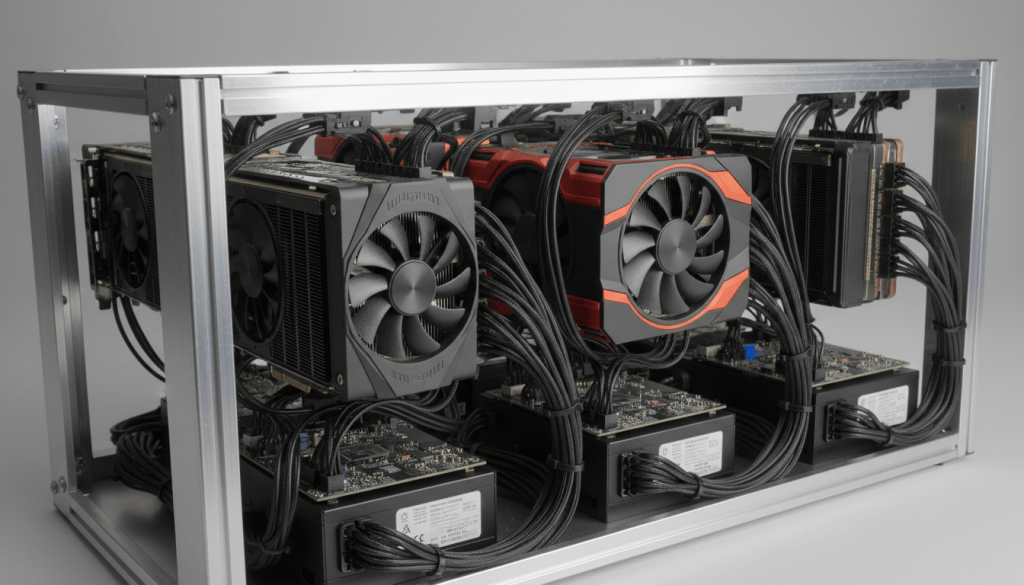
ForgeMiner 1.9.2, released November 6, adds verifiable GPU voltage readings and automatic recovery for failed mining cards. The developer also reports improved performance for several cryptocurrency mining algorithms, but the most consequential change for operators may be the ability to distinguish a requested electrical setting from one actually applied by the graphics card.
GPU mining software controls general-purpose graphics processors to calculate proof-of-work hashes. Unlike Bitcoin’s modern SHA-256 ASIC mining equipment, graphics cards can support different algorithms through specialized kernels. Stable voltage, clock frequency and cooling influence energy cost and the number of valid shares delivered to a mining pool.
Voltage confirmation replaces guesswork
According to the official release notes, some NVIDIA RTX 20-, 30-, 40- and 50-series cards previously rejected voltage-offset commands with an ambiguous-record error. The miner could continue operating at its prior voltage even though a lower setting had been requested. The updated Linux interface exposes a Volt column and a voltage_mv API field. Green marks a confirmed reduction; yellow indicates an unapplied request.
Voltage reduction can decrease chip power consumption, but a lower voltage alone does not establish improved mining profitability. Operators still need accepted-share counts, rejected-share rates, wall-power measurements and stable operating periods. For background on GPU and ASIC differences, BitcoinVersus.Tech explains the anatomy of a Bitcoin mining hashboard. Earlier BitcoinVersus.Tech coverage of automated ASIC power targets addresses a related efficiency problem on different hardware.
A twelve-card test highlights energy tradeoffs
The developer reports a test using twelve NVIDIA CMP 90HX cards mining Pearl with memory clocks reduced to 405 MHz. Power declined approximately 27%, while hashrate declined 1.6%. Using the reported relative figures, energy per hash becomes 0.73 divided by 0.984, or approximately 74.2% of its previous value—an estimated 25.8% reduction in energy per hash under the stated test conditions.
The figures are developer-reported, not independent laboratory measurements. They also do not necessarily include all rig overhead, such as host processors, fans or power-supply losses. The release warns that RTX 20 and CMP 50HX hardware can lose substantial hashrate at similarly low memory clocks. A result on one GPU generation cannot be generalized across a mixed fleet.
Recovery changes target lost mining time
Version 1.9.2 expands automatic recovery beyond Quantus to every supported coin. A card that fails after mining begins is retried after progressively longer delays while other cards continue. The Windows launcher can restart the mining process if device-level recovery fails. AMD RX 7000 cards connected through chipset slots without PCIe atomics also receive fixes for hangs involving Conflux, Xelis and KawPow.
The developer claims up to 1.6% faster Quantus mining on RTX 30-, 40- and 50-series cards at unchanged overclock settings, alongside KawPow improvements of up to 5.5% on certain RTX 30-series configurations. Those are upper-bound release claims, not guaranteed fleet-wide gains. BitcoinVersus.Tech previously reported on Quantus pool availability and BzMiner algorithm switching, separate developments involving GPU mining software.
ForgeMiner’s release also lists SHA-256 checksums for downloadable archives and specific NVIDIA driver requirements. The practical test is whether voltage changes are confirmed, failed cards resume producing accepted work and measured energy per accepted hash improves without sacrificing reliability. No independent hardware test was performed for the article.
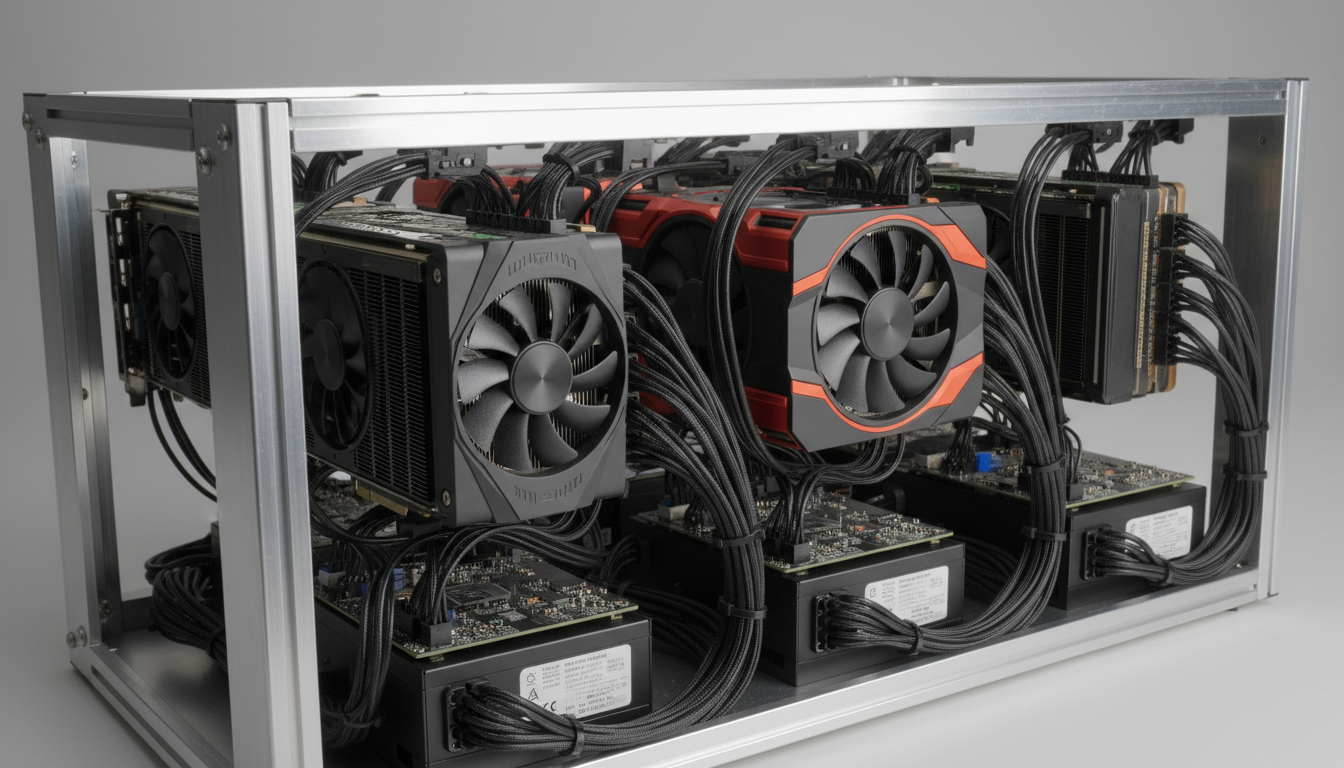
Editor’s Note: Technical changes, compatibility limitations, release date and test figures were verified against the developer’s November 6, 2026 release notes. Energy-per-hash changes were calculated from rounded developer measurements. No miner binary was installed, GPU benchmark reproduced or pool share log independently inspected. The featured illustration is AI-generated. No verified official video was available for a responsible embedded-player claim.

To donate 5,000 satoshis, display the original QR on a second screen and scan with a compatible Bitcoin wallet. On mobile, use another device or a wallet’s supported saved-image scanning feature. Confirm the destination before transferring funds.
We volunteer daily to ensure the information on this platform is Verifiably True. If you would like to support the research, please scan QR code.


Leave a Reply