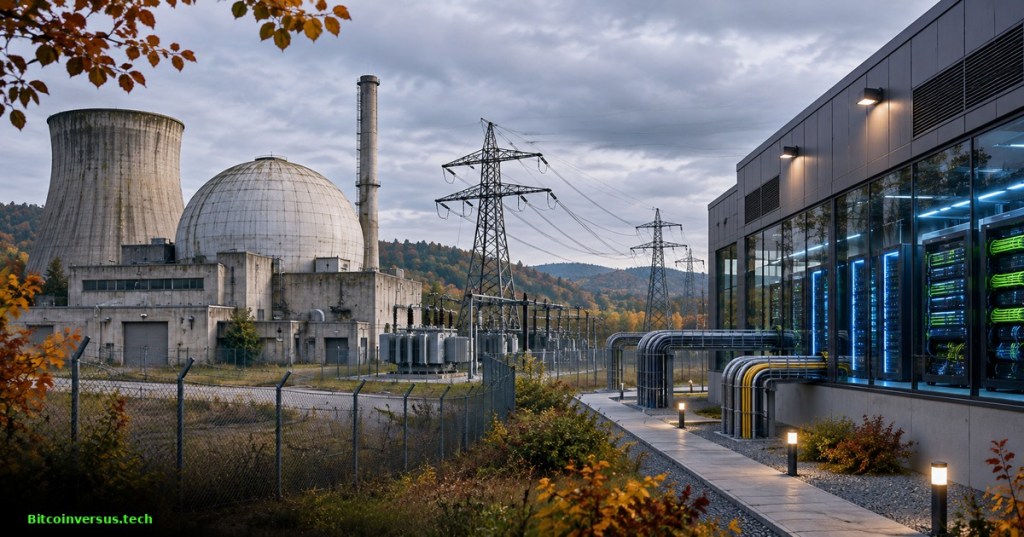
German utility E.ON is reviewing whether retired nuclear-power stations could become locations for artificial-intelligence data centers, its chief financial officer Nadia Jakobi confirmed during a November 11, 2026, results call. E.ON subsidiary PreussenElektra began working with NVIDIA on the question in October. The companies are assessing land, existing electrical infrastructure and technical requirements, but have announced no selected sites, construction approvals, investment budgets or firm power-supply agreements. The discussion concerns redevelopment of shutdown industrial land, not restarting Germany’s nuclear reactors.
NVIDIA, “The Infrastructure Behind AI Explained | AI Factory Insider Ep. 1,” June 9, 2026. Verified official NVIDIA video discussing AI-factory systems and infrastructure. General engineering context, not footage of a German nuclear-site conversion. Credit: NVIDIA / YouTube.
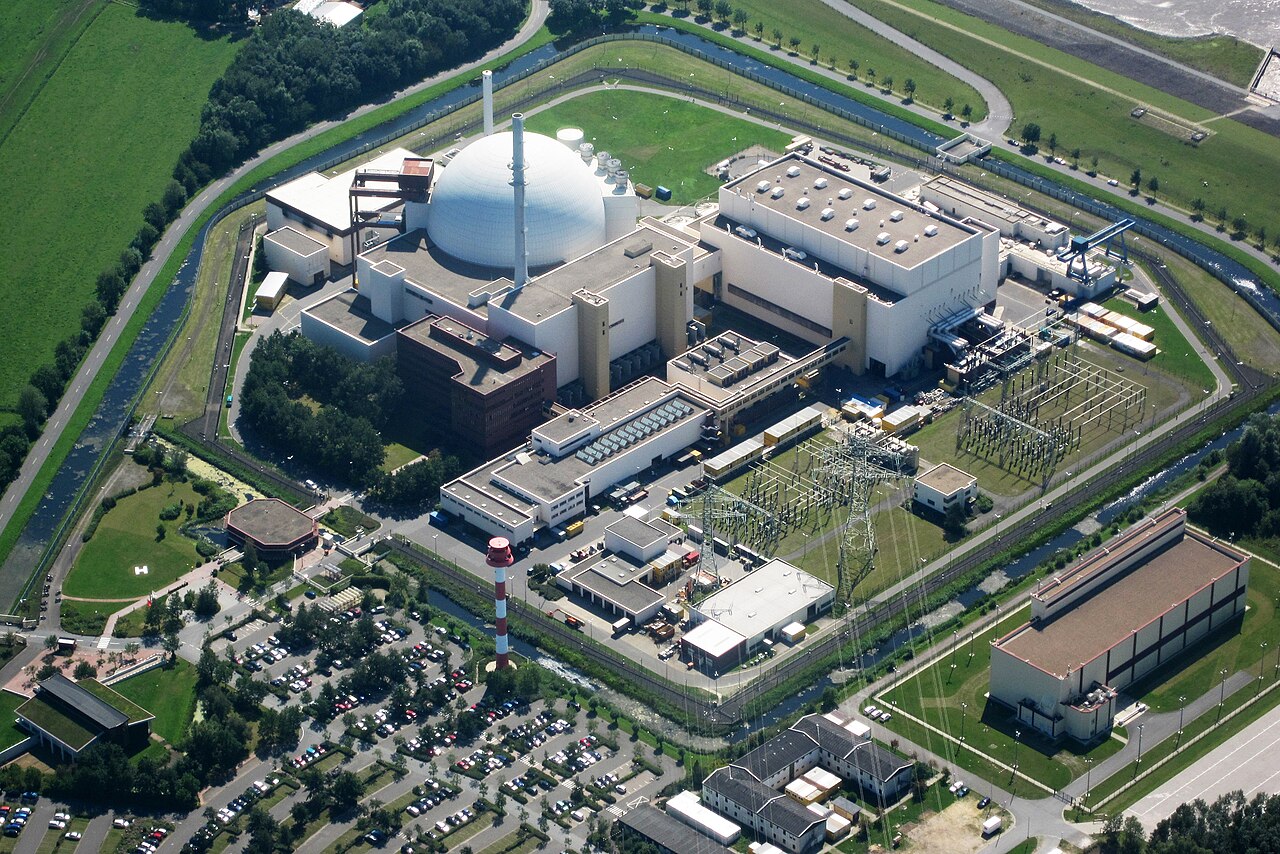
Why a former generator site could attract a data center
A retired power plant may retain transmission-line corridors, substations, industrial roads and large plots of zoned land. A high-voltage connection is valuable because electricity-intensive AI clusters can face long delays obtaining entirely new grid connections. E.ON’s financial chief said former plants may provide attractive industrial locations and substantial existing connections, depending on each site. The opportunity connects to the broader gap between fast construction and slow grid interconnection already documented by BitcoinVersus.Tech.
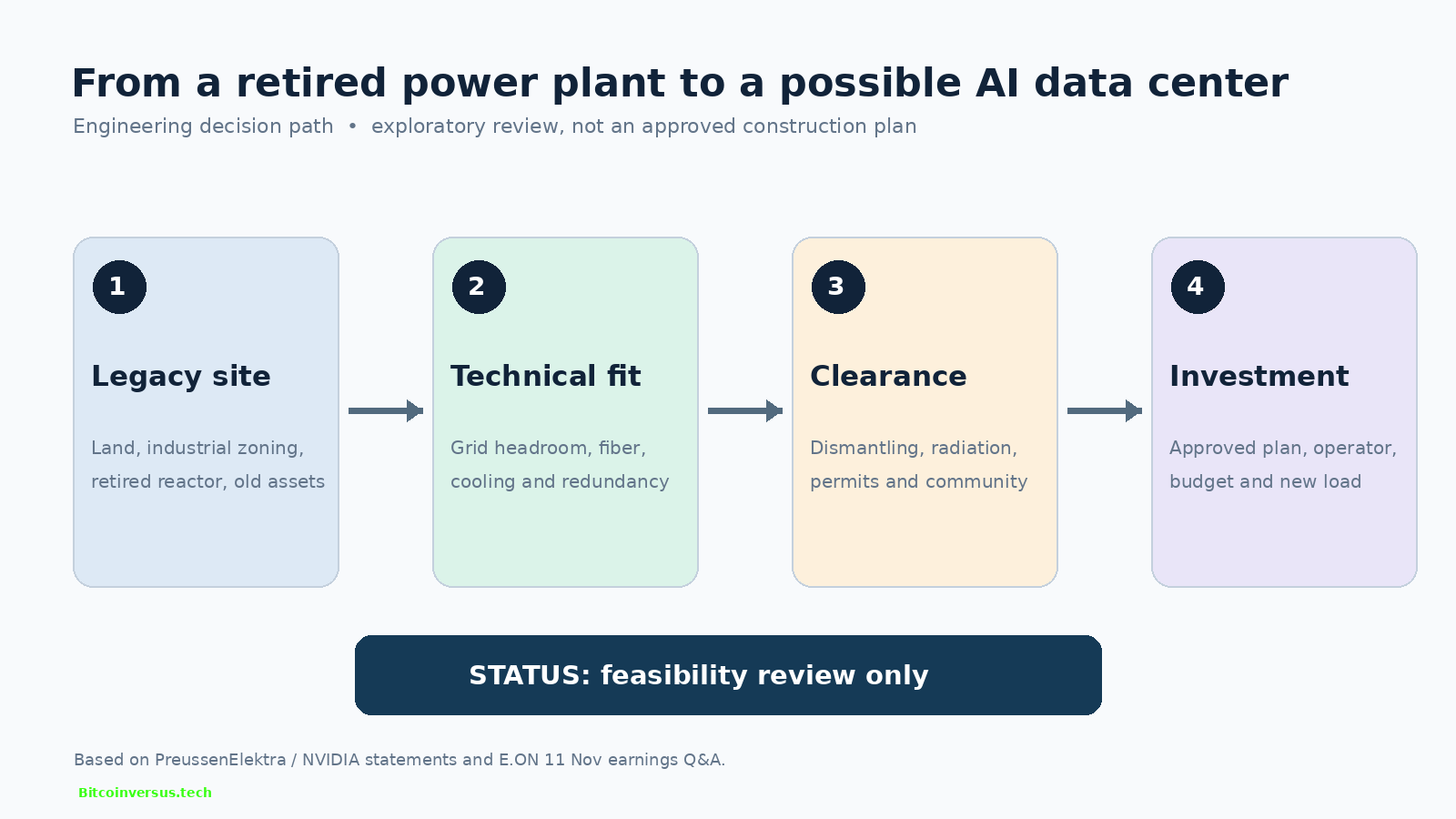
However, an intact substation does not guarantee unrestricted data-center load capacity. A former generating station once exported power; a computing campus would import substantial electricity continuously. Engineers must evaluate transformer ratings, protection settings, regional network capacity, congestion, redundant feeders, backup generation and the cost of modifications. The site also needs fiber-optic connectivity, cooling arrangements and legally available property. Earlier AI data-center power-distribution reporting illustrates how large electrical connections and the systems behind them are separate engineering questions.
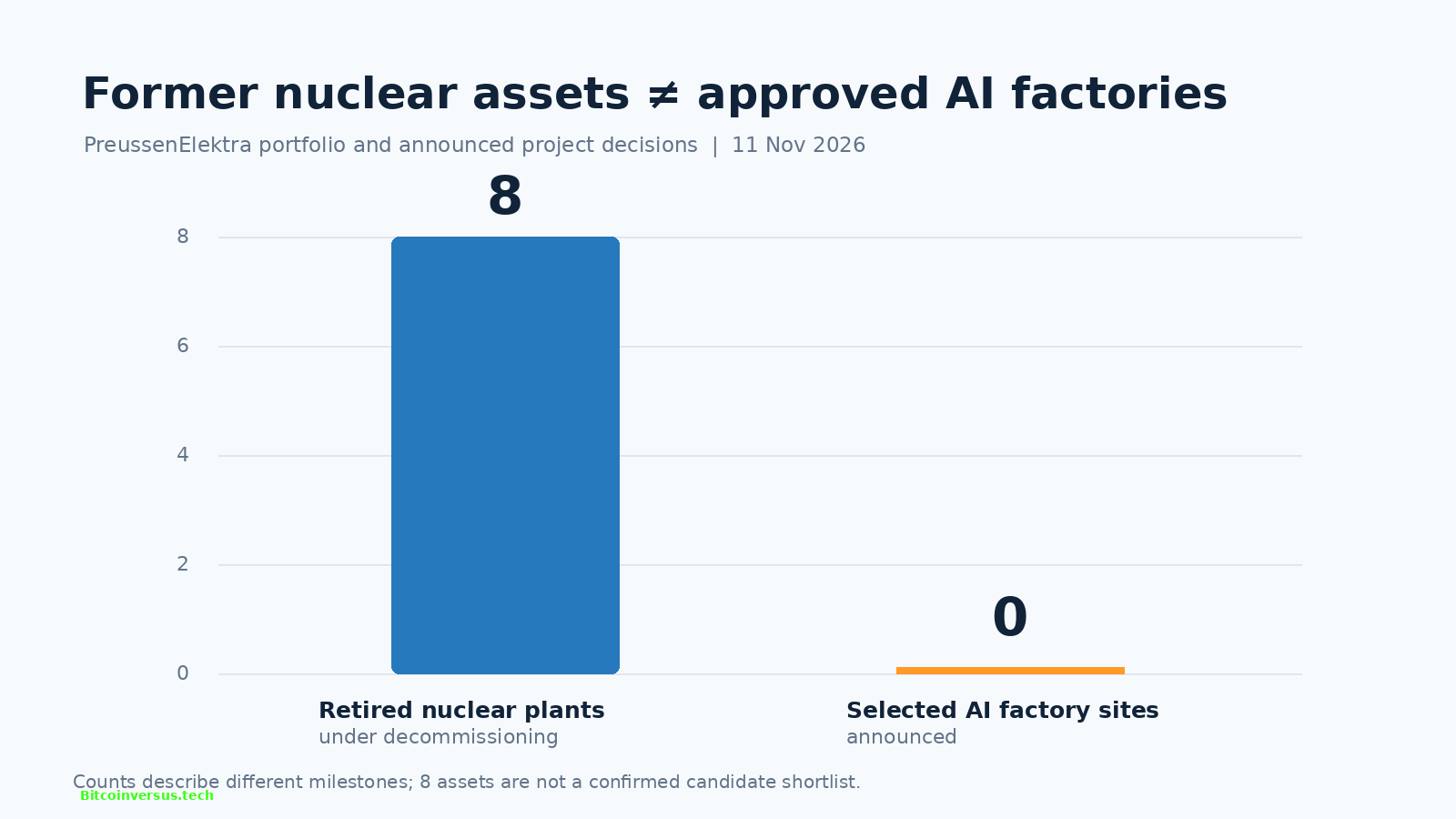
Eight retired plants do not mean eight confirmed AI projects
PreussenElektra manages dismantling at eight former German nuclear plants. Its October 21 announcement with NVIDIA proposed comparing potential locations with the electrical and operational requirements of AI factories. NVIDIA’s role is technical assessment; PreussenElektra contributes site information and knowledge of decommissioning. The companies have not published a site shortlist, operator contracts, project power ratings or construction dates. Jakobi described the work as an initial review, subject to decisions on each property.
Germany ended commercial nuclear electricity generation on April 15, 2023. Consequently, reuse of a former station does not make its proposed data center nuclear-powered. Future electricity would require a separate, viable supply arrangement. Decommissioning can also involve ongoing demolition, restricted areas, waste management and environmental licensing. A retired site may be technically attractive while remaining unavailable for a new tenant.
A feasibility study is not a nuclear-energy deal
The distinction matters when compared with nuclear-power procurement arrangements for AI campuses, where an operating or proposed reactor supplies electricity. E.ON and NVIDIA have described a property-and-infrastructure study instead. No operating reactor, gigawatt-scale AI campus or committed NVIDIA GPU deployment has been established in the German program. The October assessment was reported by World Nuclear News and Data Center Dynamics; the November 11 earnings discussion did not advance the concept into a binding investment.
Potential economic gains also remain uncertain. New industrial occupancy could support jobs and local tax bases, but data centers have different employment, cooling and power-consumption profiles from nuclear plants. Construction near decommissioning work requires safety planning and public consultation. Finland’s environmental review of proposed AI data-center sites illustrates how permitting can interrupt otherwise attractive development plans.
E.ON reported approximately €5.2 billion of investment during January–September 2026, with roughly 80% directed to energy networks. That amounts to an illustrative €4.16 billion for networks using the company’s rounded disclosures, not a budget for nuclear-site conversion. E.ON’s near-term priority remains electricity infrastructure, while NVIDIA explores whether former sites could satisfy future computing requirements. The decisive next evidence will be a named site, documented grid import capacity, cleared land, permits, a developer and a financed schedule. Until then, the proposal is technically plausible but commercially uncommitted.
Sources and methodology: Reuters, November 11, 2026; E.ON November 11 earnings-call transcript; E.ON nine-month 2026 financial release; World Nuclear News, October 27; Data Center Dynamics, October 28; PreussenElektra newsroom. Illustrative investment calculation: €5.2 billion × 80% ≈ €4.16 billion. No announced site grid-capacity or construction figures were assumed.
Editor’s Note: E.ON’s November 11 earnings remarks verify that its subsidiary is assessing potential AI data-center reuse of former German nuclear sites with NVIDIA. The October collaboration is exploratory and does not represent approved sites, financed data centers, a grid-power agreement, reactor restarts, or an NVIDIA hardware order. PreussenElektra’s eight retired nuclear plants are a decommissioning portfolio, not an announced shortlist of eight AI projects. The historical Brokdorf photograph was taken in 2011, and no Brokdorf AI development is confirmed. The cover is conceptual original art; the process and decision-count graphics are illustrative and label verified status. The official NVIDIA video predates the review and provides only general background. WordPress’s saved Gutenberg and rendered output confirm the intended NVIDIA YouTube iframe, image references, and attribution. Actual playback, physical mobile layout, and independent browser rendering were not verified.

BitcoinVersus.Tech is volunteer-run and publishes independent educational technology reporting. An optional 5,000-satoshi donation helps support continued research. Scan the original QR from a second screen using a compatible Bitcoin wallet; on mobile, use a wallet that can scan a QR saved as an image. Independently verify recipient address 3C9o19EH5HSiwEPyCTmEKzxhNCbo2X6TTb and the payment amount before sending. Bitcoin transactions are generally irreversible.
We volunteer daily to ensure information on the BitcoinVersus.Tech platform is Verifiably True. Coverage is for educational and informational purposes and does not constitute financial or investment advice.


Leave a Reply