
Finland has ordered environmentally altering work to stop at two planned Google data center sites in Muhos and Kajaani while required environmental-impact reviews are completed. The intervention lands less than a month after Google announced a $15.1 billion AI-infrastructure expansion in Finland—its largest investment in Europe—and turns permitting discipline into a very real schedule risk for one of the world’s biggest data-center buildouts.
The projects have not been canceled. The issue is the sequence of site preparation. Finnish authorities say work that significantly changed the environment advanced before the environmental-impact-assessment process was finished.
What Finland Ordered Google to Stop
Finland’s Licensing and Supervision Authority ordered Tuike Finland Oy, the company managing the projects, to suspend preparatory measures that significantly alter the environment at the planned Muhos and Kajaani sites. Reporting from The Guardian says the affected work included tree removal, topsoil removal, road and storage-area preparation, digging, ditch changes, quarrying, crushing, and movement of soil.
The order requires the environmentally altering work to stop while the environmental-impact assessment is unfinished. The regulator’s action is therefore a construction-sequencing problem, not a declaration that Finland no longer wants the data centers.
That distinction matters. A hyperscale site can have land, grid access, capital, contractors, and a customer need—and still lose months if civil work gets ahead of the permit and environmental-review chain.
More Than 300 Hectares of Forest Became the Flash Point
Data Center Dynamics reported that Finnish authorities began seeking reports after roughly 300 hectares of forest had reportedly been removed as part of the broader development work. Other reporting has placed the prepared area at hundreds of hectares across Muhos and Kajaani.
The exact acreage matters less operationally than the threshold problem: once work reaches a scale that triggers an environmental review, developers have to treat that review as a critical-path dependency just like utility interconnection, transmission capacity, civil permits, water strategy, and construction power.
Google Says It Fell Short of Its Own Standards
Google said it had “fallen short of our own high standards” in this instance and said it would follow the regulator’s guidance. That admission is notable because Google has spent years positioning its Finnish data-center operations around efficient cooling, clean energy, community investment, and heat recovery.
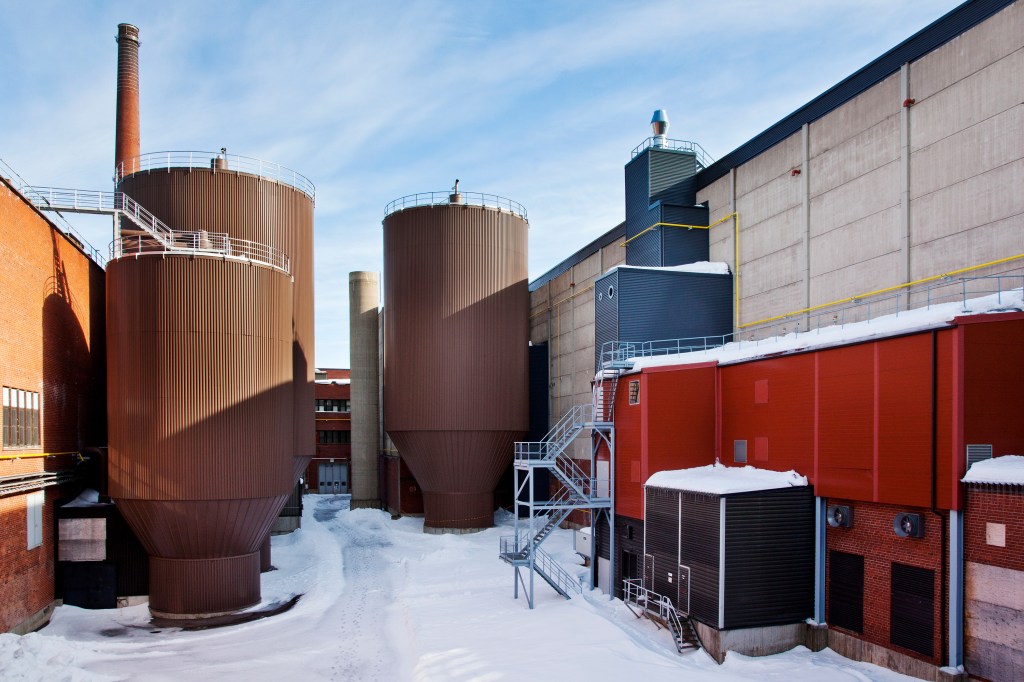
Google’s existing Hamina campus is the clearest example. The company says the site uses seawater from the Bay of Finland for cooling and has added an offsite heat-recovery system. Those systems connect directly to the engineering questions covered in BitcoinVersus.Tech’s Data Center Cooling Engineering lesson: cooling architecture, water use, heat rejection, and energy efficiency are part of the facility design—not side issues.
The Halt Hits a $15.1 Billion AI Infrastructure Push
Google announced in September that it would invest at least $15.1 billion in Finnish AI infrastructure over two years. Reuters reported that the plan includes three new northern-Finland data centers along with grid improvements, clean-energy projects, and battery infrastructure supporting services such as Gemini, Search, Maps, and YouTube.
The expansion also includes a 22-year agreement for Google to purchase up to 50% of the output from one of Finland’s nuclear plants. That shows why the permitting issue is bigger than clearing land: modern AI campuses are increasingly tied to generation, transmission, storage, local infrastructure, and community planning as one integrated project.
BitcoinVersus.Tech has already covered the same system-level pressure in Google, NVIDIA and Emerald AI’s push for flexible data-center power. Electricity is only one constraint. A site also has to clear the land-use, environmental, civil, and social-license gates.
AI Data Centers Are Discovering That Speed Has Dependencies
The AI infrastructure race rewards speed: get land, power, fiber, transformers, cooling equipment, switchgear, generators, servers, and construction crews moving as quickly as possible. But infrastructure projects do not scale like software deployments.
A data center cannot simply “ship” around a missing environmental review. Civil work changes drainage. Clearing changes habitat and runoff. Roads change traffic and site access. Large electrical loads change grid planning. Cooling systems can change water demand or heat-rejection patterns. Each dependency can carry its own review process.
That is the same broader tension behind BitcoinVersus.Tech’s report on data-center capacity growth colliding with local pushback. Capital and compute demand can move faster than the institutions that approve the physical infrastructure.
For Builders, Environmental Review Is a Schedule Item
The practical engineering lesson is straightforward: environmental review belongs on the same master schedule as substation energization, utility interconnection, long-lead electrical gear, fiber delivery, cooling commissioning, and integrated systems testing.
A site team that starts clearing, grading, quarrying, ditching, or road construction before the correct approvals are complete can create rework, legal exposure, contractor downtime, enforcement risk, and a schedule slip that cascades into equipment-delivery and commissioning milestones.
That matters because the back end of the build is already tightly sequenced. BitcoinVersus.Tech’s Data Center Commissioning lesson covers how L1–L5 testing and integrated systems testing depend on the preceding construction chain being complete and documented.
Finland Is Still an Attractive Data Center Market
The regulatory halt should not be confused with Finland turning against data centers. The country remains attractive because of its cool climate, low-carbon generation, grid quality, engineering workforce, fiber connectivity, and ability to reuse data-center heat.
In fact, Reuters reported today that French AI-infrastructure company Sesterce plans roughly $11.2 billion of additional Finnish data-center investment. That reinforces the central point: Finland is attracting enormous AI capital at the same time regulators and communities are being asked to absorb the physical consequences of that growth.
What Happens Next
The immediate questions are whether the required environmental reviews materially change the Muhos or Kajaani designs, how long the pause lasts, whether additional mitigation is required, and whether Google’s construction schedule can absorb the delay without pushing later commissioning dates.
The bigger question is whether hyperscale AI developers start treating environmental permitting with the same urgency they now give to power procurement. The fastest path to a live AI data center is not necessarily the path with the fastest bulldozer. It is the path where land, permits, power, cooling, civil work, equipment, and commissioning all reach the starting line in the right order.
Editor’s Note
The 1200×630 featured image comes from Google’s September 2026 Finland AI-infrastructure investment announcement, the same expansion program tied to the planned northern-Finland data centers. The body image is Google’s existing Hamina, Finland data-center cooling infrastructure and is clearly identified as a separate existing site. No generic data-center stock photography is used. Reporting was checked against Google’s own Finland announcement, Reuters, The Guardian, Data Center Dynamics, and Google’s Hamina facility page.
Support and donation options are available through BitcoinVersus.Tech.
BitcoinVersus.Tech is not a financial advisor. Content is provided for informational and educational purposes.


Leave a comment