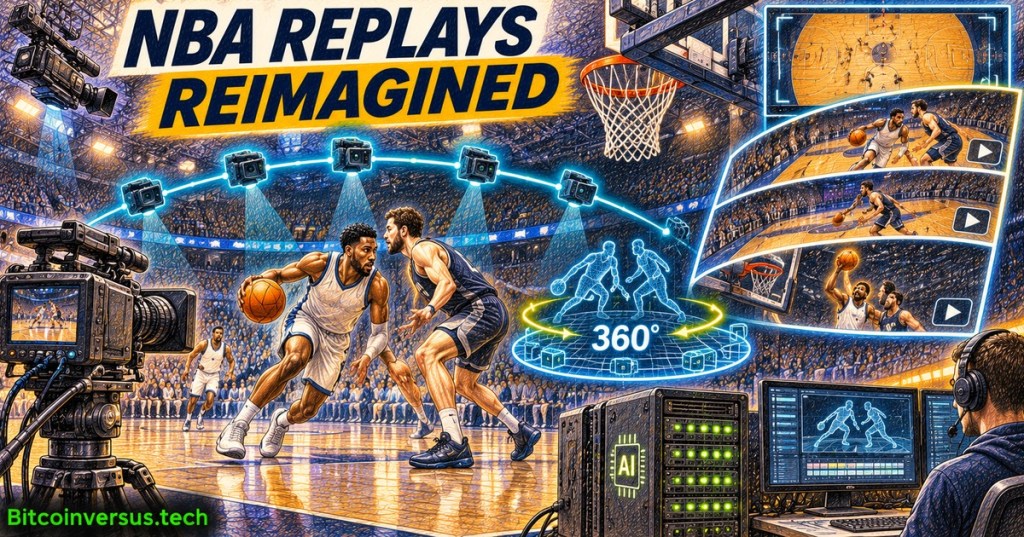
Prime Video is changing how NBA viewers see the court with two distinct broadcast technologies: Prime Vision, an alternate game feed offering elevated viewpoints and statistical overlays, and Prime 360, an AI-powered replay system that reconstructs action from synchronized cameras. A basketball clip circulating on social media has drawn renewed attention to immersive camera perspectives, while Amazon’s October 2026 technical disclosures clarify how the features work.
Watch the viewer-shared NBA camera-angle post on X. The video could not be independently inspected or rendered inline. Credit: @NBAdabad / X.
Prime Video announced its 2026–27 NBA presentation ahead of the October 23 season debut, rather than launching every camera feature on November 14. The broadcaster distinguishes a continuous alternate camera view from cinematic highlights rendered from captured game footage. Both aim to show details that a standard sideline television cut can miss.
Prime Vision changes the view during live action
Amazon describes Prime Vision as a selectable alternate broadcast for certain games. Its elevated, above-the-rim view is paired with player identification, matchups, defensive-coverages analysis, and real-time statistical graphics. Some features had already appeared during the 2025–26 NBA season; the 2026–27 presentation extends the existing approach.
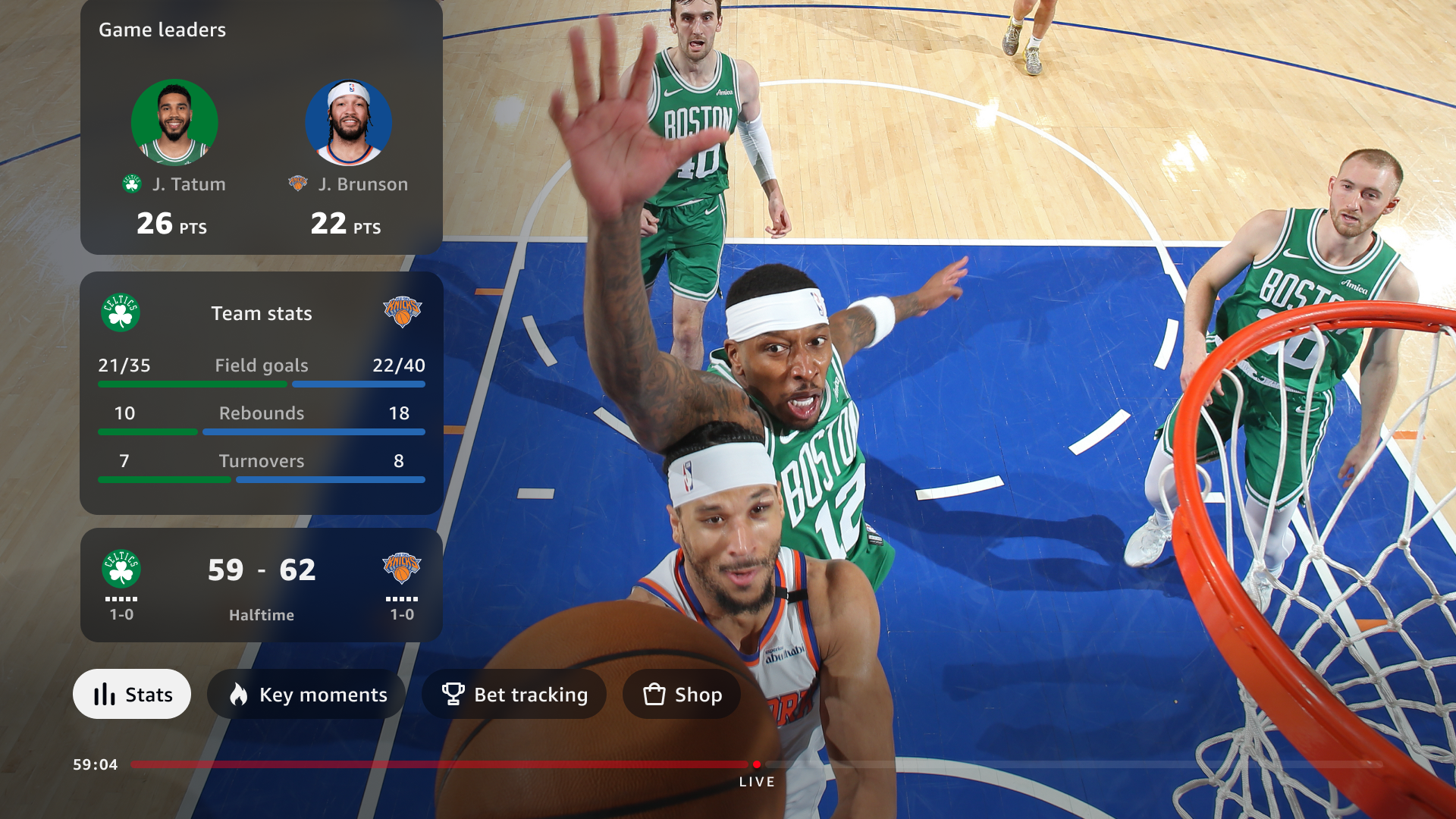
An elevated fixed perspective helps expose spacing and movement around the basket. The tradeoff is that a higher or less familiar vantage point can make distance, height and the ball’s path harder to judge. Viewers can choose a presentation where offered, but it should not be described as unrestricted user control of a camera roaming anywhere inside a live NBA game.
Prime 360 uses cameras, reconstruction and custom AI chips
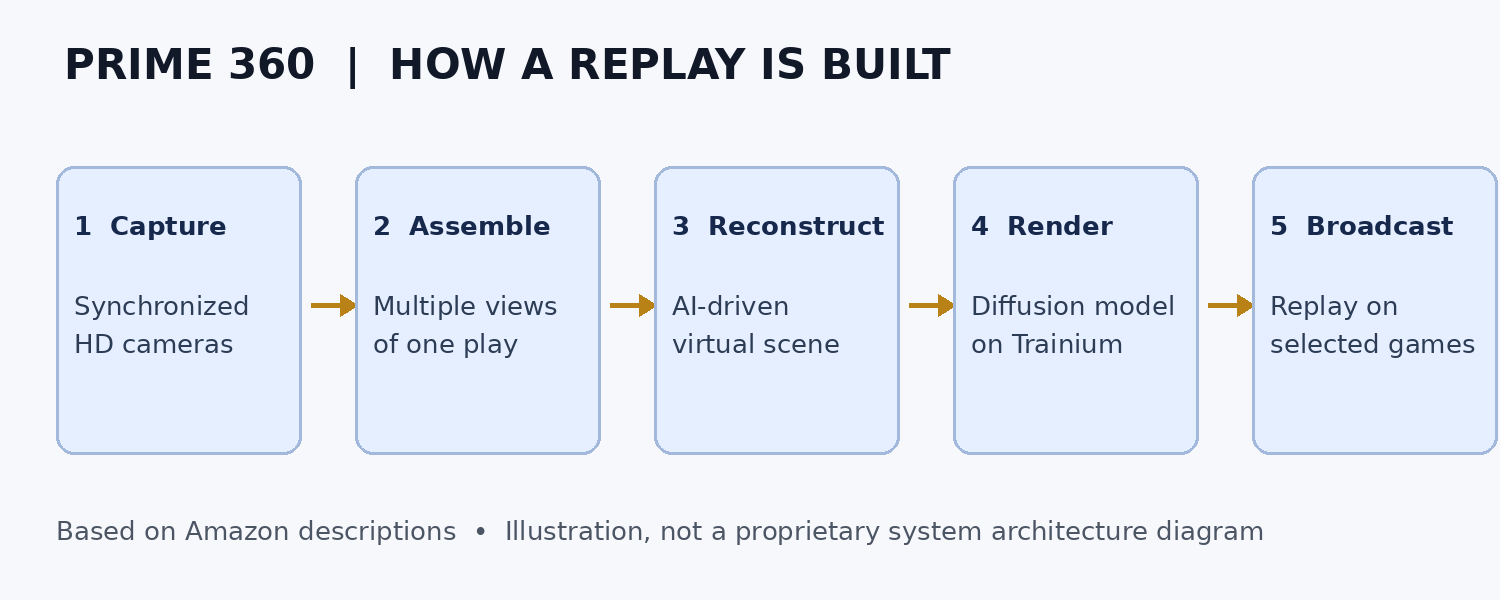
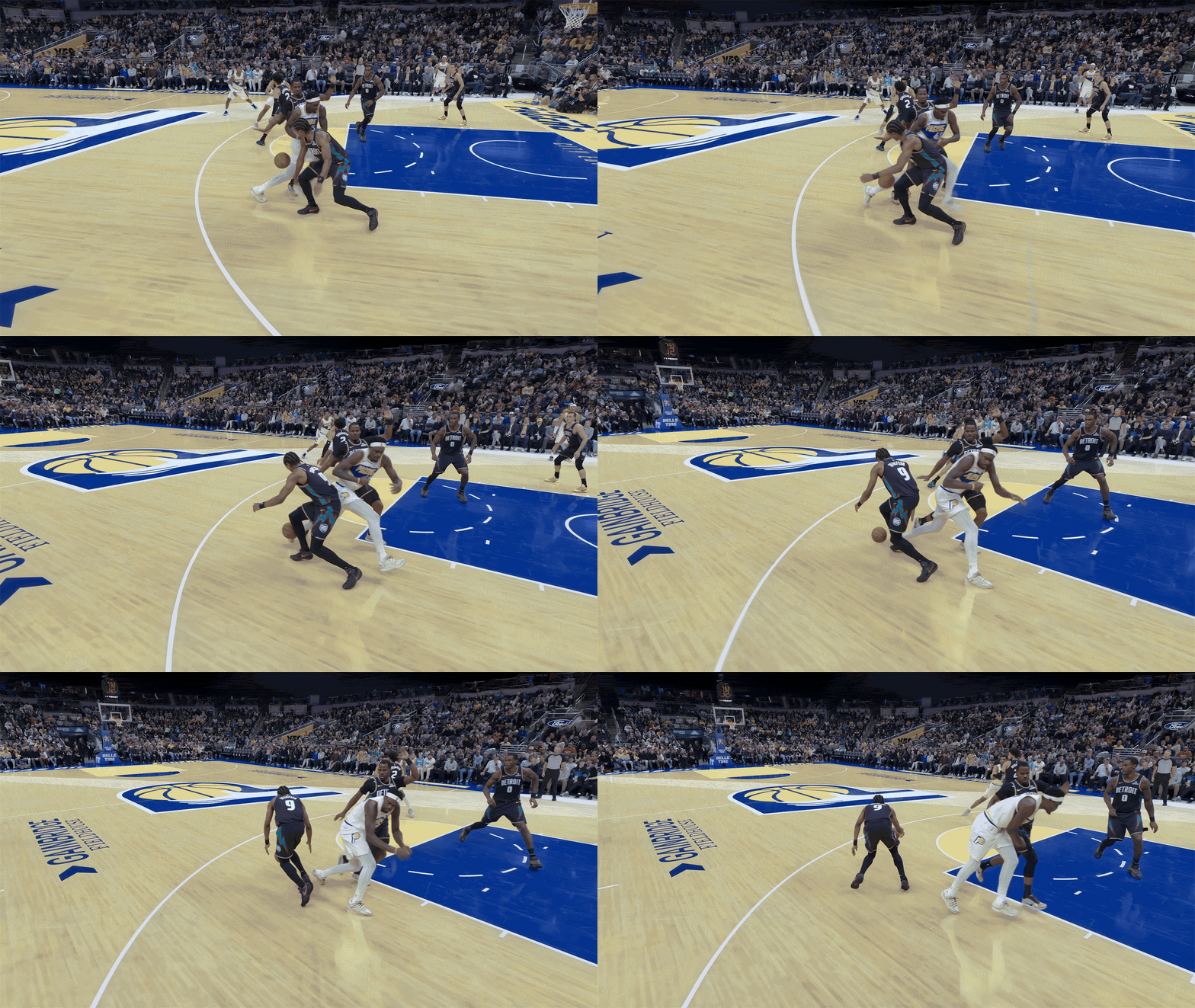
Prime 360 serves a different purpose. Amazon says multiple high-resolution cameras surrounding the playing floor capture synchronized footage, which is reconstructed into a scene for replay. AI diffusion models then generate a polished view that can appear to move through a play. The result is a computed replay perspective, not a physical broadcast camera flying between basketball players.
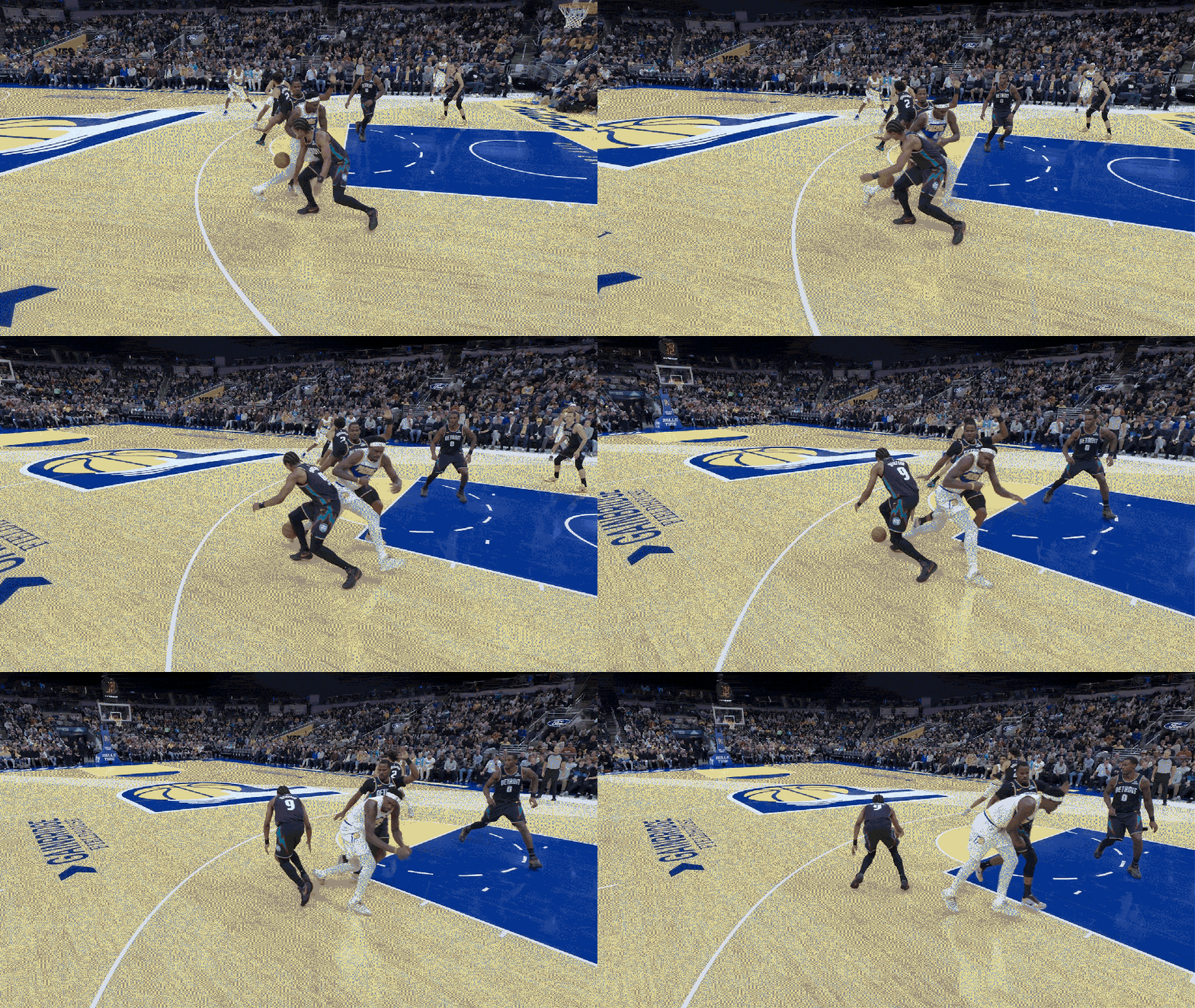
Prime Video’s official October 14 Prime 360 demonstration on X supplies additional source footage. Its post identity was corroborated by GeekWire; WordPress did not provide a working inline social player.
Amazon’s October 28 engineering explanation says the diffusion pipeline divides frames into dozens of overlapping tiles, each processed as large numerical tensors. Amazon credits its custom AWS Trainium accelerators and software optimizations with cutting diffusion inference latency by more than 40%. No absolute per-replay processing duration or independent latency benchmark accompanied the claim.
The AI silicon link makes the system a broadcasting and semiconductor story. Amazon has been investing in custom-chip engineering, and processing replay footage quickly enough for a live production imposes strict compute, transfer and rendering constraints.
What is genuinely new—and what remains limited
Multicamera and volumetric sports replays predate Prime 360. BitcoinVersus.Tech has covered the Brooklyn Nets’ Alibaba-powered arena replays and Canon’s live 3D basketball streaming. Another Sony athletics tracking project demonstrates the wider trend toward reconstructed views. Prime Video’s contribution is incorporating accelerated AI replay production into its national NBA television workflow.
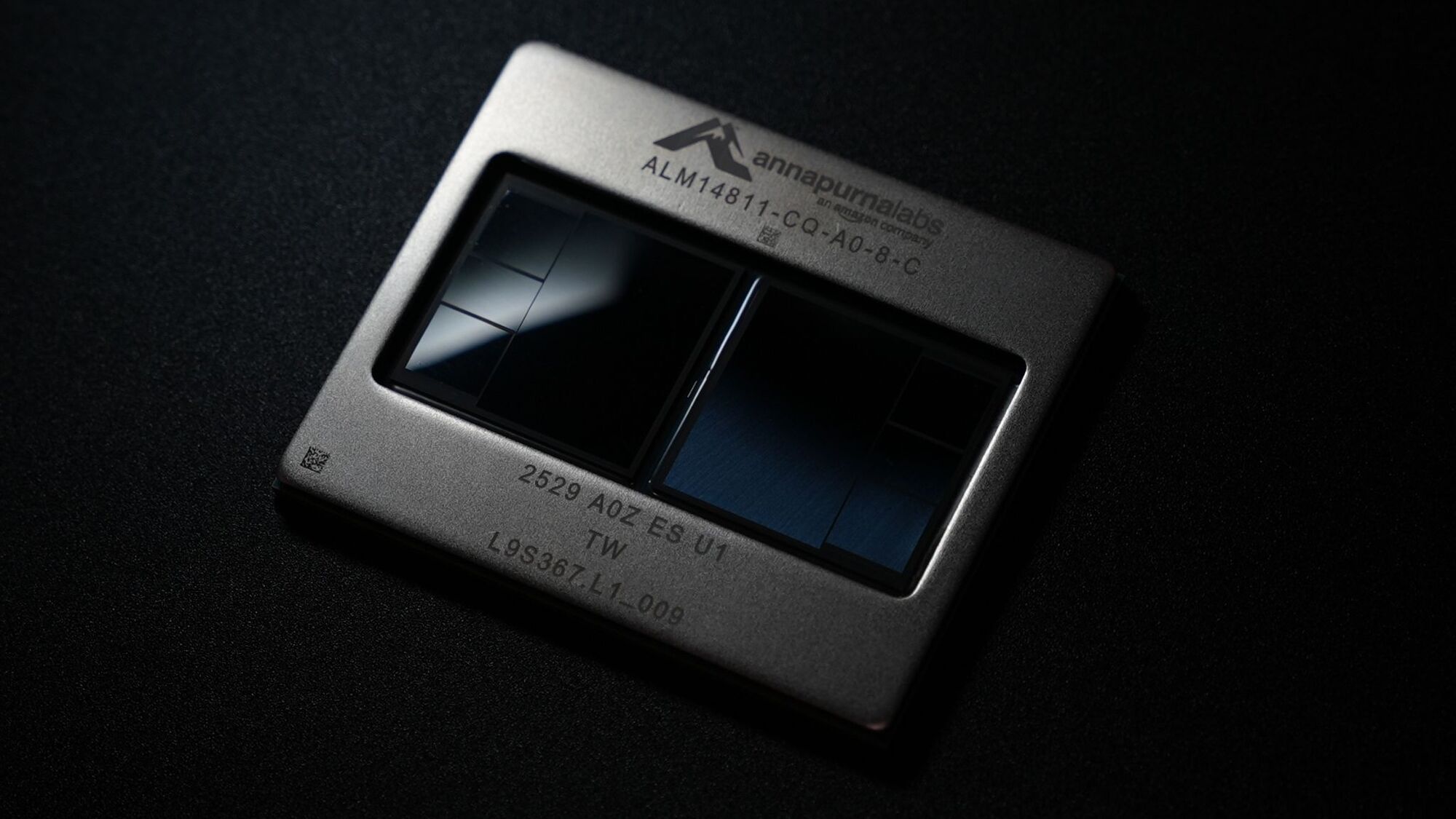
Prime 360 is available on select broadcasts, not every NBA game or every camera angle on demand. Generated frames can also introduce reconstruction artifacts or misleading geometric details, particularly around overlapping players and fast-moving objects. Such limitations deserve transparent labeling when replay angles are synthesized rather than directly captured.
The shift parallels other sports tools, including Spiideo’s low-latency coaching review, but the audiences and technical goals differ. For fans, the most important distinction is practical: Prime Vision changes the live viewing feed; Prime 360 changes how a completed play can be replayed.
Primary sources: Amazon NBA on Prime 2026–27 feature guide, updated October 14; Amazon Prime 360 / AWS Trainium technical explanation, October 28; Amazon 2025 broadcast interface guide; GeekWire interview and official Sports on Prime X post, October 15; Sports on Prime source video posted October 14; viewer-shared November X post. The greater-than-40% inference-latency reduction is Amazon’s reported improvement, not an independent finding.
Editor’s Note: Prime Vision is an alternate broadcast presentation; Prime 360 uses AI-generated replays based on actual captured game footage. They should not be represented as identical products or as a viewer-controlled free camera during live games. The user-supplied X post could not be independently retrieved, and its precise imagery remains unverified. Amazon’s Prime 360 animation, legacy NBA interface screenshot and Trainium chip photograph are authentically sourced, while the original colored-pencil 1200 × 630 cover and explanatory flowchart are editorial illustrations. Platform availability varies by game. Embedded-media rendering and live playback are reported separately; no visual or playback test is claimed without execution.

BitcoinVersus.Tech is volunteer-run and publishes independent educational technology reporting. An optional 5,000-satoshi donation supports ongoing research. Scan the original QR from a second screen with a compatible Bitcoin wallet; on mobile, use a wallet that supports scanning a saved image. Independently verify the recipient address 3C9o19EH5HSiwEPyCTmEKzxhNCbo2X6TTb and the payment amount before sending. Bitcoin transfers are generally irreversible.
We volunteer daily to ensure information on the BitcoinVersus.Tech platform is Verifiably True. Coverage is educational and informational and does not constitute financial or investment advice.


Leave a Reply