
OSDCEC.017 examines how data-center critical power systems respond to utility voltage dips, generator load steps, and staged failure tests. A UPS can maintain regulated power to IT equipment during disturbances, but protection settings, batteries, static bypass synchronization, and generator controls determine whether the whole facility remains stable. The lesson follows OSDCEC.016 on voltage sags and harmonics.
Aggreko, “Test Your Data Center Power Before Go-Live,” August 27, 2026. Official manufacturer video on testing generator and UPS capacity with load banks before commissioning sign-off. Credit: Aggreko / YouTube.
Ride-through is a coordinated system response
In a double-conversion UPS, the rectifier and battery-supported DC link supply an inverter feeding protected loads. During an input voltage sag, energy storage may compensate for insufficient rectifier power while the output stays regulated. Severe disturbances can still trigger protective trips or bypass changes depending on equipment limits. OSDCEC.011 explains storage capacity and UPS operation, while the OCP grid-fault review describes why large data-center loads must coordinate with grid stability expectations.
Generator-backed operation creates another challenge: rapid computing-load swings can exceed an engine’s short-term frequency response. A September 2026 Vertiv, ST Telemedia and Baudouin laboratory study reported that a particular AI-heavy load profile prevented bypass synchronization when the AI share exceeded roughly 75% in the tested setup. With vendor-configured power smoothing at 20%, reported voltage and frequency variation fell from around ±10% to ±0.5%. The findings are vendor-reported and not universal operating thresholds.
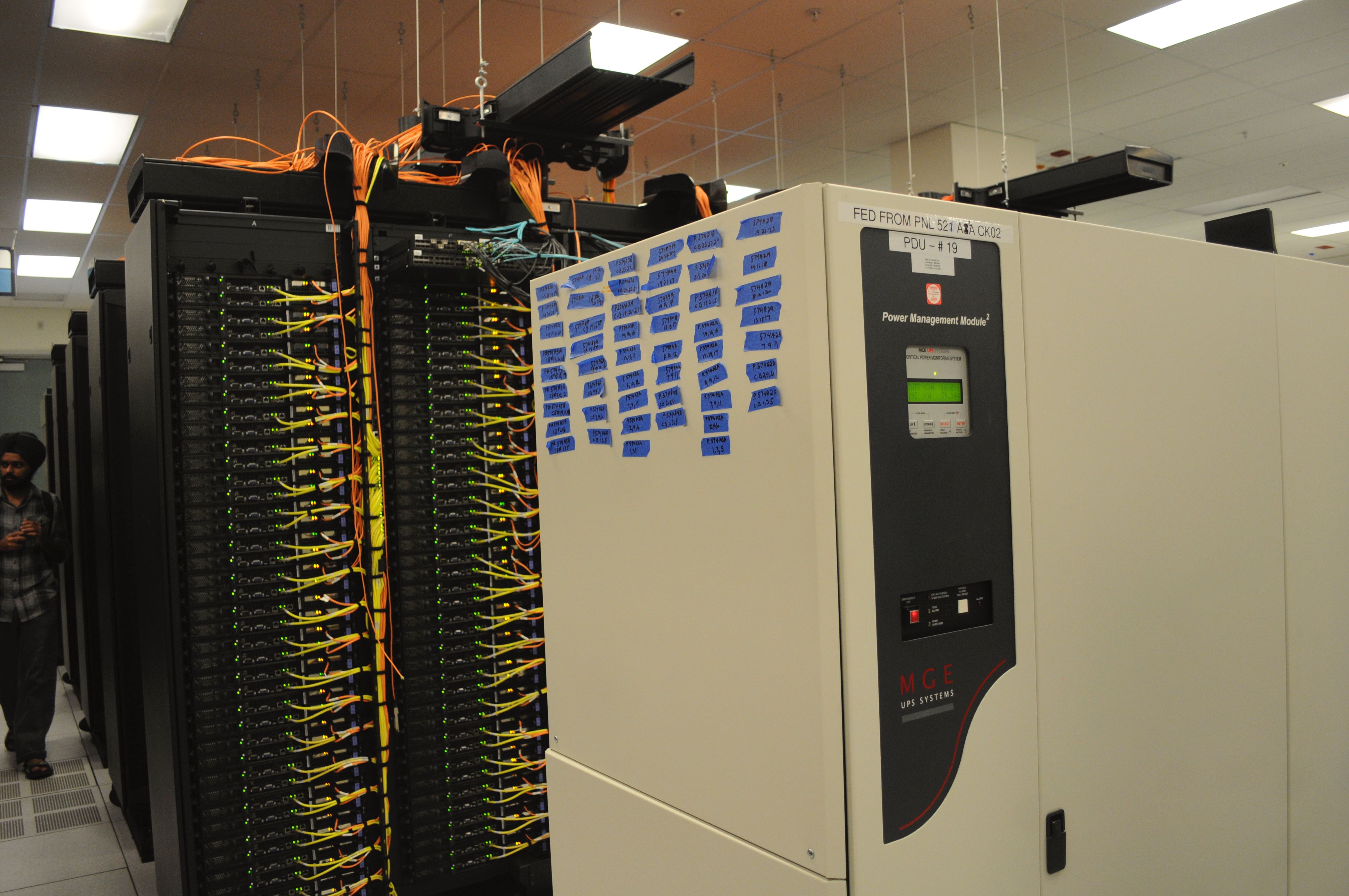
Test the generator, UPS, and transfer path together
Individual factory tests establish component performance, but an integrated systems test checks interactions. Aggreko’s commissioning guidance identifies Level 4 individual-system testing and Level 5 integrated testing, including failures and recovery scenarios. Load banks help simulate electrical demand before production workloads become available. OSDCEC.006 covers the full L1–L5 process.
Schneider Electric, “Meet the New Galaxy VL 3-Phase UPS,” April 13, 2021. Official overview of a 200–500 kW class UPS; product illustration rather than proof of site-specific generator ride-through. Credit: Schneider Electric / YouTube.
Capture transitions, not only steady-state readings
An approved test plan records input and output voltage, frequency, load in kW, battery state, bypass state, generator start-to-ready time, transfer sequence and the recovery of cooling and monitoring equipment. Include a synchronized event timeline so brief disturbances are not hidden by one-minute averages. Vertiv’s load-bank testing guidance emphasizes validating the protection chain under load. OSDCEC.012 addresses generator sizing and operating limits.
Test acceptance criteria must come from the approved design, OEM requirements and applicable standards—not an invented universal transfer duration. Where bypass power is unsynchronized, a UPS may prohibit a transfer or expose loads to a different failure mode. Staged generator or module faults require coordinated controls, isolation provisions and personnel authorization.
Engineering conclusion: A successful component demonstration does not establish facility resilience. Verify ride-through, load sharing, transfer logic and recovery using realistic loads and documented traces before relying on redundancy claims.
Editor’s Note: Claims were checked against Vertiv’s September 2026 vendor test report and official Aggreko and Schneider Electric material. The original 1200 × 630 oil-painted cover has a neon-green Bitcoinversus.tech watermark; displayed waveforms are illustrative. The NERSC power-room photograph is authentic CC0 imagery, not a picture of the reported test. No electrical switching, generator fault, or independent browser playback test was performed.

BitcoinVersus.Tech is volunteer-run and provides independent technical education. An optional 5,000-satoshi contribution supports continued research. Scan the original QR from a second screen with a compatible Bitcoin wallet; on the same phone, use a wallet that can import a saved QR image. Independently verify recipient 3C9o19EH5HSiwEPyCTmEKzxhNCbo2X6TTb and the amount. Bitcoin transfers are generally irreversible.
We volunteer daily to ensure the information on BitcoinVersus.Tech is Verifiably True. Educational reporting does not authorize testing energized critical-power systems or replace qualified engineering, safety assessment, financial or investment advice.


Leave a Reply