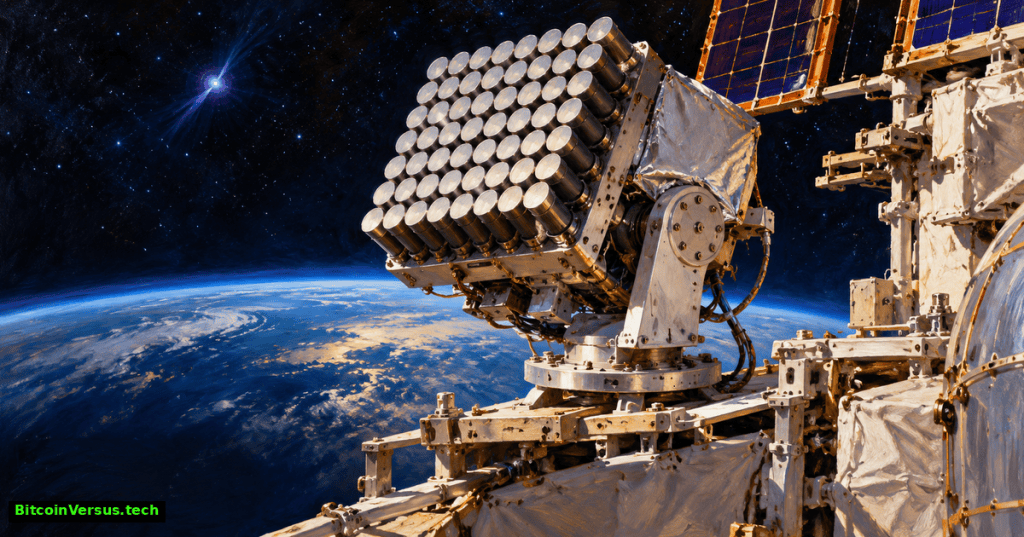
NASA formally ended science operations for its Neutron star Interior Composition Explorer, or NICER, on November 17, 2026, closing an International Space Station astronomy campaign that began in 2017. The X-ray telescope had remained scientifically productive far beyond its original 18-month mission, but a pointing-system problem halted observations in June 2025. NASA is now preparing to finish the mission’s eight-year data archive and arrange the instrument’s eventual removal from the station. NASA’s November 17 status update confirms the decision.
What failed after eight years of observations
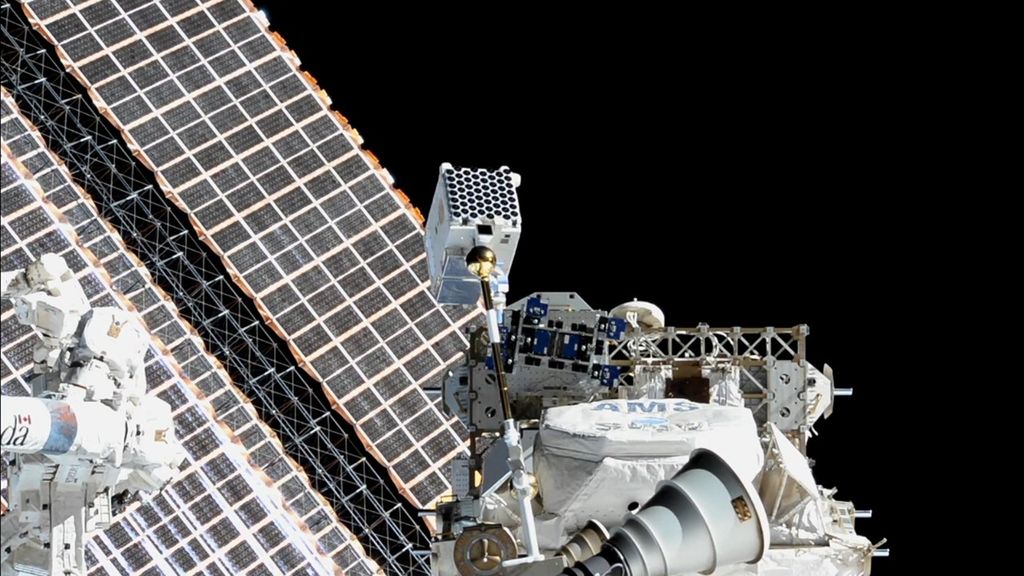
NICER used 56 X-ray concentrator optics and silicon detectors to study cosmic sources in an energy range of approximately 0.2 to 12 kiloelectronvolts. Mounted outside the station, the telescope repeatedly adjusted its orientation to track neutron stars, pulsars and active galactic nuclei. Precise photon arrival times helped researchers examine how rapidly changing X-ray emissions reveal the behavior of dense matter and material close to black holes. The instrument launched on June 3, 2017, according to NASA’s mission archive.
The pointing system became the decisive limitation. On June 17, 2025, engineers suspended observations after a motor could no longer reliably swivel the instrument sideways. Robotic exterior photographs helped rule out some external causes; NASA says investigators suspect an internal motor failure. A formal end to science operations in November 2026 does not mean the telescope collected new observations until November. Its measurements had already been paused for roughly seventeen months.
NASA Goddard video, August 2018: archival time-lapse showing NICER tracking targets outside the space station. The video documents normal operation, not the 2025 failure.
An earlier repair recovered valuable observing time
An unrelated engineering problem had been partially overcome. Damage to thin thermal shields allowed sunlight into NICER’s detectors beginning in 2023. Astronaut Nick Hague installed nine patches during a January 2025 spacewalk. After the team adjusted detector electronics in March, NASA reported that observations became possible during more than 70% of the station’s daytime periods. The later pointing failure illustrated the difficulty of maintaining sensitive instruments mounted outside an inhabited orbiting laboratory.
Neutron stars and navigation were the scientific payoff
NICER’s primary achievement was measuring X-ray pulse shapes from rapidly rotating neutron stars. Observers can compare those timing patterns with physical models to constrain stellar mass, radius and the behavior of matter at extreme density. NASA reported radius measurements for three millisecond pulsars by 2024, while the broader interpretation still depends on modeling choices and measurement uncertainty. Research results remain usable after the hardware stops operating. See NASA’s technical summary.
NASA Goddard video, 2021: archival explanation of neutron-star matter and measurements made with NICER. The footage predates the mission shutdown.
NICER also supported SEXTANT, an experiment using predictable X-ray flashes from pulsars as navigation beacons. During a 2017 demonstration involving four pulsars, the system achieved a position error below 10 kilometers in about 7.5 hours. The experiment established technical feasibility in low Earth orbit, not a commercially deployed navigation network for spacecraft. NASA published the original test details.
What happens to the telescope and its data
Scientists can continue reanalyzing the archive, checking competing neutron-star models and combining NICER measurements with observations from other telescopes. Meanwhile, engineers must plan safe detachment from the space station. NASA has not announced a confirmed date for physical removal in its November 17 update.
The program also illustrates a broader challenge for space technology: scientific value depends on serviceability, instrumentation and communications long after launch. Related BitcoinVersus.Tech coverage includes Voyager 1’s growing communication delay, Axiom’s next-generation lunar suit, NASA’s lunar delivery framework and the qualifications of prospective Mars explorers.
NICER’s observing career is over, but its scientific legacy remains open to independent study. The strongest measure of its success will be how well its calibrated X-ray records continue to improve our understanding of stellar matter and help engineers design the next generation of space observatories.
Primary sources: NASA mission closure, November 17, 2026; NASA NICER overview; NASA High Energy Astrophysics Science Archive.


Leave a Reply