
A research team has demonstrated an alternative to retrieval-augmented generation (RAG): AtlasKV can integrate one billion knowledge graph triples using less than 20GB of GPU VRAM, according to experiments published at the International Conference on Learning Representations (ICLR) 2026. The result tackles the cost of attaching massive factual databases to large language models, although it does not establish that conventional RAG is obsolete. ICLR lists the peer-reviewed paper by researchers from the Hong Kong University of Science and Technology and Huawei’s Theory Lab.
The paper first appeared on arXiv in October 2025, with an updated version in April 2026. Viral social posts in November 2026 have revived debate about whether external vector search is becoming unnecessary. Our RAG explainer describes the conventional approach, in which a retriever selects documents or text chunks before the model composes its answer.
The viral November 2026 claim that AtlasKV makes RAG obsolete. Original X post.
How AtlasKV turns facts into model memory
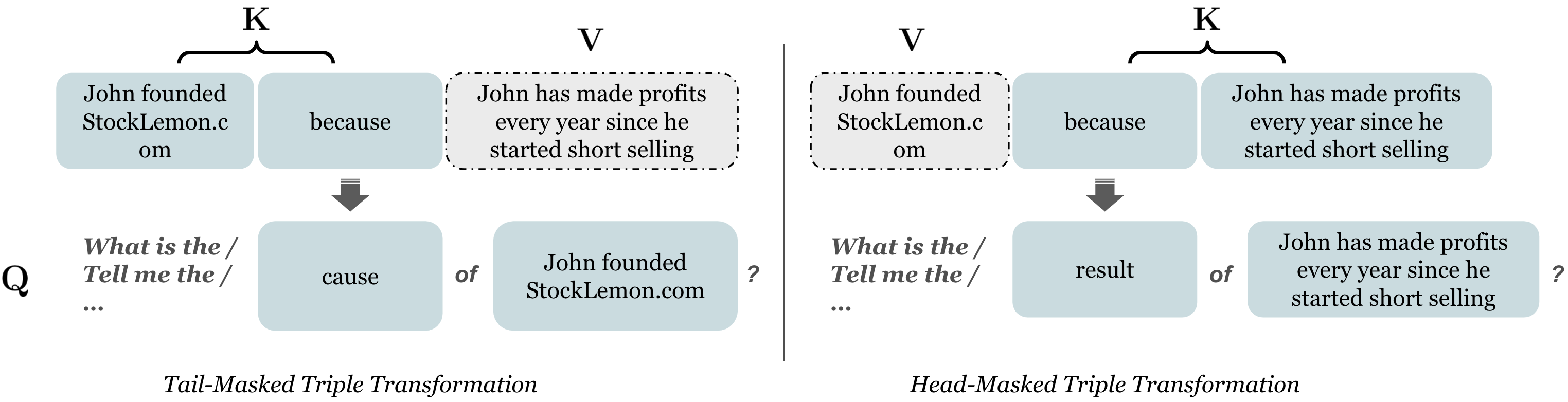
A knowledge graph stores facts as subject, relationship and object triples, such as a company, its founder and the founder’s name. AtlasKV’s first component, KG2KV, converts those relationships into query, key and value representations. Specialized attention heads then let the language model use the encoded factual memory while generating text. The authors’ project page publishes the method and original diagrams.
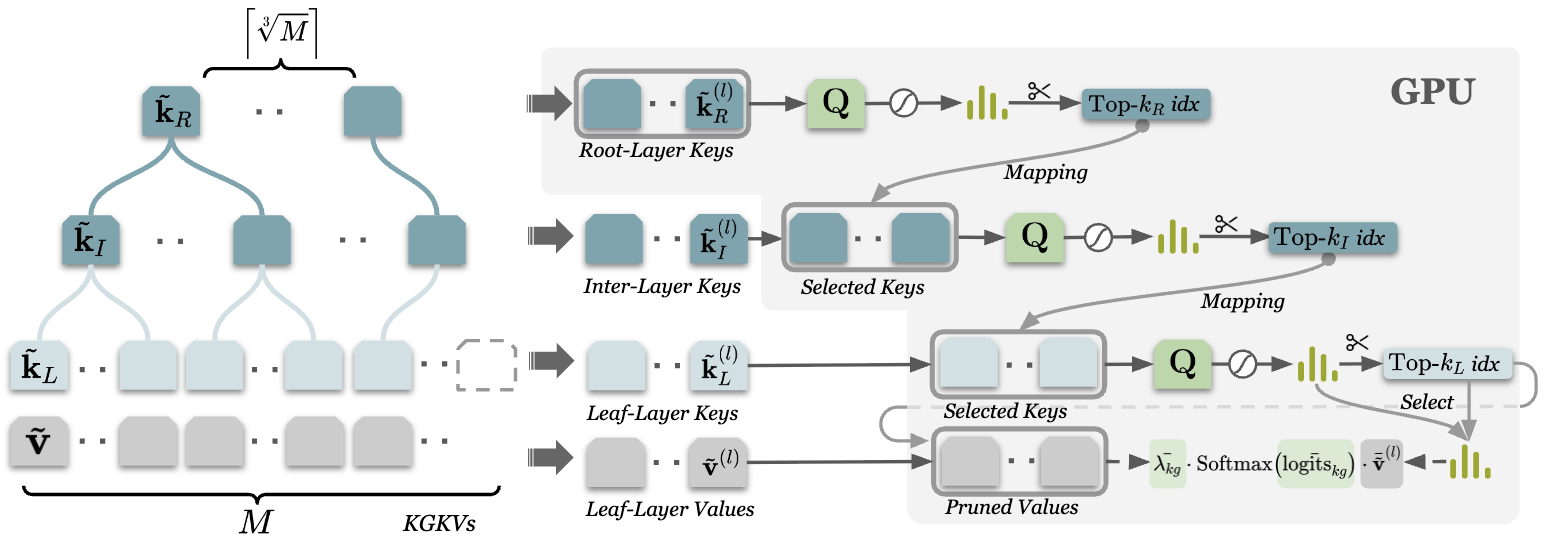
The second component, hierarchical key-value pruning (HiKVP), organizes knowledge keys into multiple levels. Each query progressively narrows the candidates before relevant values enter attention computation. The design still selects information, but the selection happens inside the model’s augmented attention process rather than through an external vector database. The researchers describe sub-linear inference-time compute and memory complexity for their pruning scheme.
Lead author Haoyu Huang announced the paper and its ICLR 2026 presentation. Original X post.
What the experiments actually show
The VRAM result is a scalability measurement at one billion triples, not a demonstration of accurate answers across one billion facts. In Table 3 of the published paper, detailed Top-1 grounding accuracy is reported at knowledge graph sizes up to 10,000 triples. On the ATLAS-CC-QKV evaluation at 10,000 triples, AtlasKV reached 40.0%, compared with 3.6% for the KBLaM baseline. The gain is material, but 40% remains far below dependable factual retrieval.
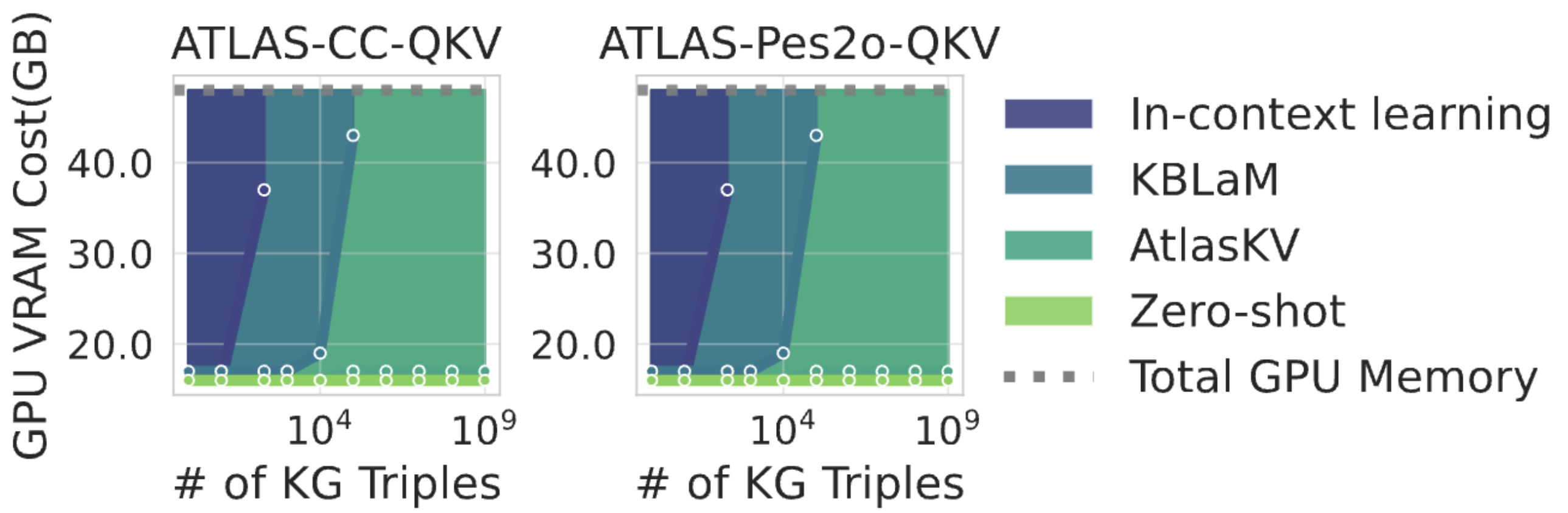
AtlasKV used LLaMA 3.1 8B Instruct as its backbone. The research also documents initial training and dataset construction, including relation rewriting assisted by GPT-4o-mini, plus experiments performed on a 48GB GPU. “No retraining” refers to adapting an already prepared AtlasKV system to new knowledge; it does not mean the technology requires no initial training, graph preparation, CPU memory or embedding work.
Does RAG still have a job?
Yes. AtlasKV assumes facts have already been converted into a structured graph. Company reports, PDFs, emails, software tickets, images and changing policies often require extraction, provenance checks, access controls and quotation-level citations. The paper does not benchmark the complete cost of assembling such graphs against a production document-RAG stack, nor does it demonstrate equivalent performance on all those tasks.
The distinction matters for infrastructure budgets. Our coverage of KV-cache inference acceleration considers a different bottleneck, while GitLab’s context graph shows why structured relationships can improve AI workflows. Our open-weight versus open-source guide offers context for organizations assessing deployment control. A data-center operator should compare end-to-end latency, accuracy, graph-build cost, updates and auditability rather than VRAM alone.
AtlasKV represents a promising research direction for enormous, relatively structured factual stores. RAG is not finished; engineers now have another architecture to test, potentially alongside retrieval rather than instead of it.
Sources and verification
Primary sources: ICLR 2026 proceedings, AtlasKV paper, version 2, official project figures, and the research code repository. Benchmark figures come from the authors; no independent billion-triple reproduction was performed.
Cover note: The featured image is an original illustrative oil painting of a knowledge graph and GPU, not a photograph of AtlasKV hardware.
Editor’s Note: We volunteer daily to ensure the credibility of the information on this platform is Verifiably True. If you would like to support to help further secure the integrity of our research initiatives, please scan the QR code below

For mobile scanning, open the article on another display. BitcoinVersus.tech provides technical and financial journalism for informational purposes and does not provide investment, legal, or cybersecurity assurance.


Leave a Reply