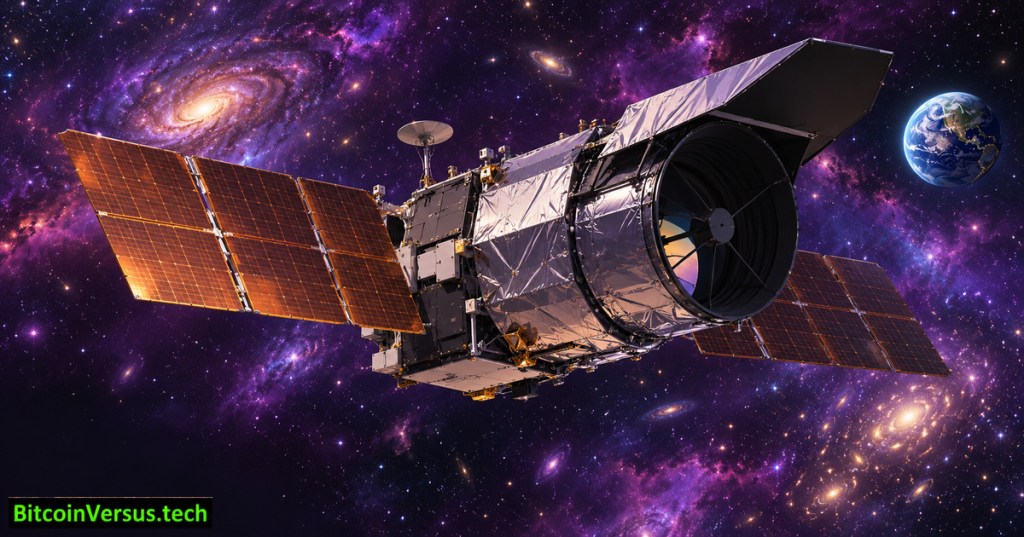
NASA has set December 7, 2026 for the public unveiling of the first official images from its Nancy Grace Roman Space Telescope. The release is scheduled for 3:30 p.m. Eastern / 12:30 p.m. Pacific during the American Geophysical Union meeting in San Francisco. NASA plans a livestream and simultaneous publication of the images on its website. The pictures are not public yet, so any preview claiming to show the December 7 release is premature.
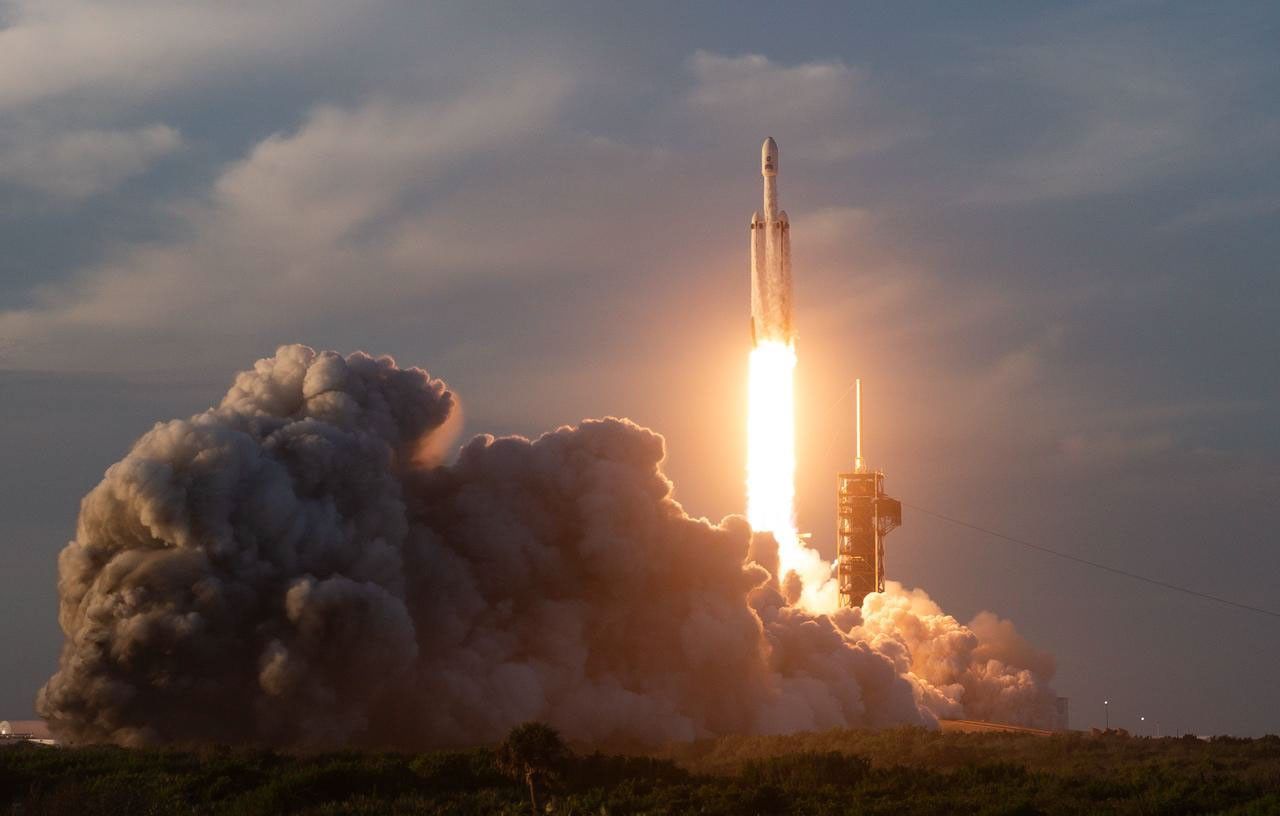
Roman launched aboard a SpaceX Falcon Heavy on August 30 and has spent the following months undergoing commissioning, calibration and pointing tests on its journey to the Sun–Earth L2 region, roughly 1 million miles from Earth. An early September engineering image showed deliberately out-of-focus rings of starlight. Such a test confirms that photons reached the detector; it should not be confused with the scientific imagery NASA intends to reveal in December.
A wider view, not a bigger mirror
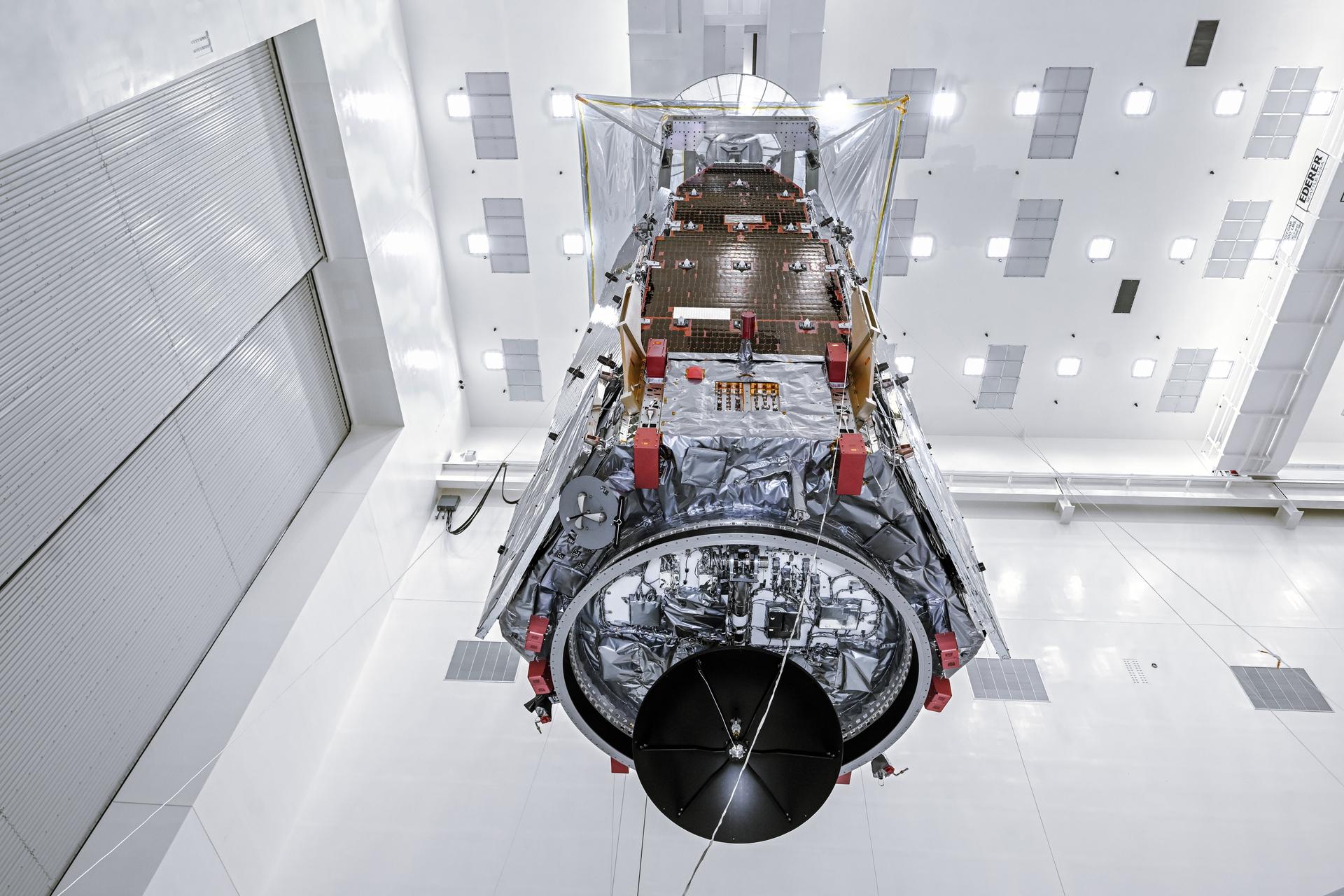
Roman carries a 2.4-meter primary mirror, comparable in diameter to Hubble’s. Its distinguishing instrument is a roughly 300-megapixel near-infrared camera built around 18 detectors. According to NASA, the Wide Field Instrument captures a patch of sky at least 100 times larger than a comparable Hubble view while retaining crisp space-based resolution. The advantage is survey coverage, not a claim that each individual star appears 100 times sharper.
Imagine studying a city through a narrow telescope and then acquiring a camera capable of recording entire neighborhoods at similar detail. Astronomers can use Roman’s wider field to measure patterns across immense populations of galaxies rather than spending years assembling small snapshots. NASA expects broad surveys to inform research into dark energy, the acceleration of cosmic expansion, and dark matter, whose gravity changes the apparent shapes of distant galaxies.
The same scientific questions are already being explored through other observatories. BitcoinVersus.Tech previously covered Euclid’s vast galaxy survey and Hubble’s gravitational-lens targets for Roman. Their data will complement, rather than automatically validate, Roman’s future conclusions.
The planet-hunting instrument has a separate job
Roman also contains a Coronagraph Instrument, a technology demonstration designed to suppress the overwhelming glare from stars so much fainter nearby objects can be studied. Unlike the wide-field camera, its engineering priority is high-contrast imaging. NASA has already reported preliminary guidance and coronagraph observations, with more alignment and optical tuning required. Our earlier report on Roman’s guide-star alignment explains why tiny pointing errors matter when photographing faint planets.
Directly photographing exoplanets remains challenging, and a successful coronagraph demonstration would not by itself establish the discovery of another Earth. Researchers must distinguish instrumental artifacts from faint astrophysical signals and test results against independent observations. A related BitcoinVersus.Tech report examined methods for recovering weak exoplanet signatures from Webb data. Different optical methods face the same general problem: a convincing signal must survive systematic checks.
What December 7 will actually establish
The first official Roman pictures should demonstrate image quality after extensive commissioning and help researchers communicate the telescope’s large observing footprint. They will not, alone, measure dark energy or reveal the composition of dark matter. Those conclusions require calibrated surveys, statistical analysis and comparison with other datasets over time. NASA says the public can view the unveiling through NASA Live, with the images posted on its Roman mission site. The December 7 date is an announced event; successful image delivery and future discoveries remain to be confirmed.
Primary sources
NASA’s November 17, 2026 first-image announcement; NASA instrument and launch specifications; NASA’s September commissioning report; November alignment report. Featured cover: original conceptual illustration, not a Roman science image. The two body photographs are credited NASA archival images.
We volunteer daily to ensure the credibility of the information on this platform is Verifiably True. If you would like to support to help further secure the integrity of our research initiative, please scan the QR code below.


Leave a Reply