
Power grids around the world carry a faint rhythm that electricity customers rarely notice: once every minute, system frequency briefly dips. A peer-reviewed study published online on October 30, 2026, in Nature Energy points to an unexpected mechanism. Software in battery-backed uninterruptible power supplies (UPS) can synchronize recurring power checks, causing distributed electrical loads to move together. Researchers identified the one-minute signature in 12 grids spanning five continents. The discovery turns a longstanding observation into an engineering problem with a potential software remedy.
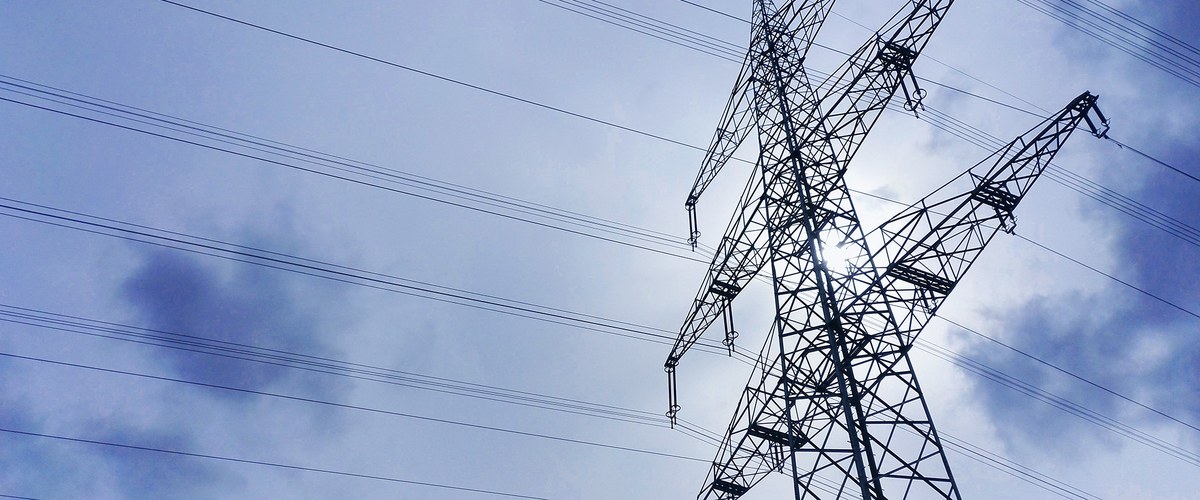
Why a tiny change in frequency matters
Alternating-current grids operate around a nominal 50 or 60 hertz (Hz), depending on the region. Frequency responds to the instantaneous balance between electrical consumption and production. When demand briefly rises, frequency can sag before controls restore balance. The researchers and Germany’s TenneT transmission operator described the minute-scale pattern as measurable, not a demonstrated cause of widespread blackouts.
A precise 60-second repetition suggested a software clock rather than random equipment behavior. Scientists from Forschungszentrum Jülich, the University of Cologne and Karlsruhe Institute of Technology examined grid records and installed measuring points at 80 locations on the Jülich campus. They detected periodic demand changes around UPS installations, tracked battery-current spikes and followed corresponding power variations through local transformers to a 110-kilovolt grid connection.
UPS self-checks can add up
A UPS uses batteries and power electronics to keep critical equipment operating through short interruptions. Routine checks help estimate battery condition and readiness. Some battery-management controllers conduct periodic checks at round-minute boundaries. When independent systems follow synchronized clocks, many seemingly minor load changes can occur at nearly the same instant. Our earlier UPS ride-through engineering lesson explains why backup-power design matters for data centers.

The study reports that Ireland’s one-minute frequency-dip amplitude grew from about 3 millihertz in 2016 to 12 millihertz in 2021, a fourfold increase. Twelve millihertz equals 0.012 Hz; the metric describes a small recurring deviation, not a collapse of the 50 Hz operating frequency. The authors connect growing interest in UPS systems and data-center infrastructure to the need for stronger grid-control design. The trend alone does not establish responsibility for every battery installation.
A particularly useful observation came after the researchers contacted one equipment manufacturer. An update to the studied battery-management software removed the strict periodicity of current peaks in one UPS battery block. The researchers also warn that coordinated power demand can increase mechanical adjustments and wear in hydropower turbines. The finding adds a software-control perspective to our reporting on grid-forming battery systems and data-center fault ride-through.
The fix: stop every controller from acting together
The proposed remedy is to stagger diagnostic checks or introduce controlled timing variation, often called jitter, rather than run every scheduled action on the same clock boundary. Engineers would need vendor-approved changes, site-specific testing and change control; altering a live UPS configuration without authorization could undermine backup-power protection. Frequency recordings, equipment telemetry and manufacturer documentation are better evidence than assumptions about a single battery.
As grid-scale battery deployment expands and large electronic loads face stricter grid tests, the design of internal software schedules becomes an external power-system concern. The strongest lesson is not that battery storage is unsafe. It is that widely distributed devices can behave like a coordinated electrical load even when nobody intended them to.
Primary sources and verification
- Nature Energy research paper, published online October 30, 2026 (DOI: 10.1038/s41560-026-02144-0)
- Forschungszentrum Jülich: research announcement and investigation details
- Nature Energy independent News & Views: An extra beat every minute
Media and methods note: The original featured artwork is an editorial illustration, not measured frequency data or a photograph of the study’s specific UPS installation. Both in-story photographs are credited authentic research-institute images. No video or social playback is represented as tested.
We volunteer daily to ensure the credibility of the information on this platform is Verifiably True. If you would like to support to help further secure the integrity of our research initiative, please scan the QR code below.



Leave a Reply