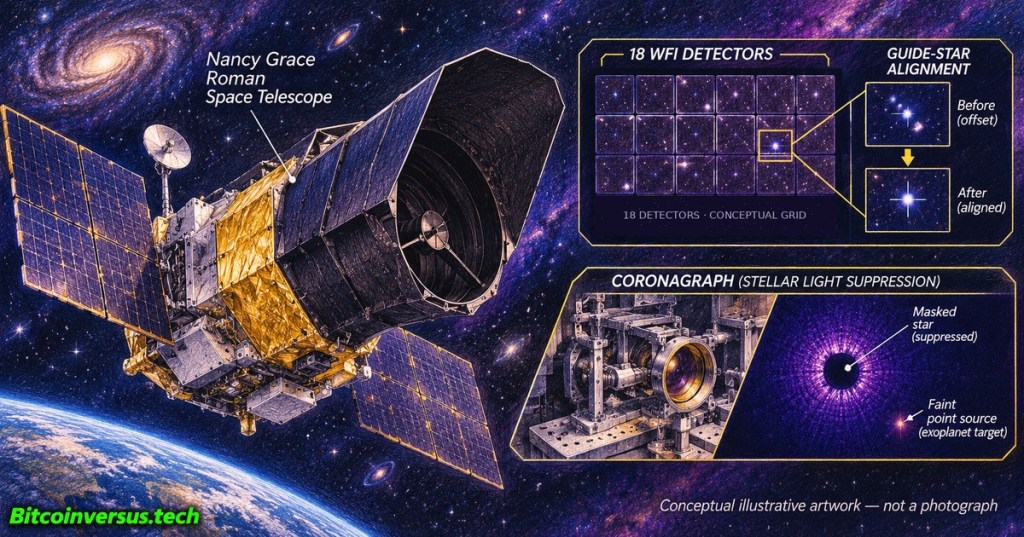
NASA’s Nancy Grace Roman Space Telescope has completed a major instrument-alignment step in orbit, sharpening its ability to track stars while preparing for precision observations of distant galaxies and exoplanets. In a November 13, 2026 mission update, the agency reported that teams mapped the positions of stars across Roman’s 18-detector Wide Field Instrument and refined the observatory’s optical alignment. The work advances commissioning after the telescope’s August 30 launch, but it is not an announcement of completed science surveys.
Official NASA Goddard overview of the Roman telescope, published August 26, 2026. The video explains the mission’s instruments and science goals; it predates the November orbital-alignment milestone. Credit: NASA Goddard / YouTube.
Eighteen detectors must agree on where stars belong
Roman’s 300-megapixel Wide Field Instrument performs two jobs: collecting infrared science images and providing fine guidance. When it tracks guide stars, the software must know which detector should see each star and precisely where the star should fall. Small differences between the predicted and observed positions can degrade pointing stability.
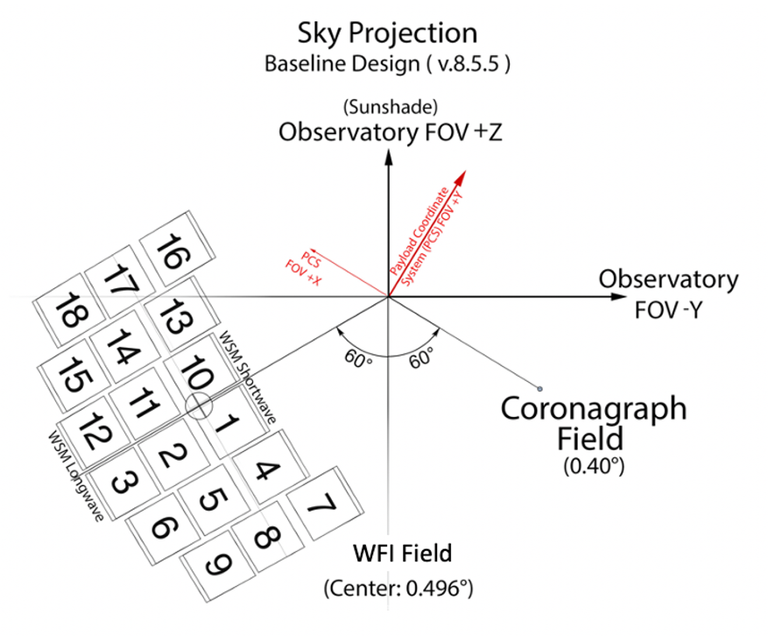
Engineers compared real star measurements with the instrument’s prelaunch geometry, which can shift after launch vibration and temperature changes. The resulting calibration updates help Roman hold targets steady rather than describing a mechanical relocation of all 18 detector chips. NASA said the instrument alignment now meets the precision required for the next commissioning activities.
The observatory’s 2.4-meter mirror matches the diameter of Hubble’s primary mirror, but its wide-field infrared imager covers a much larger area of sky per exposure. NASA’s stated goal is a view at least 100 times wider than Hubble’s, not a claim that every Roman image is intrinsically 100 times sharper.
Coronagraph masks prepare for a harder test
Roman also carries a technology-demonstration coronagraph designed to suppress starlight so fainter objects close to a bright star become observable. Teams adjusted the secondary mirror, an optical relay mirror and the coronagraph’s masks and internal optics. Positioning those components is a prerequisite for active control of residual starlight.
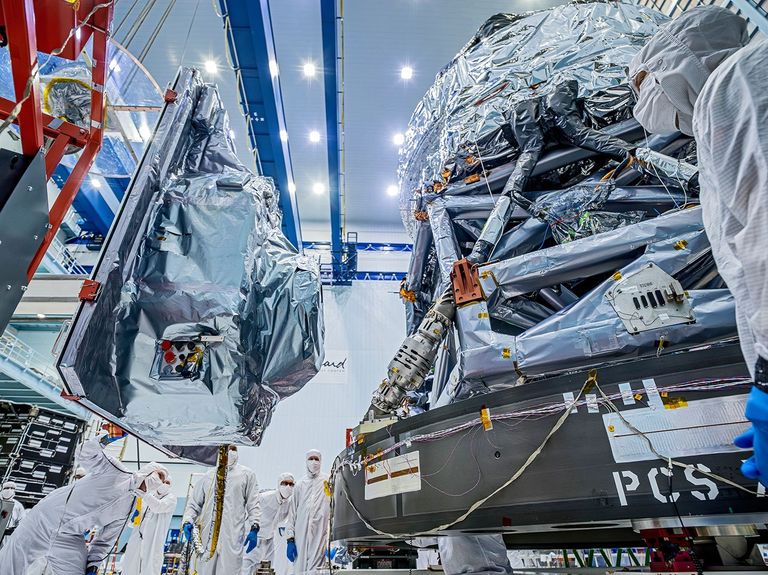
The next phase includes testing more than 3,000 tiny moving elements in the coronagraph’s deformable mirrors. Those elements alter mirror shape to reshape the light wavefront and reject glare. NASA reports previous laboratory demonstrations under simulated space conditions, while on-orbit active suppression around real stars remains a future test. Optical alignment alone does not establish the final achievable planet-imaging contrast.
The effort complements other exoplanet approaches, including signal recovery in existing Webb observations, and increasingly demanding space-instrument engineering described in Berkeley’s gamma-ray telescope work. Roman’s future surveys could also provide context for discoveries made using Webb’s deep-universe observations.
Commissioning is progressing, not finished
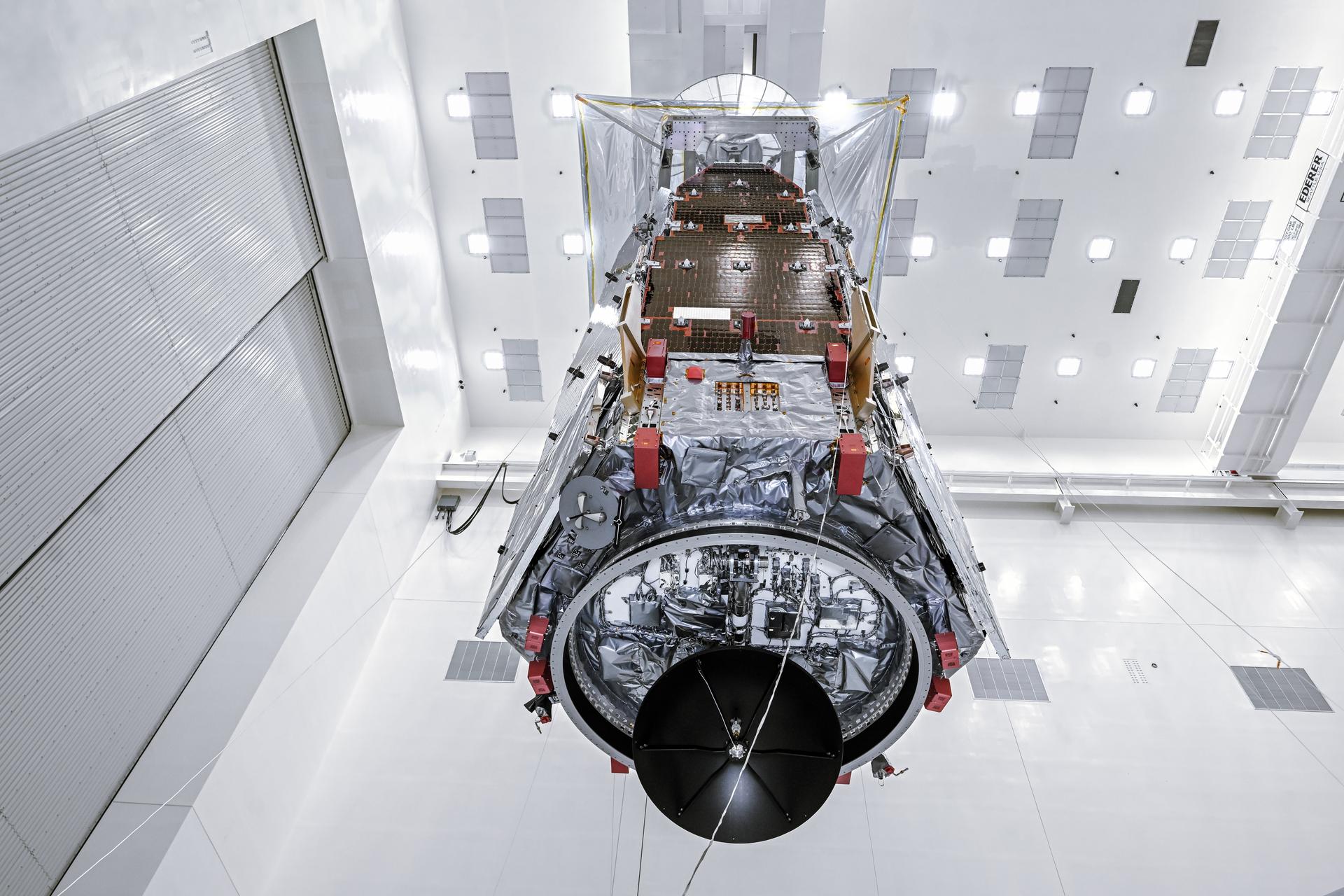
NASA’s October 22 commissioning update confirmed that Roman could slew, guide, expose its camera and return data. The November alignment advances measurement accuracy and stability; the first public science images were previously expected by early 2027. Launch success and instrument checkout are distinct from completion of the planned multi-year survey program.
High-reliability space hardware has to survive vibration, radiation and long-distance operations. Our earlier reporting on chips designed for spaceflight and NASA’s ESCAPADE Mars probes highlights related engineering constraints across very different spacecraft.
Bottom line: Roman’s measured alignment progress is an operational milestone for its wide-area astronomy mission. The remaining coronagraph calibration and science observations will determine how effectively its hardware can suppress starlight and reveal faint targets.
Primary sources: NASA mission alignment update (November 13, 2026); NASA final commissioning update (October 22, 2026); NASA Wide Field Instrument activation report (September 15, 2026); NASA observatory technical layout; official NASA Goddard Roman explainer.
Editor’s Note: NASA confirms a completed instrument-alignment step during Roman’s orbital commissioning, not completion of the full coronagraph demonstration, final science calibration, or a discovery of a new exoplanet. The stated wide-field comparison and pointing-stability requirements are instrument design goals, not measured increases in image sharpness. The original 1200 × 630 colored-pencil cover is conceptual, not an orbital photograph; the two authentic NASA hardware photographs were captured before launch. The detector schematic is a NASA technical baseline, not live alignment data. The NASA Goddard video predates the November 13 report. WordPress player rendering may be verified independently; direct video playback and mobile interactions cannot be presumed without testing.

BitcoinVersus.Tech is volunteer-run and publishes independent educational technology reporting. An optional 5,000-satoshi donation supports ongoing research. Scan the original QR from a second screen with a compatible Bitcoin wallet; on mobile, use a wallet that supports scanning a saved image. Independently verify the recipient address 3C9o19EH5HSiwEPyCTmEKzxhNCbo2X6TTb and the payment amount before sending. Bitcoin transfers are generally irreversible.
We volunteer daily to ensure information on the BitcoinVersus.Tech platform is Verifiably True. Coverage is educational and informational and does not constitute financial or investment advice.


Leave a Reply