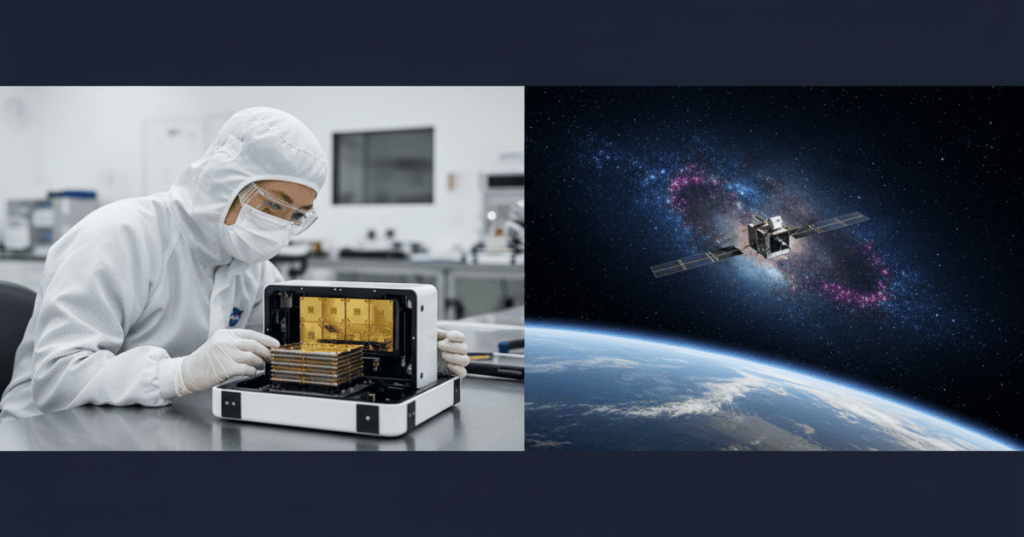
The University of California, Berkeley offered a new behind-the-scenes look at NASA’s Compton Spectrometer and Imager (COSI) on October 29, 2026. At its Space Sciences Laboratory, engineers and students are assembling a satellite that will trace gamma rays from exploded stars and investigate why the Milky Way contains so many positrons—the antimatter counterparts of electrons. The university’s new video shows the spacecraft work before its planned 2027 launch.
UC Berkeley’s October 29, 2026 Born at UC Berkeley film tours its Space Sciences Laboratory and the COSI space telescope being prepared for a planned 2027 launch.
How COSI detects invisible gamma rays
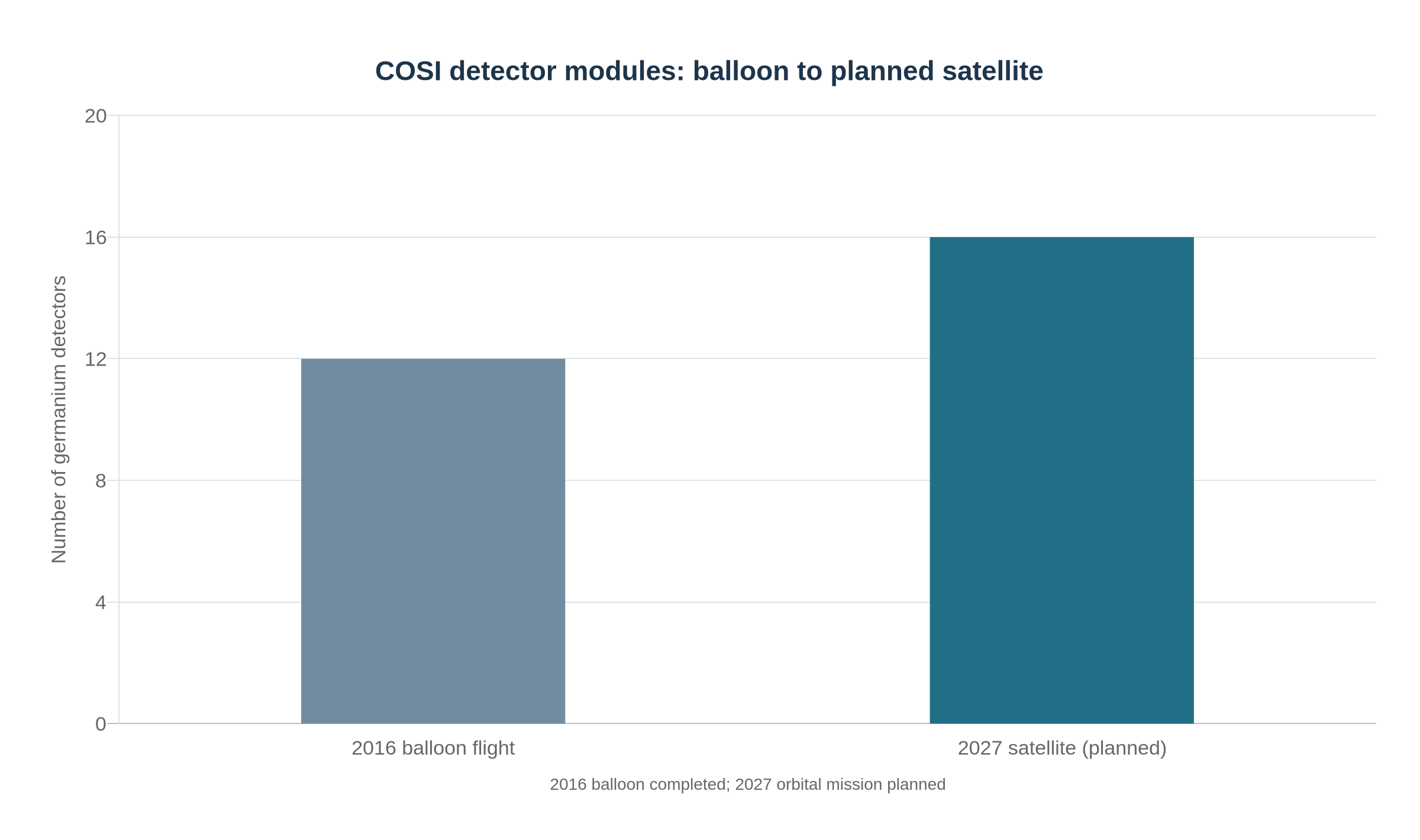
COSI is not a conventional optical telescope. Instead, its 16 position-sensitive germanium detectors record the locations and energies of gamma-ray interactions. Using Compton scattering, software reconstructs probable arrival directions from multiple interactions. This is particularly valuable because gamma rays cannot be focused with ordinary glass lenses in the same manner as visible light.
NASA describes a primary observing range of 0.2–5 MeV, far above visible-light photon energies. One target is the 511-keV signature produced when electrons and positrons annihilate. Others include radioactive material forged by dying stars, gamma-ray bursts and the polarized radiation around black holes. Mapping these signals could help reveal how heavy elements spread through the galaxy.
From a 2016 balloon to a planned 2027 satellite
The hardware has a history. An earlier COSI instrument flew on a NASA super-pressure balloon from New Zealand in 2016. NASA’s instrument archive identifies 12 germanium detector modules in that balloon version, compared with 16 planned for orbit. The module-count chart shows a design difference; it does not establish how much better the new instrument will perform.
Engineers must keep the detectors clean and cryogenically cooled while fitting them into a compact spacecraft. NASA’s August assembly imagery shows precision handling of the detector stack in Berkeley’s cleanroom. More broadly, gamma-ray imaging illustrates the same challenges of radiation-tolerant hardware discussed in our spacecraft chips guide and the specialized materials covered in our semiconductor reference.
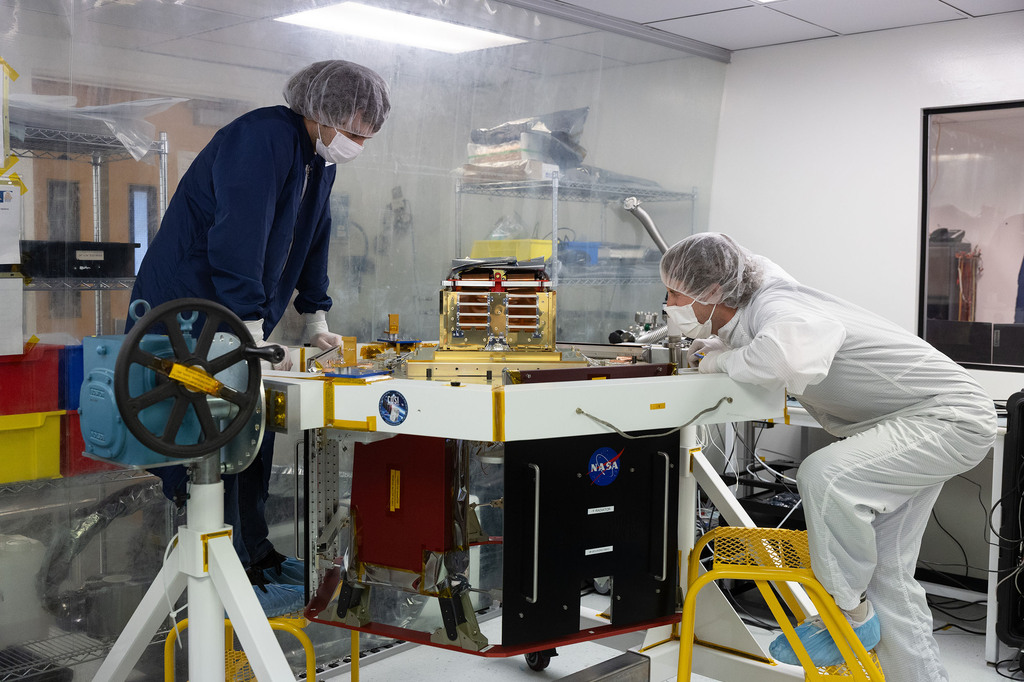
COSI mission team’s detector-assembly video provided on the official COSI media page. It documents physical instrument assembly, not data from space.
What the new space telescope could discover
COSI’s objectives complement, rather than replace, instruments examining other wavelengths. NASA’s PRIMA far-infrared observatory proposal addresses colder cosmic material, while our Webb astronomy coverage explores another observational frontier. Combining wavelengths and gravitational-wave alerts can illuminate events no single telescope completely explains.
The next milestones are completing spacecraft integration, environmental testing and launch preparations. Berkeley leads the science mission, alongside NASA and other partners; COSI has not yet launched. The October video documents engineering progress, not new gamma-ray observations from orbit.
BitcoinVersus.Tech
BitcoinVersus.Tech Editor’s Note: We volunteer daily to ensure the credibility of the information on this platform is Verifiably True. If you would like to support our work and help further secure the integrity of our research initiatives, please scan the QR code below to donate 5,000 sats. For best results, scan the QR code from a laptop or larger screen.

Bitcoin address: 3C9o19EH5HSiwEPyCTmEKzxhNCbo2X6TTb. On a phone, open the QR image on another screen or copy and verify the address in your wallet before sending.
BitcoinVersus.tech is not a financial advisor. This media platform reports on financial subjects purely for informational purposes.


Leave a Reply