Bitcoin miner Bitdeer Technologies is preparing to deliver the first 60.5 megawatts (MW) of critical IT load at its converted Tydal, Norway, data center before year-end 2026. Its November 10 infrastructure update sets a second 60.5 MW phase for the first quarter of 2027. Neither target constitutes confirmation that the new AI equipment is already running.
The move gives a former Bitcoin proof-of-work facility a different role: hosting high-density NVIDIA GPU systems for artificial intelligence. Bitdeer’s subsidiary signed a 16-year colocation and services agreement with Volta Tydal AS in August, covering 121 IT MW and approximately $4.7 billion in scheduled base-term payments, subject to performance and contract conditions.
Official Bitdeer video: a May 2026 tour of Tydal. The footage predates the November infrastructure status and does not demonstrate completion of the new AI phases.
Three phases, three different electrical milestones
The first two phases serve Volta’s contracted GPU deployment. A third expansion, involving another 42.7 IT MW in two halls, is targeted for the second half of 2027 and sits outside the Volta lease. The company’s November investor presentation describes 163.7 IT MW across the eventual three phases, against approximately 180 MW of gross facility power.
Those figures must not be added as interchangeable units. IT load measures the electricity assigned to computing equipment; gross facility power also includes cooling, power conversion and support systems. For the 121 IT MW lease, Bitdeer estimates 133 gross MW and a design power-usage effectiveness (PUE) near 1.1. The ratio, 133 ÷ 121 ≈ 1.10, is a planning assumption rather than a measured, year-round operating result.
Electrical infrastructure: why the conversion is demanding
Retrofitting an ASIC mining site for AI involves more than replacing machine racks. GPU clusters need coordinated power distribution, uninterruptible power supplies, fast low-latency networking, cooling redundancy and commissioning procedures suited to uninterrupted service. Unlike flexible ASIC loads, contractual AI workloads often carry tighter availability requirements and different economic penalties for outages.
Bitdeer’s presentation reports that 22-kilovolt transformer houses and UPS equipment were installed by October. The company describes dual Norwegian and Swedish grid connectivity, dry-cooling equipment and multiple fiber providers. It also outlines potential heat reuse for nearby food production. The reuse plan is an infrastructure ambition, not documented annual waste-heat recovery.
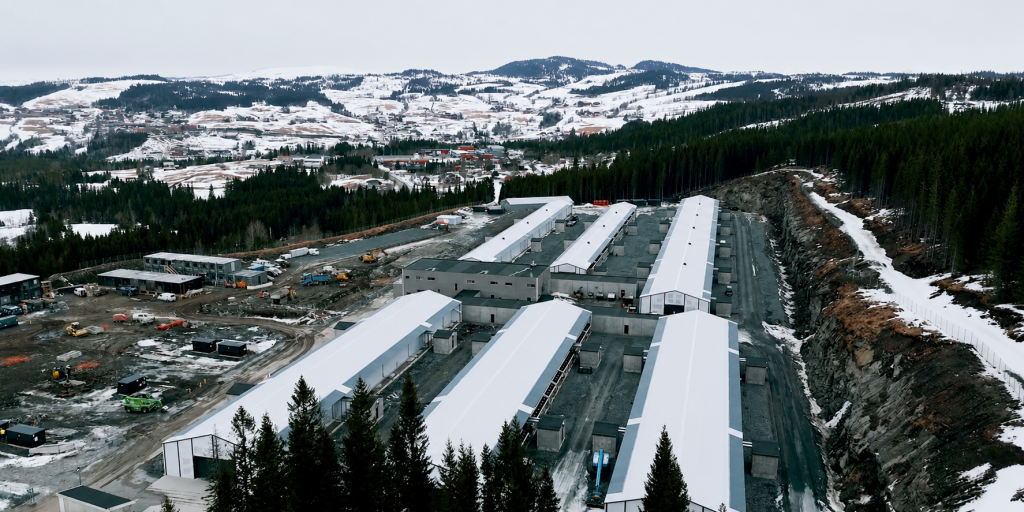
The conversion contractor, Data Center Installations AS, was engaged in March. An affiliated contractor has shared project photographs of the snowy campus, showing the physical scale of the redevelopment.
Official Bitdeer video, November 2024: tour of its separate Molde, Norway, mining facility. Included for Norwegian operational context; it is not footage of Tydal.
A multibillion-dollar contract is not cash collected
The $4.7 billion headline describes contractual payments over 16 years, not current revenue or project funding. The tenant may terminate without a fee at year ten; an optional eight-year renewal could lift potential scheduled value to about $8 billion. The original August release also described anticipated, rather than completed, credit-support arrangements.
As of September 30, Bitdeer estimated roughly $350 million of remaining construction spending for the two leased phases. Delivery, commissioning, utility reliability and tenant installation remain the decisive tests. The first scheduled handover is December 31, 2026; initial customer installation follows in 2027.
What the mining industry should watch
Tydal illustrates a different route from Bitdeer’s 179 MW Rockdale expansion, its 55 MW Knoxville conversion delay, and its fully operating 221 MW Ohio Bitcoin mine. Nearby, Bitzero is expanding a Norwegian Bitcoin operation instead of converting it. The same energy and land assets can therefore support diverging strategies. Our mining-versus-cloud infrastructure explainer examines the engineering trade-offs.
Sources and disclosure
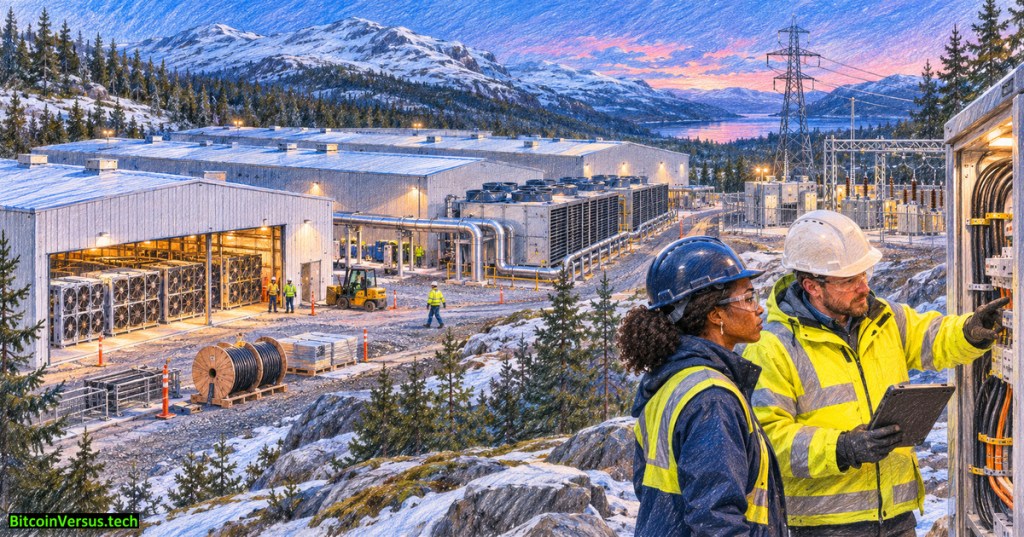
Bitdeer, November 10, 2026 quarterly update; Bitdeer Q3 2026 investor presentation; Bitdeer, August 4 contract announcement. The cover is an original editorial illustration, not a documentary photograph. Project timings and efficiency claims are company statements, not independently commissioned measurements.
We volunteer daily to ensure the credibility of the information on this platform is Verifiably True. If you would like to support to help further secure the integrity of our research initiative, please scan the QR code below.

Editorial financial disclaimer: Coverage is for informational purposes only, not investment advice.


Leave a Reply