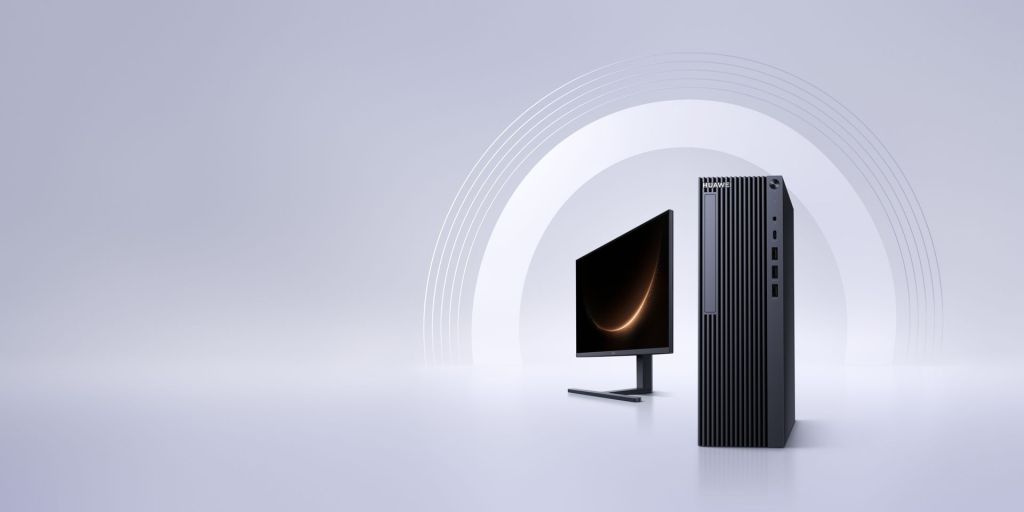
Huawei has introduced its first HarmonyOS desktop computer, the Qingyun HM650 series, marking a milestone in China’s effort to develop a domestic personal-computing ecosystem. At its November 5, 2026, enterprise computing summit in Wuhan, the company promoted a desktop platform certified for 100% component localization. Huawei’s official support documentation lists October 15 as the commercial release date, preceding the November presentation.
The HM650 and HM650g target businesses and government institutions rather than ordinary retail buyers. Their combination of Huawei’s Kirin processor and HarmonyOS offers an alternative to the familiar Intel or AMD processor paired with Microsoft Windows. The development concerns control over the computing platform as much as the origin of individual components.
A desktop built around Chinese computing technology
Huawei’s official specifications list the Kirin X90 processor, LPDDR5 memory, solid-state storage and a 180-watt rated power supply. The compact enclosure measures 293 × 93 × 315.5 mm. The power-supply rating is a maximum rated output, not a measurement of typical electricity consumption.

According to Tom’s Hardware, the processor incorporates ten Arm-based CPU cores capable of handling twenty threads, integrated graphics and a neural processing unit. The publication also cites a TechInsights teardown identifying SMIC’s 7-nanometer-class manufacturing process. Those architecture and fabrication details come from third-party reporting rather than Huawei’s desktop specification sheet.
The platform continues Huawei’s push toward tighter integration between processors and software, a direction also explored in our Kirin LogicFolding coverage and Ascend programming stack analysis.
What 100% domestic actually means
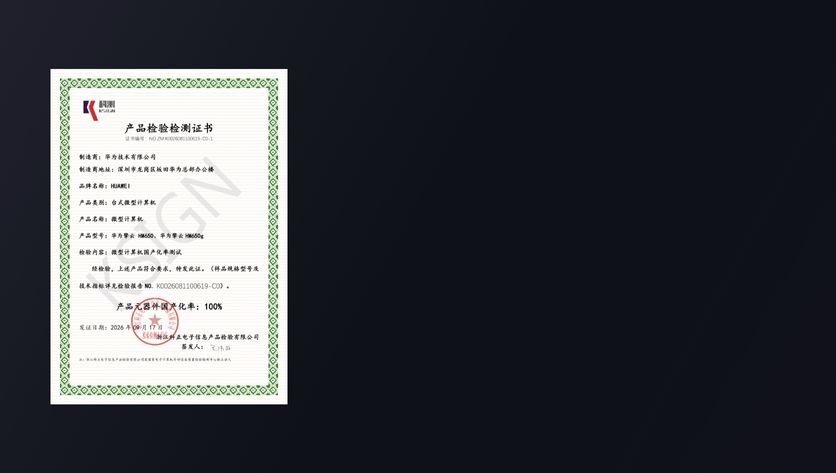
The manufacturer’s product page identifies Zhejiang Kezheng Electronic Information Product Inspection as the testing organization. A crucial qualification appears in footnote four: the certification indicates that the motherboard’s hardware components can be sourced domestically, while Huawei uses multiple suppliers and actual deliveries depend on component availability.
Domestic component sourcing does not necessarily eliminate foreign intellectual property, semiconductor design tools, fabrication equipment or imported raw materials. Nor does the certificate independently establish the provenance of every individual production unit. The achievement is significant, but complete supply-chain independence is a broader claim requiring additional evidence.
The competition extends beyond the processor
HarmonyOS V1.0 Enterprise Edition brings hardware and operating-system development under the same corporate umbrella. Huawei advertises device collaboration, enterprise management and AI-assisted office functions, some of which require connectivity or software updates. Organizations evaluating the platform will still need to verify application compatibility, security updates, peripheral support and performance under their own workloads.
The commercial importance of domestic computing is visible across the industry. Our reporting on Chinese restrictions on Nvidia H200 imports and alternative processor architectures illustrates how hardware availability and software ecosystems can shape purchasing decisions.
Huawei’s desktop is not evidence that Windows or x86 processors are about to disappear. Its significance lies in demonstrating a commercially offered alternative for domestic institutional buyers. The next meaningful tests are deployment scale, independent performance benchmarks, software adoption and verified component provenance across shipped machines.
Additional reporting: South China Morning Post, November 5, 2026. Featured image: official Huawei product imagery.
We volunteer daily to ensure the credibility of the information on this platform is Verifiably True. If you would like to support to help further secure the integrity of our research initiative, please scan the QR code below.



Leave a Reply