
Commercial operation at altitude
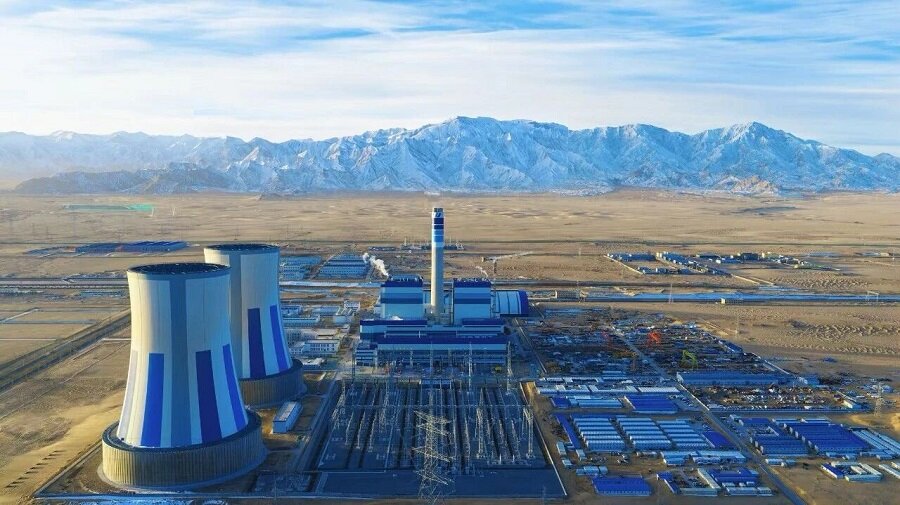
China brought the first generating unit of the Huadian Golmud Phase I coal power project into commercial service on November 5, 2026, after completing a 168-hour trial. PowerChina, a contractor on the project, confirmed the milestone on November 6. The project comprises two 660 MW units, giving it a planned combined capacity of 1,320 MW. The milestone applies to the first unit, not necessarily the entire station.
Featured cover: conceptual editorial illustration, not a photograph of the named project. Documentary and contextual images are identified in their captions.
Why altitude changes the design
At high elevation, atmospheric pressure and air density fall. A given volumetric airflow therefore contains less oxygen than at sea level, creating additional requirements for combustion-air equipment. Fans, ducts and controls must supply sufficient oxygen across the boiler’s operating range. The lower air density can also influence the performance of equipment that rejects waste heat to the atmosphere. Engineers have to account for these conditions before interpreting a plant’s rated capacity.
Understanding ultra-supercritical steam
A conventional steam power station transfers heat from a fuel into water, producing steam that expands through a turbine coupled to an electrical generator. Ultra-supercritical systems operate above water’s critical pressure and at elevated temperatures, allowing a higher thermodynamic efficiency than many older steam plants. Materials, welds and valves must tolerate the resulting pressure and temperature. Higher efficiency reduces the fuel required for a given electrical output, all else being equal, but does not eliminate carbon emissions.
Power and energy are different
At its rated output, one 660 MW unit could theoretically generate 15,840 MWh in 24 hours. Both units together could deliver 31,680 MWh over the same interval at full power. Neither figure represents actual measured production. Maintenance, dispatch instructions, fuel availability and auxiliary electrical consumption affect net electricity delivered to the grid. An operating trial establishes a commissioning milestone rather than a full-year performance record.
A regional grid question
Coal-fired generation can provide controllable output during periods when electricity demand exceeds available renewable generation. Its contribution has to be weighed against fuel consumption, air pollution, water requirements and greenhouse gas emissions. A high-altitude installation is particularly interesting because its engineering constraints are not identical to those of a coastal station. The next meaningful evidence will be net generation, heat rate, emissions and availability over sustained operation, alongside the commissioning status of the second unit.
A useful comparison with other thermal projects requires a common measurement boundary. Gross generator output excludes the deduction for plant equipment such as feedwater pumps, ventilation fans and emissions-control machinery. Net output includes those deductions. A reported steam temperature or installed megawatt rating cannot establish the station’s net heat rate. Comparing fuel energy input with net electrical energy over a defined operating period would help separate the effects of advanced steam conditions from the additional demands of operating at elevation.
Sources and further reading
Announcement or reporting | Additional source
Fervo’s geothermal transmission rights | China’s 60 MW liquid-air battery | U.S. electricity generation mix | Utah’s 600 MWh battery
We volunteer daily to ensure the credibility of the information on this platform is Verifiably True. If you would like to support to help further secure the integrity of our research initiative, please scan the QR code below.

For mobile scanning, open the article on another display and scan the QR code with a Bitcoin wallet. The voluntary donation amount is 5,000 sats. Verify the receiving address 3C9o19EH5HSiwEPyCTmEKzxhNCbo2X6TTb before sending.
BitcoinVersus.tech is not a financial advisor. This media platform reports on financial subjects purely for informational purposes.


Leave a Reply