A transition from construction to nuclear commissioning
China General Nuclear completed the initial fuel loading at San’ao Unit 2 in Zhejiang province on November 2, 2026, according to industry reporting published November 4. The reactor uses the Hualong One pressurized water reactor design. The event advances the generating unit into another commissioning phase, but loading fuel does not establish that a reactor has reached criticality, connected to the grid or entered commercial operation.
Featured cover: conceptual editorial illustration, not a photograph of the named project. Documentary and contextual images are identified in their captions.
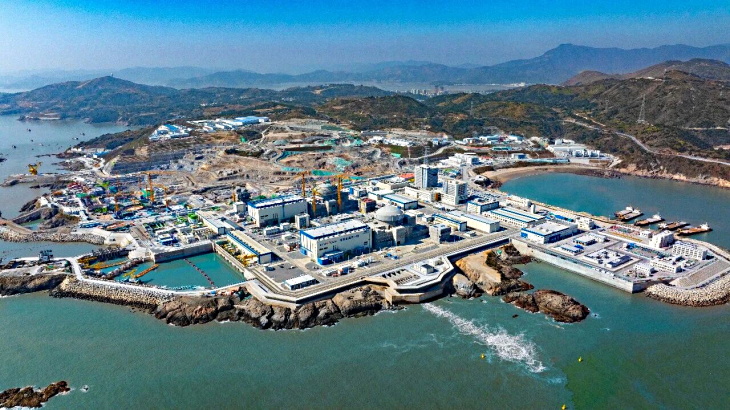
San’ao nuclear power plant site. Credit: CGN via World Nuclear News.
How a pressurized water reactor generates electricity
A pressurized water reactor uses energy released by controlled nuclear fission to heat water circulating through the primary circuit. High pressure prevents that water from boiling under normal operating conditions. Heat is transferred through steam generators into a separate water circuit, where steam can expand through a turbine. An electrical generator produces electricity from the resulting mechanical rotation. Keeping the primary and secondary systems separate is central to the design.
Commissioning involves multiple milestones
Large generating units undergo extensive construction inspections and functional testing before commercial service. Earlier in 2026, CGN reported progress on hot functional testing for San’ao Unit 2. Such testing checks equipment and system performance under representative thermal conditions before normal nuclear operation. Fuel loading is another significant milestone in a broader regulatory and engineering process. Subsequent startup and grid integration milestones must each be confirmed separately.
The capacity of a reactor is not the energy produced
The Hualong One is a gigawatt-class reactor design, making a single unit a substantial addition to a regional electricity system when fully operational. For illustration, a 1 GW plant operating continuously for a full day would generate 24 GWh, while a hypothetical 90% annual capacity factor would imply about 7.88 TWh per year. Neither calculation is a report of electricity generated by San’ao Unit 2. Actual net capacity and operating performance need plant-specific data.
What to watch next
Nuclear power projects require evidence of safe system operation, regulatory oversight and reliable electricity delivery. Grid synchronization is the point at which a generator begins operating in coordination with the electrical network, but commercial operation may follow only after additional testing. Long-term output, outage schedules and maintenance performance will determine how the unit contributes to the regional grid. The fuel-loading announcement is a verified step in that sequence, not a substitute for evidence of electricity production. Future coverage should distinguish commissioning milestones from routine operation and avoid counting unfinished capacity as current generation.
Nuclear capacity planning also involves supporting infrastructure outside the reactor building. Cooling systems, turbine equipment, transformers and transmission connections must be available for sustained electricity generation. A reactor can reach a technical commissioning milestone while work continues elsewhere at the station. Reporting the progress of each major subsystem separately provides a more accurate assessment than assuming every part of the generating unit advances simultaneously.
Sources and further reading
Announcement or reporting | Additional source
DOE fusion research projects | Princeton’s fusion ignition research | Idaho’s nuclear research supercomputer | U.S. electricity generation mix
We volunteer daily to ensure the credibility of the information on this platform is Verifiably True. If you would like to support to help further secure the integrity of our research initiative, please scan the QR code below.

For mobile scanning, open the article on another display and scan the QR code with a Bitcoin wallet. The voluntary donation amount is 5,000 sats. Verify the receiving address 3C9o19EH5HSiwEPyCTmEKzxhNCbo2X6TTb before sending.
BitcoinVersus.tech is not a financial advisor. This media platform reports on financial subjects purely for informational purposes.


Leave a Reply