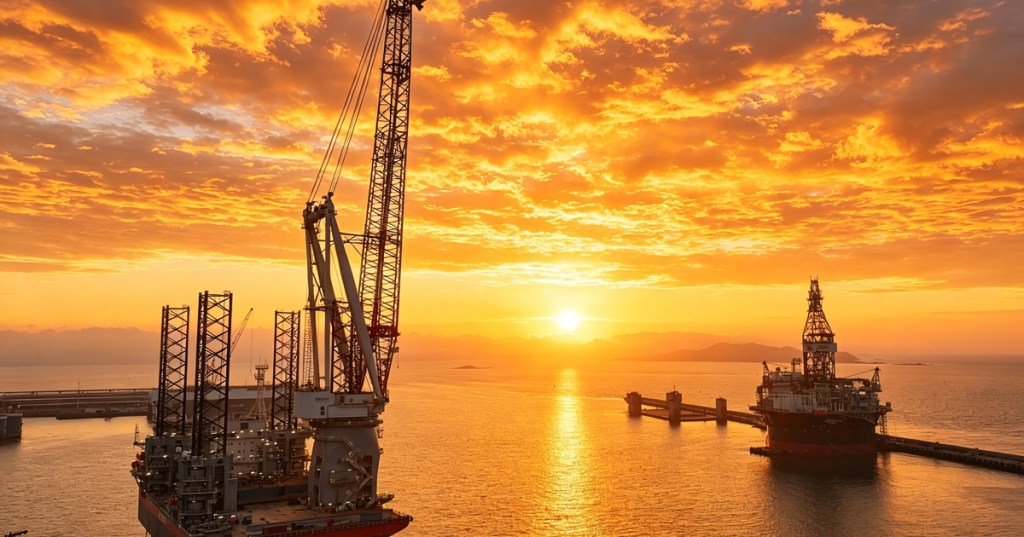
Dogger Bank Wind Farm has secured another specialist installation vessel for the third phase of its North Sea development. In a November 4, 2026 announcement, SSE Renewables confirmed a contract with Cadeler to deploy the new Wind Apex vessel during the third quarter of 2027. The ship will supplement Seaway Ventus during the installation of 87 turbines at Dogger Bank C, a 1.2 GW phase of the 3.6 GW project. The contract addresses the marine logistics challenges also evident in Germany’s Nordseecluster B development.
One project, three generating phases
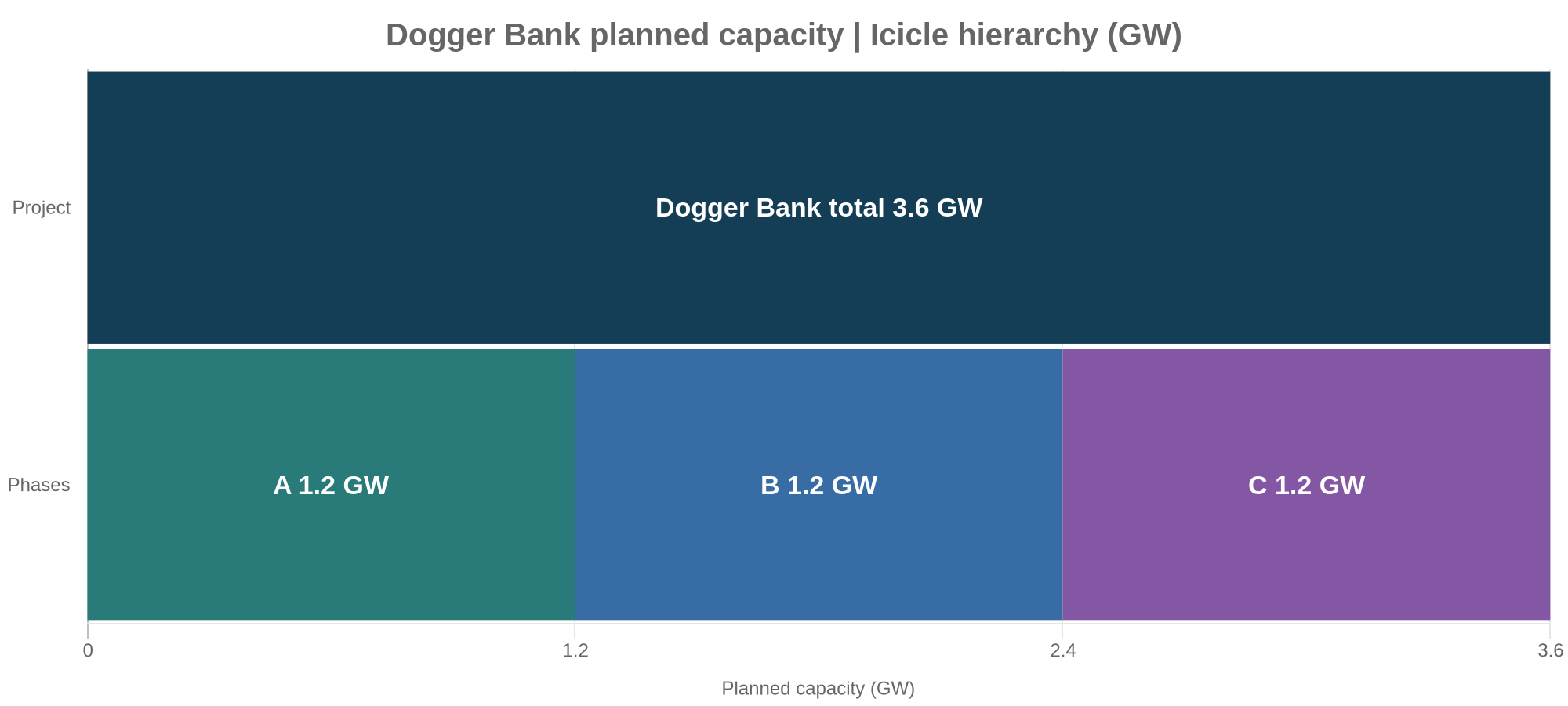
Dogger Bank consists of three equally sized phases designated A, B and C. Each has a planned generating capacity of 1.2 GW. The complete project therefore totals 3.6 GW, with each phase representing one-third of planned capacity. The icicle chart below uses SmartChart’s recently added reference format number 70. Rectangle widths represent electrical capacity; the upper rectangle represents the entire project and the lower rectangles divide the same capacity among its constituent phases. The rows are alternative levels of the same hierarchy and must not be added together.
The developer’s construction archive reports that all 277 turbine foundations were completed in November 2025. Phases A and B each have 95 foundation positions, while phase C has 87. Different turbine counts can support equal phase-level capacity because turbine ratings and grid export limits differ. Foundation completion is a separate milestone from turbine erection, electrical testing and commercial operation, as illustrated by the installation of 52 turbines at Ecowende.
The installation vessel as an engineering resource
An offshore wind installation ship transports large turbine components from port to the project area. Jack-up vessels lower legs to the seabed and elevate their hull above the water surface, providing a comparatively stable platform for heavy lifting. Cranes assemble towers, nacelles and blades according to engineered lift plans. Vessel capacity, port handling, weather windows and component availability constrain the installation schedule.
Cadeler’s contract announcement identifies Wind Apex as its third A-class vessel. The class supports both foundation and turbine installation. The additional vessel provides scheduling flexibility across the project, but does not guarantee that construction will accelerate in direct proportion to vessel count. Offshore operating conditions and coordination constraints also matter, including for emerging marine projects such as Scotland’s licensed wave-energy demonstration.
From installation to grid-connected electricity
Dogger Bank’s turbines feed offshore collection networks, with electricity converted for high-voltage direct-current transmission to shore. Installation must be followed by electrical connection, protection testing and commissioning. The project’s 3.6 GW headline describes planned capacity rather than continuous power delivered to consumers. Wind generation varies with resource conditions, just as solar generation varies with irradiance in Sabey’s Texas renewable energy agreement. No dedicated Bitcoin mining or AI customer was announced under the vessel contract. The November development is an investment in construction capability, with Wind Apex’s first deployment expected in 2027 rather than an indication of newly commissioned capacity.
Featured image: SSE Renewables, November 4, 2026; Cadeler A-class vessel illustration.
We volunteer daily to ensure the credibility of the information on this platform is Verifiably True. If you would like to support to help further secure the integrity of our research initiative, please scan the QR code below.

For mobile scanning, open the article on another display and scan the QR code with a Bitcoin wallet. The voluntary donation amount is 5,000 sats. Verify the receiving address 3C9o19EH5HSiwEPyCTmEKzxhNCbo2X6TTb before sending.
BitcoinVersus.tech is not a financial advisor. This media platform reports on financial subjects purely for informational purposes.


Leave a Reply