Norwegian embedded AI developer Elliptic Labs is exploring a way to give smart glasses touch and wear-detection functions without adding dedicated sensing components. Its November 24, 2026 announcement confirms a proof-of-concept agreement with an unnamed eyewear customer. The proposed software would recognize when glasses are put on or removed, as well as taps, double taps and directional swipes on the frame. The company expects to conclude the evaluation in January 2027; the agreement contains no commitment to commercial deployment.
An earlier Mobile World Congress 2018 demonstration of Elliptic Labs’ ultrasound gesture detection in smart speakers. Historical context, not footage of the new glasses. Watch directly on YouTube.
Turning audio hardware into a virtual sensor
A conventional wearable can use dedicated capacitive, optical or mechanical sensors to identify interactions. Elliptic Labs instead proposes extracting information from existing speakers, microphones and other onboard sensors. Its embedded machine-learning models combine ultrasonic and ambient acoustic information without using camera data. Our coverage of Cornell’s smartwatch motion-tracking research illustrates a separate application of acoustic sensing in wearables.
In an active acoustic sensing system, a transmitted sound can interact with surrounding objects before returning to a microphone. Changes in the received signal can reveal movement or proximity. Physical contact with a frame can also alter its vibration and acoustic characteristics. Signal-processing algorithms must separate relevant patterns from interference, and a classifier can use those patterns to recognize intended actions. Elliptic Labs has not published the exact signal-processing architecture for its prospective customer’s glasses.
The engineering trade-off
Removing separate sensing components could free valuable space inside the narrow arms of a pair of glasses. Weight and packaging are already significant constraints, as illustrated by Vuzix’s lightweight display eyewear and KAIST’s research into thinner polarization optics. Software-defined sensing still requires electrical power, processing time and compatible acoustic components. Existing speakers and microphones may also be needed simultaneously for conversations and media playback.
The Mac Observer’s 2020 interview and demonstration covers Elliptic Labs’ earlier use of existing smartphone speakers and microphones for sensing. Watch directly on YouTube.
A practical implementation must distinguish intentional gestures from accidental contact, environmental noise and routine adjustment of the glasses. Manufacturers should evaluate false activations, missed gestures, latency, power consumption and performance across different users and frame designs. Local model execution can avoid a network round trip for recognition, but does not establish that every other function of the eyewear operates privately. Our coverage of Android XR intelligent eyewear explains the broader privacy considerations.
From evaluation to a commercial product
Elliptic Labs’ November 19 business update identifies a separate commercial smartwatch agreement with an anticipated launch in the second quarter of 2027. That contract should not be confused with the newer glasses evaluation. The November 24 disclosure provides no customer identity, product release date, measured detection accuracy or power consumption results. The next milestone is completion of the evaluation, followed by evidence of reliable operation and a manufacturing commitment.
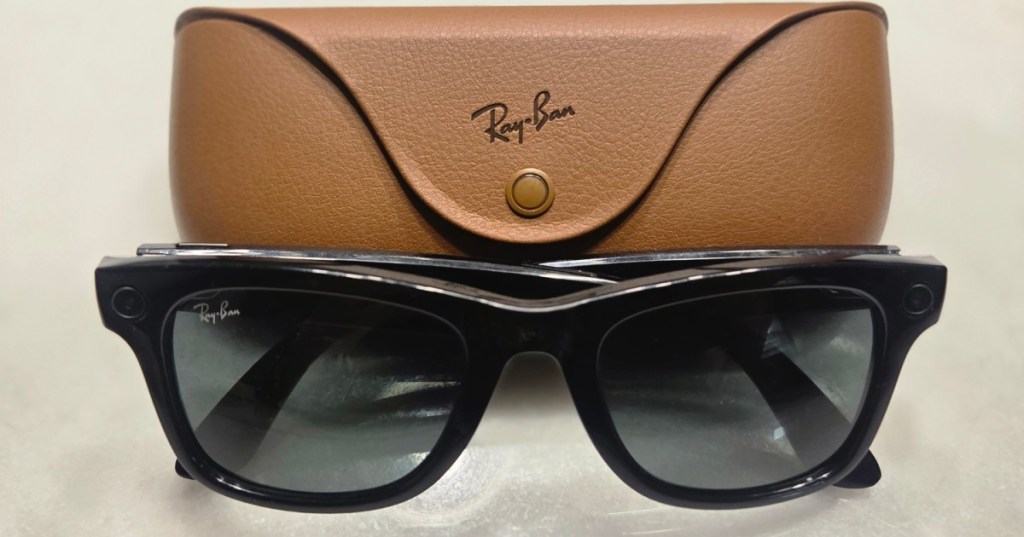
Featured image: Ray-Ban Meta Gen 1 glasses, a separate illustrative product, photographed by CCadio via Wikimedia Commons, CC BY 4.0, cropped. No affiliation with the unnamed evaluation customer is implied.
We volunteer daily to ensure the credibility of the information on our platform is Verifiably True. If you would like to support to help further secure the integrity of our research initiative, please scan the QR code below.



Leave a Reply