
Eswatini’s finance minister Neal Rijkenberg cautioned legislators about cryptocurrency risks during an October 27, 2026 Senate debate on national payment-system regulations, according to Eswatini Positive News. The proposed rules concern payment-provider authorization, electronic money, consumer safeguards and cross-border interoperability. The remarks provide evidence of continuing policy consideration, not the enactment of a dedicated Bitcoin law. Earlier research commissioned by the Central Bank of Eswatini found Bitcoin was the leading cryptocurrency among surveyed holders.
What the ownership survey measured
The central bank’s December 2023 baseline research used an online convenience sample of 4,561 adults and interviews with 34 financial-service firms. Around 8.6% of individual respondents owned cryptocurrency at the time, while 12.5% reported previous ownership. Awareness was substantially higher at 88.1%. Figure 4.2.6 identifies Bitcoin as the leading asset among respondents reporting current or former holdings. The survey cannot establish national prevalence because participation was not selected through a probability sample. The figures also describe conditions in 2023, not November 2026.
| Survey indicator | Reported share |
|---|---|
| Cryptocurrency awareness | 88.1% |
| Current ownership | 8.6% |
| Former ownership | 12.5% |
The same historical survey described the lack of dedicated cryptocurrency legislation and noted financial-crime compliance obligations. October’s parliamentary debate does not establish that a virtual-asset licensing regime has subsequently been enacted. Readers should distinguish a payment-service authorization from permission to provide cryptocurrency exchange or custody services. Similar distinctions appear in our Estonia licensing analysis and Egypt regulatory coverage.
An experimental digital currency that was not Bitcoin
The Central Bank of Eswatini’s current digital-currency page confirms that it completed research and trials but has decided against issuing a retail central-bank digital currency for now. Its 2024 Digital Lilangeni design proposed a token-based system distributed through financial intermediaries. Online wallets and offline-capable hardware were evaluated in pilot environments. The design envisaged the central bank controlling issuance and redemption, with financial-service providers handling customers and compliance. Those design proposals are not features of a deployed national currency.
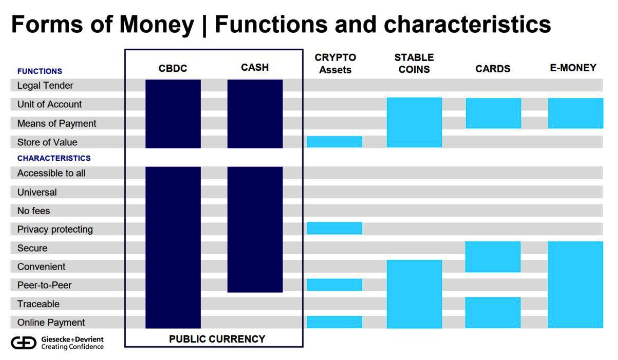
Bitcoin instead relies on distributed consensus to validate transfers and enforce its issuance schedule. A private key can authorize spending without a central issuer, but network connectivity is required to independently establish the latest confirmed state. Offline transaction signing is therefore different from guaranteed offline settlement. The connectivity constraints examined in our Eritrea report illustrate why infrastructure availability matters for both payment models.
The next measurable milestone
Eswatini’s payment modernization can improve conventional transfers without creating a Bitcoin payment system. Evidence of a dedicated virtual-asset framework would require a published legal instrument defining covered services, supervisory authority and licensing obligations. Evidence of adoption would require fresh survey data, documented merchants or independently measured transaction activity. As in Equatorial Guinea’s regional payment modernization, digital payment capacity must not be confused with Bitcoin adoption. The October debate is a policy signal, while the older baseline provides a reference against which future research could be compared.
Featured photograph: Stefan Krasowski, historical Mbabane bank building, December 2010, cropped under CC BY 2.0. The photograph predates the bank’s headquarters relocation announcement. The original PDFs are provided as downloadable documents; public-page visual and responsive tests remain unverified.
We volunteer daily to ensure the credibility of the information on our platform is Verifiably True. If you would like to support our independent research, please scan the QR code below.



Leave a Reply