Ghana plans to establish a National Artificial Intelligence Centre under a US$300 million technology investment program. Finance Minister Cassiel Ato Forson presented the 2027 budget to Parliament on November 12, 2026. Communications Minister Samuel Nartey George reaffirmed the computing initiative at the Privacy Symposium Africa in Accra on November 26, according to Modern Ghana. The official budget assigns the investment to both AI infrastructure and rural mobile-network upgrades, rather than exclusively to accelerator purchases. Like Leipzig University’s research data center, Ghana’s proposed facility is intended to broaden access to advanced computing.
Procurement and the first deployment phase
On October 21, George described procurement work involving Ghana’s Public Procurement Authority and set a target of approximately 24 months for the initial facility. MyJoyOnline reported the statement on October 22. The target implies an initial milestone around October 2028 if the schedule holds. It does not establish a construction completion date, an installed accelerator inventory or a contractual service launch. The November budget speech places the combined technology investment in 2027–2028, whereas the broader New Economy programme describes the investment within its 2027–2030 horizon. Readers should distinguish the announced spending schedule from the longer policy framework.
The original parliamentary proceedings are available from the legislature: Parliament of Ghana, presentation of the 2027 Budget, November 12, 2026. The recording covers the full budget, not commissioned AI hardware. Playback inside WordPress was not independently verified, so the original recording is linked.
Shared computing is more than a server purchase
A national AI service can combine accelerator nodes, persistent storage, a high-speed network and software that allocates resources among users. Training workloads require communication between accelerator devices when a model or its data is distributed across several machines. Inference workloads have different demands: they must balance request latency, model memory and concurrency. Ghana has not publicly specified the accelerator models, server count, interconnect architecture or usable IT power for the proposed center. A procurement estimate therefore cannot be converted into a reliable performance figure. Georgia’s Silk Cloud project illustrates the greater technical specificity possible when a named hardware platform has been announced.
A shared service also needs a scheduler and identity-management system. Universities and companies could submit jobs with resource limits and access permissions. Useful operational measurements would include completed training jobs, available accelerator-hours, queue delays, service uptime and electricity consumed per completed workload. Establishing such measurements would help separate installed hardware from actual research capacity.
Connectivity, electricity and data governance
The parallel rural 4G upgrade matters because network access determines whether researchers and enterprises outside major cities can reach centralized services. Radio coverage alone cannot guarantee end-to-end performance. Backhaul capacity, congestion, latency and redundant upstream routes also affect the experience. Our Kenyan network infrastructure report examines the role of regional interconnection.
Computing reliability also requires adequate electrical capacity, protected distribution and cooling. An illustrative facility with 1 MW of IT load and a power usage effectiveness of 1.3 would draw 1.3 MW in total under the assumed conditions. Neither number is a Ghana project specification. A real design would require engineering studies and measured operating data. South Africa’s data center electricity procurement provides a separate example of how power sourcing can shape infrastructure operation.
Local hosting may help organizations control data location, but effective governance requires tenant isolation, encryption, auditable access, backup arrangements and accountable administrators. The published policy identifies applications across economic and public-service sectors, including local-language technology. The project remains a planned AI service; no cryptocurrency mining deployment or operational accelerator capacity has been established by the announcements reviewed. The next evidence to watch is contract award, equipment selection and commissioned capacity.
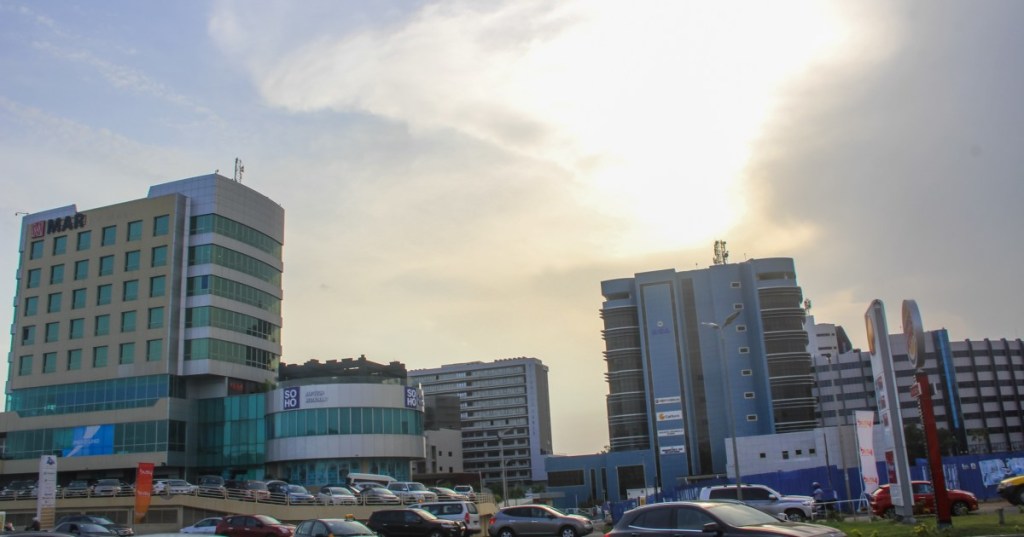
Featured photograph: Muntaka Chasant (Synth85), Accra Airport City, March 27, 2019, cropped, CC BY-SA 4.0. City context, not the proposed computing facility.
We volunteer daily to ensure the credibility of the information on our platform is Verifiably True. If you would like to support our independent research, please scan the QR code below.



Leave a Reply