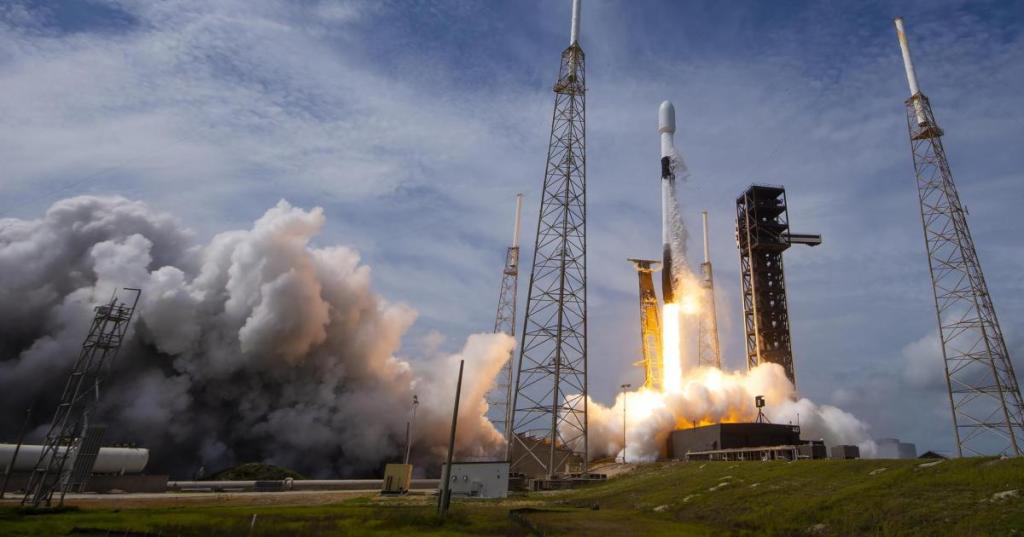
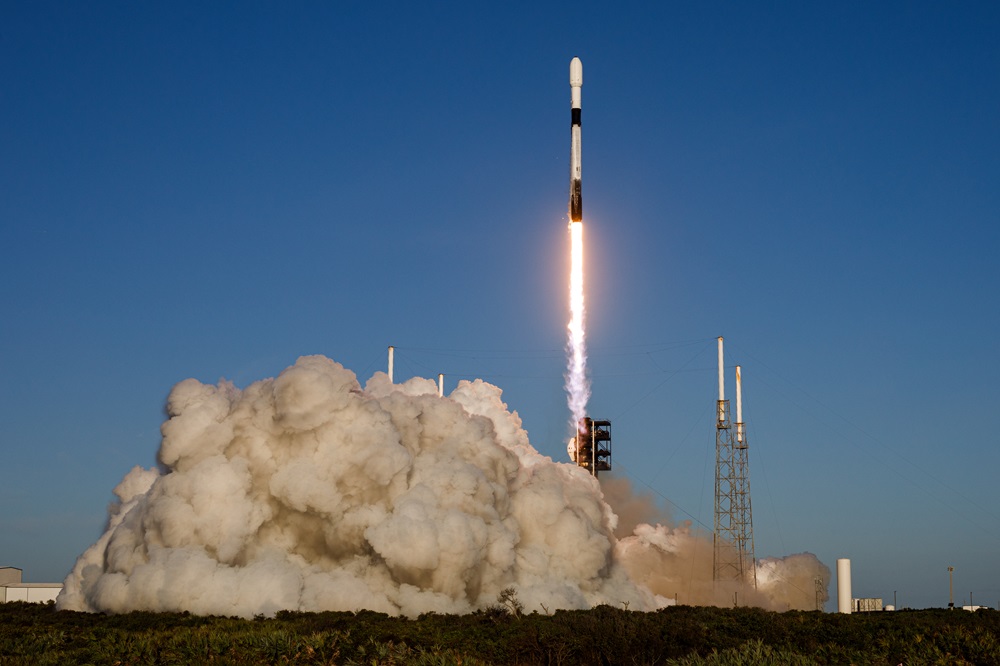
Northrop Grumman’s Cygnus XL cargo spacecraft launched aboard a SpaceX Falcon 9 on November 29, 2026, carrying approximately 11,000 pounds of equipment, supplies and science experiments toward the International Space Station. NASA’s launch confirmation records liftoff at 10:47 a.m. EST. The flight is Commercial Resupply Services-25, the third mission using the expanded Cygnus configuration. It advances a mission previously covered in our report on the OHALO III space-farming experiment. Cargo launch is confirmed; station arrival and installation remain future milestones.
Orbital logistics and electrical power
The payload mass is approximately 4,990 kilograms using the standard conversion from pounds. The figure describes carried supplies and equipment, not the total launch mass of the rocket or spacecraft. Cygnus uses solar arrays to support onboard electrical systems during free flight. NASA expected the arrays to deploy after initial orbital insertion. Navigation, communications and attitude control must remain functional while the spacecraft adjusts its trajectory toward the station. The principles behind spacecraft orientation are discussed in our reaction-wheel technical explainer; the existence of those principles does not establish the exact attitude-control hardware used aboard Cygnus.
Experiments address medicine and manufacturing
The NASA mission overview describes research into muscle deterioration, drug-delivery particles and cancer-cell behavior. Cardinal Muscle 2.0 uses cultured human muscle tissue to investigate whether existing medicines could counter muscle loss. DNA Nano B examines the formation of nanoscale structures in microgravity, while Encapsulate-1 investigates movement and interactions in miniature tumor models. Results from these experiments are not yet available, and their potential applications do not establish treatment efficacy.
The Active Radiation Environment Sensor experiment will evaluate radiation monitoring for future crewed missions. NASA also lists the JOINS demonstration, which will investigate robotic laser and friction-stir welding in space using aluminum and stainless steel. Such technologies could support assembly and maintenance of structures larger than a launch vehicle’s payload enclosure. As with Dragonfly’s specialized scientific instruments, equipment capability and validated experimental outcomes are separate milestones.
Rendezvous is a separate operation
NASA plans to capture Cygnus with Canadarm2 around 2:35 a.m. EST on December 1, before installation on the station’s Unity module. The robotic operation requires coordinated navigation, relative positioning and communications. Spaceflight Now’s mission coverage provides independent context. Like the Europa Clipper gravity-assist preparations, the next stage depends on successful spacecraft operations rather than the launch event alone. The near-term engineering objective is reliable delivery of cargo and installation of research hardware, followed by actual experiment execution.
We volunteer daily to ensure the credibility of the information on this platform is Verifiably True. If you would like to support to help further secure the integrity of our research initiative, please scan the QR code below.



Leave a Reply